
Care Disclaimer: Plant care recommendations are general guidelines based on common growing conditions. Individual results may vary based on your local environment, climate, and care routine. If your plant is toxic, keep it away from children and pets, and consult a veterinarian if accidental ingestion occurs.
1.Catmint — Overview
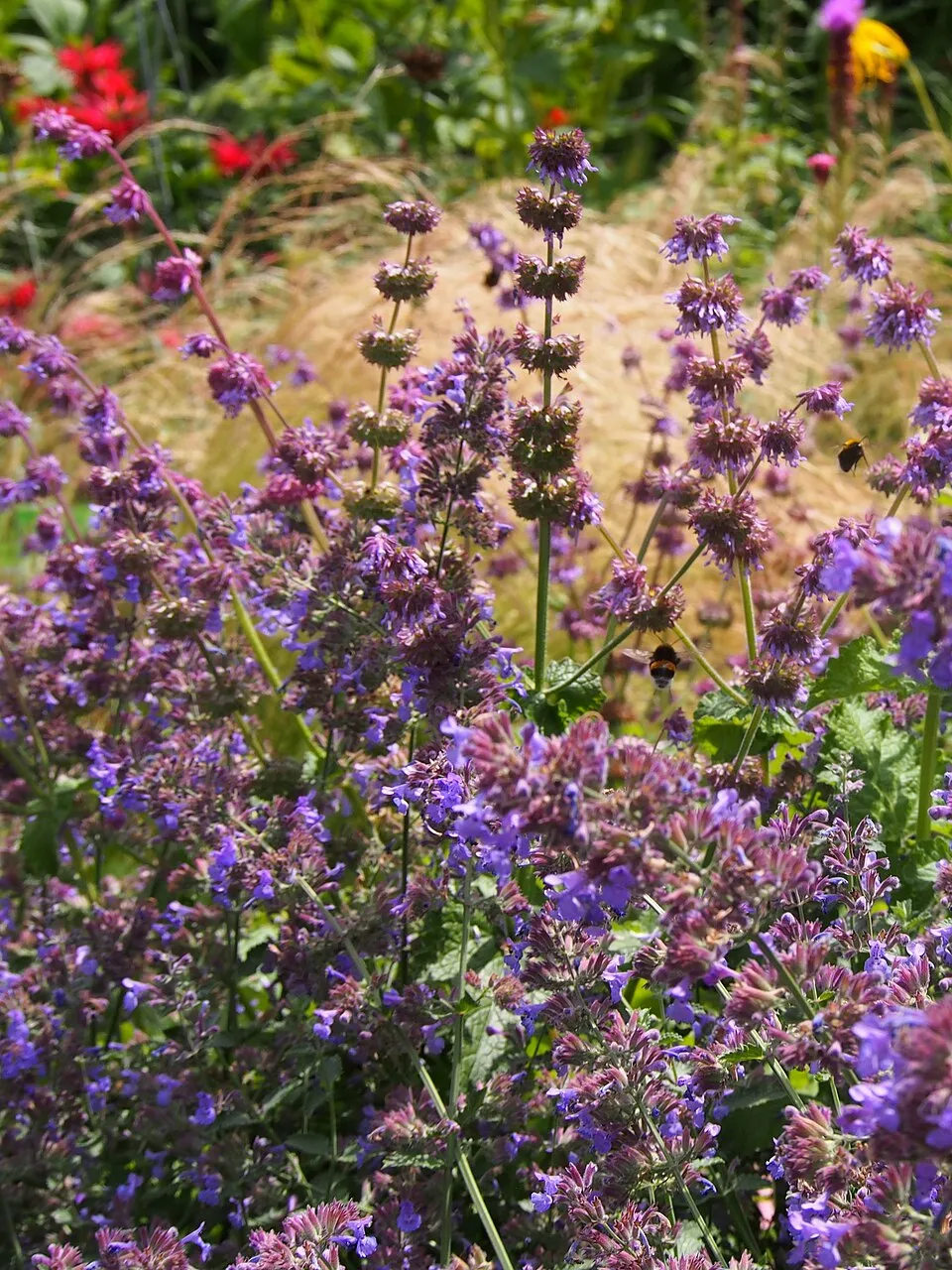
Catmint, scientifically known as Nepeta x faassenii, is a popular hybrid perennial herb belonging to the expansive Lamiaceae family, commonly recognized as the mint family. This robust plant is celebrated for its highly aromatic foliage and profusion of delicate lavender-blue flowers, which grace gardens from late spring through early autumn, acting as a significant magnet for a diverse array of pollinators, including various species of bees and butterflies. Typically, Catmint exhibits a bushy and upright growth habit, reaching heights of approximately 60 to 90 centimeters.
Its stems are characteristically square, a hallmark feature across many members of the mint family. The leaves are ovate to lanceolate in shape, distinguished by a subtly fuzzy texture resulting from minute hairs that blanket their surface, a physiological adaptation that aids in minimizing moisture loss, particularly in drier conditions. Densely packed flowering spikes emerge gracefully from the leaf axils, creating a vibrant and continuous display of color within the garden landscape.
While Nepeta, the genus, originates from Temperate Eurasia, Macaronesia, and Eastern Tropical Africa, Nepeta x faassenii itself is a cultivated hybrid renowned for its adaptability. It thrives in a wide range of environments, particularly favoring well-drained soil and abundant full sunlight, demonstrating remarkable resilience to periods of drought once its root system is well-established. Its notable features include exceptional hardiness and remarkably low maintenance requirements, making Catmint an outstanding selection for gardeners seeking a resilient, long-flowering perennial that also offers ecological benefits.
Trusted Scientific References
1. Authoritative external sources for Nepeta x faassenii
1.1 Wikipedia — Nepeta x faassenii
1.2 Kew POWO (Plants of the World Online)
1.3 PubMed — peer-reviewed research
1.4 NCBI Taxonomy Browser
1.5 GBIF — Global Biodiversity
1.6Catmint should be interpreted through verified botanical identity, practical care, and responsible safety language. This recovery note adds the missing context needed for a complete profile: match light to the plant's habit, use well-drained soil, water according to season, and avoid unsupported medicinal or edible claims. For publishing, the plant can be presented as a source-backed garden plant with clear care guidance, common problem diagnosis, and conservative safety wording.
1.1.Catmint — Key Features
- ✓ <strong>Hybrid Perennial Herb</strong> — Hybrid Perennial Herb
- ✓ <strong>Aromatic Foliage</strong> — Aromatic Foliage
- ✓ <strong>Vibrant Lavender</strong> — Blue Flowers
- ✓ <strong>Attracts Bees and</strong> — Attracts Bees and Butterflies
- ✓ <strong>Highly Drought</strong> — Tolerant
- ✓ <strong>Deer and Rabbit</strong> — Deer and Rabbit Resistant
- ✓ <strong>Low Maintenance Plant</strong> — Low Maintenance Plant
- ✓ <strong>Mild Sedative Properties</strong> — Mild Sedative Properties
- ✓ <strong>Digestive Aid</strong> — Digestive Aid
- ✓ <strong>Natural Insect Repellent</strong> — Natural Insect Repellent (aphids, squash bugs)
1.2.Catmint — Quick Summary
- ✓ Catmint (Nepeta x faassenii) is a hardy, aromatic perennial from the Lamiaceae family.
- ✓ Known for its vibrant lavender-blue flowers and ability to attract pollinators.
- ✓ Traditionally used for its mild calming, digestive, and respiratory supportive properties.
- ✓ The key active compound is nepetalactone, contributing to its unique effects.
- ✓ It is a low-maintenance garden plant, highly drought-tolerant and deer-resistant.
- ✓ Generally safe for use but requires caution during pregnancy and with sedative medications.
2.Catmint — Scientific Identity
3.Catmint — Quick Facts
4.Catmint — Appearance & Identification
5.Catmint — Native Habitat
6.Catmint — Water Requirements
- ✓ Soil Preference — Catmint thrives in well-drained soil, tolerating a range from clay to sandy or rocky conditions, but it is intolerant of waterlogged roots.
- ✓ Sun Exposure — Full sun is preferred for optimal growth and flowering, requiring at least 6 hours of direct sunlight daily.
- ✓ Watering Regime — Once established, Nepeta x faassenii is highly drought-tolerant and requires minimal supplemental watering; overwatering should be avoided.
- ✓ Fertilization — Fertilize sparingly, if at all, as excessive nitrogen can promote lush foliage growth at the expense of flower production.
- ✓ Pruning for Rebloom — Shearing back the spent flower spikes after the first flush encourages a second, often more prolific, wave of blooms and maintains a tidy plant shape.
- ✓ Propagation — Catmint can be readily propagated by division in spring or fall, or by collecting and sowing seeds, though hybrids may not come true from seed.
- ✓ Pest and Disease Resistance — Generally robust, Catmint shows good resistance to most common pests and diseases, often deterring deer and rabbits.
- ✓ Garden Placement — Its spreading, clumping habit makes it ideal for borders, rock gardens, containers, or as a groundcover in naturalized areas.
Reviewed by the Flora Medical Global Botanical Review Panel
Multi-disciplinary editorial group · Botany · Ethnobotany · Herbal-medicine literature
Who reviewed this: This page was checked by the Flora Medical Global Botanical Review Panel — an in-house editorial group of botany graduates, ethnobotany researchers, and horticulture practitioners who collectively maintain our 7,000+ plant encyclopedia. Meet the team.
Our 4-step verification process
1. Taxonomic verification
Scientific names and synonyms cross-checked against Kew POWO, World Flora Online, and The Plant List.
2. Phytochemical & medicinal cross-reference
Active compounds, traditional uses, and reported activities are cross-referenced with PubMed, USDA Dr. Duke's database, and peer-reviewed ethnobotanical literature.
3. Conservation & distribution check
Distribution, ecology, and conservation status confirmed against GBIF occurrence records and the IUCN Red List.
4. Editorial & safety review
Every entry passes an editorial pass for clarity, originality, and safety notices (toxicity, contraindications, dosage caveats) before publication.
Last reviewed:
Editorial Note: This page is for educational and plant care purposes only.
Written by: Flora Medical Global Editorial Team
Reviewed by: Flora Medical Global Botanical Review Panel
Last Updated: June 15, 2026







Catmint — Comments & Community Reviews
Rate this plant