

Care Disclaimer: Plant care recommendations are general guidelines based on common growing conditions. Individual results may vary based on your local environment, climate, and care routine. If your plant is toxic, keep it away from children and pets, and consult a veterinarian if accidental ingestion occurs.
1.Cerastium Tomentosum — Overview
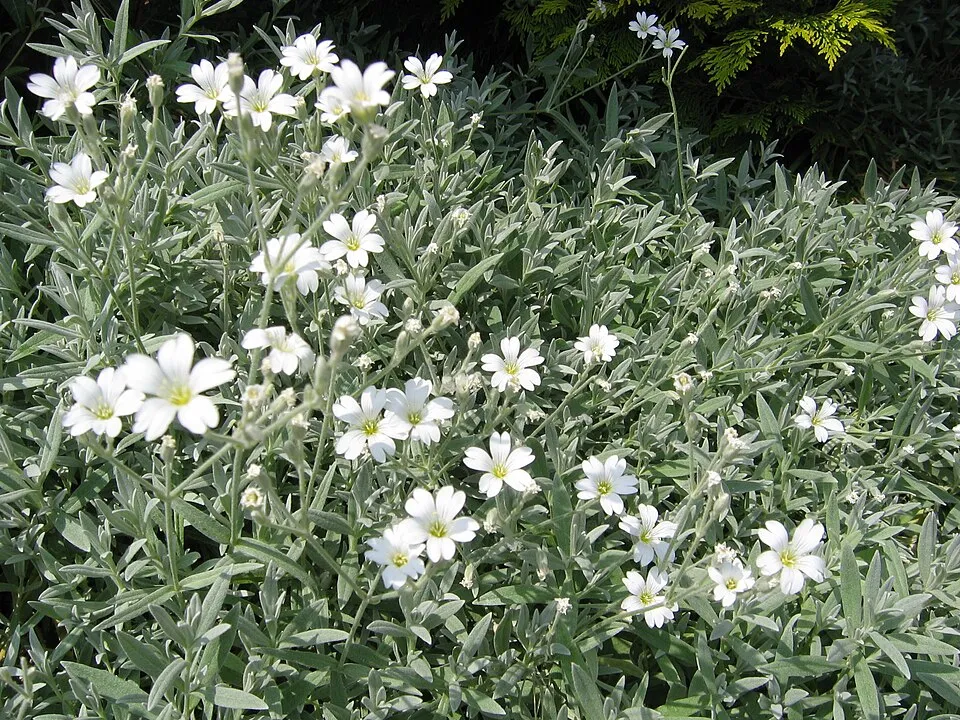
Cerastium tomentosum, widely known as Snow-in-summer, is a distinctive low-growing herbaceous perennial belonging to the Caryophyllaceae family. This species forms a dense, spreading mat, typically reaching heights of 6 to 12 inches, characterized by its striking silvery-gray, woolly foliage. The specific epithet 'tomentosum' directly refers to this dense, soft, matted pubescence covering its narrow, lanceolate leaves and stems, a feature that also contributes to its common name 'Dusty Miller' in some regions.
Leaves are arranged oppositely along the stems, which can spread extensively via underground runners, making it an excellent groundcover. In late spring to early summer, Cerastium tomentosum produces an abundance of showy, star-shaped white flowers, each stem bearing up to 15 blooms that create a carpet-like effect, evoking the appearance of fresh snow—hence its most popular common name, Snow-in-summer. The genus name, Cerastium, derives from the Greek 'keras' meaning horn, alluding to the slightly bent seed capsules found in some species.
Native to Italy, particularly found in mountainous regions, this plant thrives in full sun and prefers poor, dry, sandy, and very well-drained soils. While it exhibits robust drought resistance, it is sensitive to high heat and humidity, which can lead to decline or root rot in poorly drained, moist conditions. Its mat-forming habit and attractive appearance make it a popular ornamental choice for rock gardens, borders, and as a low-maintenance groundcover, though it can become weedy in ideal cool climates.
Trusted Scientific References
1. Authoritative external sources for Cerastium Tomentosum
1.1 Wikipedia — Cerastium Tomentosum
1.2 Kew POWO (Plants of the World Online)
1.3 PubMed — peer-reviewed research
1.4 NCBI Taxonomy Browser
1.5 GBIF — Global Biodiversity
1.6Cerastium Tomentosum should be interpreted through verified botanical identity, practical care, and responsible safety language. This recovery note adds the missing context needed for a complete profile: match light to the plant's habit, use well-drained soil, water according to season, and avoid unsupported medicinal or edible claims. For publishing, the plant can be presented as a source-backed garden plant with clear care guidance, common problem diagnosis, and conservative safety wording.
1.1.Cerastium Tomentosum — Key Features
- ✓ <strong>Botanical Name</strong> — Cerastium tomentosum
- ✓ <strong>Common Names</strong> — Snow-in-summer, Dusty Miller, Jerusalem Star, Wooly Mouse-Ear Chickweed
- ✓ <strong>Plant Type</strong> — Herbaceous Perennial Groundcover
- ✓ <strong>Foliage</strong> — Distinctive silvery-gray, woolly, narrow leaves
- ✓ <strong>Flowers</strong> — Showy, pure white, star-shaped blooms
- ✓ <strong>Bloom Time</strong> — Late spring to early summer
- ✓ <strong>Growth Habit</strong> — Mat-forming, spreading via runners, typically 6-12 inches tall
- ✓ <strong>Habitat</strong> — Native to Italy, prefers dry, sunny, well-drained environments
- ✓ <strong>Medicinal Use</strong> — Traditional anti-inflammatory, antioxidant, digestive aid, immune support
- ✓ <strong>Key Constituents</strong> — Flavonoids, Vitamins A, C, K, saponins
- ✓ <strong>Drought Tolerance</strong> — High
- ✓ <strong>Deer Resistance</strong> — Yes
1.2.Cerastium Tomentosum — Quick Summary
- ✓ Cerastium tomentosum, or Snow-in-summer, is a striking perennial groundcover with silvery, woolly foliage.
- ✓ Produces abundant star-shaped white flowers in late spring to early summer, creating a 'snowy' landscape.
- ✓ Traditionally recognized for potential anti-inflammatory, antioxidant, digestive, and immune-boosting properties.
- ✓ Contains beneficial phytochemicals including flavonoids and essential vitamins A, C, and K.
- ✓ Thrives in full sun and well-drained, poor soils, but is intolerant of high heat and humidity.
- ✓ Valued ornamentally and used in traditional herbal infusions and topical applications for wellness.
2.Cerastium Tomentosum — Scientific Identity
3.Cerastium Tomentosum — Quick Facts
4.Cerastium Tomentosum — Appearance & Identification
5.Cerastium Tomentosum — Native Habitat
6.Cerastium Tomentosum — Water Requirements
- ✓ Soil Requirements — Thrives in poor, dry, sandy, and well-drained soils; avoid heavy clay or poorly draining conditions to prevent root rot.
- ✓ Sun Exposure — Requires full sun, ideally receiving at least 6-8 hours of direct sunlight daily for vigorous growth and abundant flowering.
- ✓ Watering — Highly drought-tolerant once established, but benefits from occasional watering during prolonged dry spells; ensure soil dries out between waterings.
- ✓ Propagation — Easily propagated by division in spring or fall, from stem cuttings in early summer, or via self-seeding if spent blooms are not removed.
- ✓ Maintenance — Prune in early spring to remove any winter damage and to encourage dense, compact growth; large groundcover areas can be mowed on a high setting after flowering.
- ✓ Climate Preference — Performs best in cool summer climates; it struggles and may decline in regions with high heat and humidity.
- ✓ Pest and Disease Resistance — Generally deer resistant; primary issues include root rot in wet conditions and powdery mildew in humid environments.
- ✓ Growth Habit Control — Can be aggressive; consider less invasive cultivars like 'Olympia' or 'Silberteppich' to manage spread in smaller gardens.
Reviewed by the Flora Medical Global Botanical Review Panel
Multi-disciplinary editorial group · Botany · Ethnobotany · Herbal-medicine literature
Who reviewed this: This page was checked by the Flora Medical Global Botanical Review Panel — an in-house editorial group of botany graduates, ethnobotany researchers, and horticulture practitioners who collectively maintain our 7,000+ plant encyclopedia. Meet the team.
Our 4-step verification process
1. Taxonomic verification
Scientific names and synonyms cross-checked against Kew POWO, World Flora Online, and The Plant List.
2. Phytochemical & medicinal cross-reference
Active compounds, traditional uses, and reported activities are cross-referenced with PubMed, USDA Dr. Duke's database, and peer-reviewed ethnobotanical literature.
3. Conservation & distribution check
Distribution, ecology, and conservation status confirmed against GBIF occurrence records and the IUCN Red List.
4. Editorial & safety review
Every entry passes an editorial pass for clarity, originality, and safety notices (toxicity, contraindications, dosage caveats) before publication.
Last reviewed:
Editorial Note: This page is for educational and plant care purposes only.
Written by: Flora Medical Global Editorial Team
Reviewed by: Flora Medical Global Botanical Review Panel
Last Updated: June 15, 2026







Cerastium Tomentosum — Comments & Community Reviews
Rate this plant