

Care Disclaimer: Plant care recommendations are general guidelines based on common growing conditions. Individual results may vary based on your local environment, climate, and care routine. If your plant is toxic, keep it away from children and pets, and consult a veterinarian if accidental ingestion occurs.
1.Chamaecyparis Obtusa — Overview
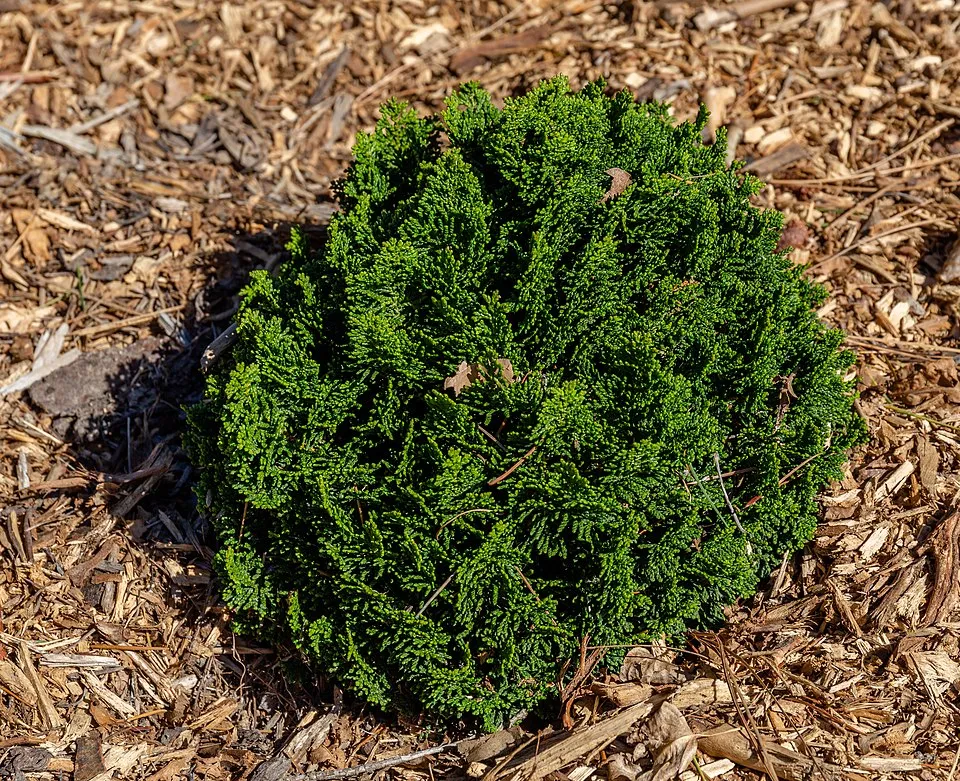
Chamaecyparis obtusa, commonly known as the Hinoki cypress, is a majestic evergreen conifer belonging to the Cupressaceae family. This revered species typically attains heights ranging from 15 to 30 meters, with some ancient specimens reaching up to 35 meters, showcasing a slow but steady growth rate. Its distinctive foliage consists of small, scale-like leaflets, approximately 2-5 mm in length, arranged in alternating spirals. These leaves present a vibrant, fresh green hue that subtly deepens or browns during colder winter months and feature a characteristic glossy surface.
The tree’s bark is notably fibrous and reddish-brown, gracefully peeling away in thin strips, which contributes to its unique aesthetic appeal. Hinoki cypress produces small, globular cones, measuring about 1-2 cm in diameter, that mature to a rich brown color. Native to Japan, Korea, and Taiwan, Chamaecyparis obtusa thrives in moist, well-drained, slightly acidic soils and prefers a temperate climate with consistent rainfall. While demonstrating good tolerance to dry and arid conditions, it exhibits poor tolerance to cold and salt.
The Hinoki cypress holds significant cultural and economic importance in Japan, where it is regarded as a sacred tree and constitutes a substantial portion of plantation forests, valued for both its timber and aromatic essential oil. It also shows some resilience to urban air pollution, making it a valuable ornamental species worldwide.
Trusted Scientific References
1. Authoritative external sources for Chamaecyparis obtusa
1.1 Wikipedia — Chamaecyparis obtusa
1.2 Kew POWO (Plants of the World Online)
1.3 PubMed — peer-reviewed research
1.4 NCBI Taxonomy Browser
1.5 GBIF — Global Biodiversity
1.6Chamaecyparis Obtusa should be interpreted through verified botanical identity, practical care, and responsible safety language. This recovery note adds the missing context needed for a complete profile: match light to the plant's habit, use well-drained soil, water according to season, and avoid unsupported medicinal or edible claims. For publishing, the plant can be presented as a source-backed garden plant with clear care guidance, common problem diagnosis, and conservative safety wording.
1.1.Chamaecyparis Obtusa — Key Features
- ✓ <strong>Native to Japan,</strong> — Native to Japan, Korea, and Taiwan.
- ✓ <strong>Evergreen conifer with scale</strong> — like leaves.
- ✓ <strong>Distinctive reddish</strong> — brown, fibrous bark.
- ✓ <strong>Highly aromatic wood</strong> — Highly aromatic wood and essential oil.
- ✓ <strong>Known for calming</strong> — Known for calming and anxiolytic properties in aromatherapy.
- ✓ <strong>Exhibits potent antimicrobial</strong> — Exhibits potent antimicrobial and antioxidant activities.
- ✓ <strong>Used traditionally in</strong> — Used traditionally in therapeutic bathhouses and for skin health.
- ✓ <strong>Acts as a natural, human</strong> — friendly insect repellent.
- ✓ <strong>Possesses significant cultural</strong> — Possesses significant cultural and economic value as a sacred tree.
- ✓ <strong>Ornamental appeal with</strong> — Ornamental appeal with a long lifespan.
1.2.Chamaecyparis Obtusa — Quick Summary
- ✓ Chamaecyparis obtusa, or Hinoki cypress, is a sacred Japanese conifer.
- ✓ Valued for its durable wood and aromatic essential oil.
- ✓ Rich in terpenes, offering diverse antimicrobial, antioxidant, and calming benefits.
- ✓ Primarily used in aromatherapy, topical applications, and as an insect repellent.
- ✓ Essential for dilution and patch testing due to potential skin sensitivity.
- ✓ Integral to traditional Japanese culture and increasingly recognized globally for wellness.
2.Chamaecyparis Obtusa — Scientific Identity
3.Chamaecyparis Obtusa — Quick Facts
4.Chamaecyparis Obtusa — Appearance & Identification
5.Chamaecyparis Obtusa — Native Habitat
6.Chamaecyparis Obtusa — Water Requirements
- ✓ Soil Requirements — Prefers moist, well-drained, slightly acidic soil (pH 5.0-6.5) rich in organic matter. Avoid heavy clay or overly alkaline conditions.
- ✓ Climate and Light — Thrives in temperate climates with regular rainfall. Prefers full sun to partial shade; too much shade can lead to sparse foliage.
- ✓ Watering — Requires consistent moisture, especially during dry spells and in its early growth stages. Established trees have moderate drought tolerance.
- ✓ Temperature and Hardiness — Hardy in USDA zones 4-8. Shows poor tolerance to extreme cold and salt spray, but some resistance to air pollution.
- ✓ Propagation — Can be propagated by seeds, which require stratification, or more commonly by semi-hardwood cuttings taken in late summer or early autumn.
- ✓ Pruning — Generally requires minimal pruning; focus on removing dead, damaged, or crossing branches to maintain its natural, attractive form.
- ✓ Pests and Diseases — Relatively resistant but can be susceptible to spider mites in dry conditions or root rot in waterlogged soils. Ensure good air circulation.
Reviewed by the Flora Medical Global Botanical Review Panel
Multi-disciplinary editorial group · Botany · Ethnobotany · Herbal-medicine literature
Who reviewed this: This page was checked by the Flora Medical Global Botanical Review Panel — an in-house editorial group of botany graduates, ethnobotany researchers, and horticulture practitioners who collectively maintain our 7,000+ plant encyclopedia. Meet the team.
Our 4-step verification process
1. Taxonomic verification
Scientific names and synonyms cross-checked against Kew POWO, World Flora Online, and The Plant List.
2. Phytochemical & medicinal cross-reference
Active compounds, traditional uses, and reported activities are cross-referenced with PubMed, USDA Dr. Duke's database, and peer-reviewed ethnobotanical literature.
3. Conservation & distribution check
Distribution, ecology, and conservation status confirmed against GBIF occurrence records and the IUCN Red List.
4. Editorial & safety review
Every entry passes an editorial pass for clarity, originality, and safety notices (toxicity, contraindications, dosage caveats) before publication.
Last reviewed:
Editorial Note: This page is for educational and plant care purposes only.
Written by: Flora Medical Global Editorial Team
Reviewed by: Flora Medical Global Botanical Review Panel
Last Updated: June 15, 2026







Chamaecyparis Obtusa — Comments & Community Reviews
Rate this plant