
Care Disclaimer: Plant care recommendations are general guidelines based on common growing conditions. Individual results may vary based on your local environment, climate, and care routine. If your plant is toxic, keep it away from children and pets, and consult a veterinarian if accidental ingestion occurs.
1.Chelone Lyonii — Overview
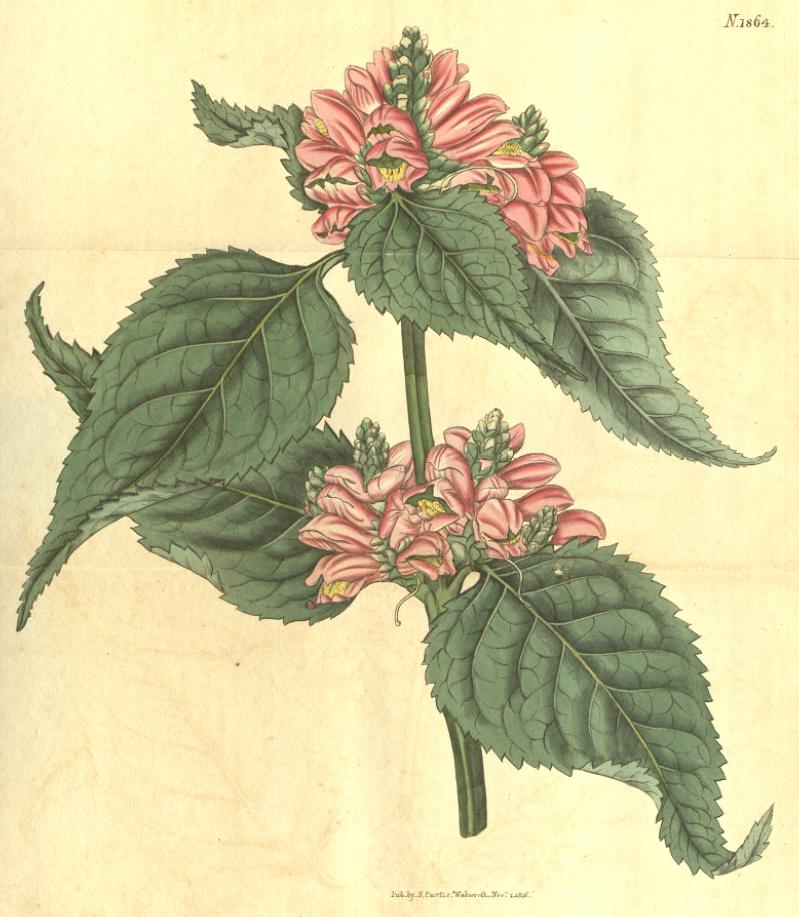
Chelone lyonii, commonly recognized as eastern turtlehead or pink turtlehead, is an enchanting herbaceous perennial indigenous to the southeastern United States, thriving predominantly within the Appalachian Mountains and adjacent areas. As a member of the Plantaginaceae family, it belongs to the genus Chelone, celebrated for its uniquely shaped, bilabiate flowers that strikingly resemble a turtle's head. This robust plant establishes an upright, clump-forming growth habit, typically reaching heights of 60 to 90 centimeters (2 to 3 feet), although some specimens can exceed this in optimal conditions.
Its stems are characteristically erect, often square in cross-section, and exhibit a sturdy structure, occasionally adorned with a soft, downy pubescence, especially on nascent growth. The foliage presents a vibrant dark green hue, with simple, lanceolate to ovate-lanceolate leaves arranged oppositely along the stem. These leaves measure approximately 7.5 to 15 centimeters (3 to 6 inches) in length, featuring distinctively serrated margins and prominent venation.
While generally smooth, a slight hairiness might be detected on the undersides or along the veins.
The most captivating attribute of Chelone lyonii is its inflorescence. The plant produces dense, terminal spikes of tubular flowers that bloom profusely from late summer through early fall, typically spanning August to September. These blossoms are truly singular, characterized by a hooded upper lip and a three-lobed lower lip, collectively forming a shape that vividly evokes a turtle's head with its mouth slightly ajar, hence its evocative common name.
The color palette of these alluring flowers ranges from various shades of pink to rose-purple, sometimes appearing nearly white, frequently with subtle yellow 'beard' or throat markings that act as guides for pollinators. Chelone lyonii flourishes in specific wetland ecosystems, favoring stream banks, marshy terrains, bogs, and the moist peripheries of woodlands, indicating a strong preference for consistently damp to wet soils and partial shade, particularly in regions with hot afternoon sun.
Trusted Scientific References
1. Authoritative external sources for Chelone lyonii
1.1 Wikipedia — Chelone lyonii
1.2 Kew POWO (Plants of the World Online)
1.3 PubMed — peer-reviewed research
1.4 NCBI Taxonomy Browser
1.5 GBIF — Global Biodiversity
1.1.Chelone Lyonii — Key Features
- ✓ <strong>Distinctive Turtle</strong> — Head Flowers — Unique pink to rose-purple bilabiate blossoms resembling a turtle's head.
- ✓ <strong>Native to Appalachian Mountains</strong> — Indigenous to moist, wooded areas of the southeastern United States.
- ✓ <strong>Late Summer to Fall Bloomer</strong> — Provides vibrant color in the garden from August through September.
- ✓ <strong>Attracts Pollinators</strong> — A valuable nectar source for hummingbirds, bees, and butterflies.
- ✓ <strong>Deer Resistant</strong> — Generally not favored by deer, making it a good landscape choice.
- ✓ <strong>Prefers Moist to Wet Soils</strong> — Ideal for rain gardens, bog gardens, and stream banks.
- ✓ <strong>Upright, Clump</strong> — Forming Habit — Grows 2-4 feet tall with a tidy, non-invasive form.
- ✓ <strong>Hardy Perennial</strong> — Resilient in USDA Zones 3-8, returning year after year.
- ✓ <strong>Low Maintenance</strong> — Requires minimal care once established in appropriate conditions.
- ✓ <strong>Member of Plantaginaceae Family</strong> — Shares botanical characteristics with other 'figwort' plants.
1.2.Chelone Lyonii — Quick Summary
- ✓ Chelone lyonii is a native perennial known for its unique turtle-head shaped pink flowers.
- ✓ Thrives in moist, partially shaded wetland habitats of the southeastern US.
- ✓ Primarily valued for its ornamental beauty and ecological role as a pollinator plant.
- ✓ Related species, particularly C. glabra, have historical uses as a liver tonic and digestive aid.
- ✓ Generally deer resistant and low maintenance in suitable growing conditions.
- ✓ Limited direct medicinal research exists for Chelone lyonii specifically.
2.Chelone Lyonii — Scientific Identity
3.Chelone Lyonii — Quick Facts
4.Chelone Lyonii — Appearance & Identification
5.Chelone Lyonii — Native Habitat
6.Chelone Lyonii — Water Requirements
- ✓ Soil Preference — Thrives in rich, moist to wet soils with high organic matter content, mimicking its native wetland habitats.
- ✓ Light Requirements — Best grown in partial shade, especially in warmer climates, though it can tolerate full sun if soil moisture is consistently maintained.
- ✓ Water Needs — Requires consistently moist soil; avoid drying out. Ideal for bog gardens, stream banks, or pond margins.
- ✓ Climate Suitability — Adaptable to cool climate summers and hardy in USDA zones 3-8.
- ✓ Pruning for Bushiness — Pinch stems in late spring or early summer to encourage a more compact, bushier growth habit and prevent legginess.
- ✓ Pest and Disease Resistance — Generally robust with no significant pest issues; powdery mildew can occur in dry soil or poor air circulation.
- ✓ Deer Resistance — Considered deer resistant, making it a good choice for gardens prone to browsing.
- ✓ Propagation — Can be propagated by seed, division in spring, or stem cuttings.
Reviewed by the Flora Medical Global Botanical Review Panel
Multi-disciplinary editorial group · Botany · Ethnobotany · Herbal-medicine literature
Who reviewed this: This page was checked by the Flora Medical Global Botanical Review Panel — an in-house editorial group of botany graduates, ethnobotany researchers, and horticulture practitioners who collectively maintain our 7,000+ plant encyclopedia. Meet the team.
Our 4-step verification process
1. Taxonomic verification
Scientific names and synonyms cross-checked against Kew POWO, World Flora Online, and The Plant List.
2. Phytochemical & medicinal cross-reference
Active compounds, traditional uses, and reported activities are cross-referenced with PubMed, USDA Dr. Duke's database, and peer-reviewed ethnobotanical literature.
3. Conservation & distribution check
Distribution, ecology, and conservation status confirmed against GBIF occurrence records and the IUCN Red List.
4. Editorial & safety review
Every entry passes an editorial pass for clarity, originality, and safety notices (toxicity, contraindications, dosage caveats) before publication.
Last reviewed:
Editorial Note: This page is for educational and plant care purposes only.
Written by: Flora Medical Global Editorial Team
Reviewed by: Flora Medical Global Botanical Review Panel
Last Updated: June 15, 2026







Chelone Lyonii — Comments & Community Reviews
Rate this plant