

Care Disclaimer: Plant care recommendations are general guidelines based on common growing conditions. Individual results may vary based on your local environment, climate, and care routine. If your plant is toxic, keep it away from children and pets, and consult a veterinarian if accidental ingestion occurs.
1.Chrysanthemum Coronarium — Overview
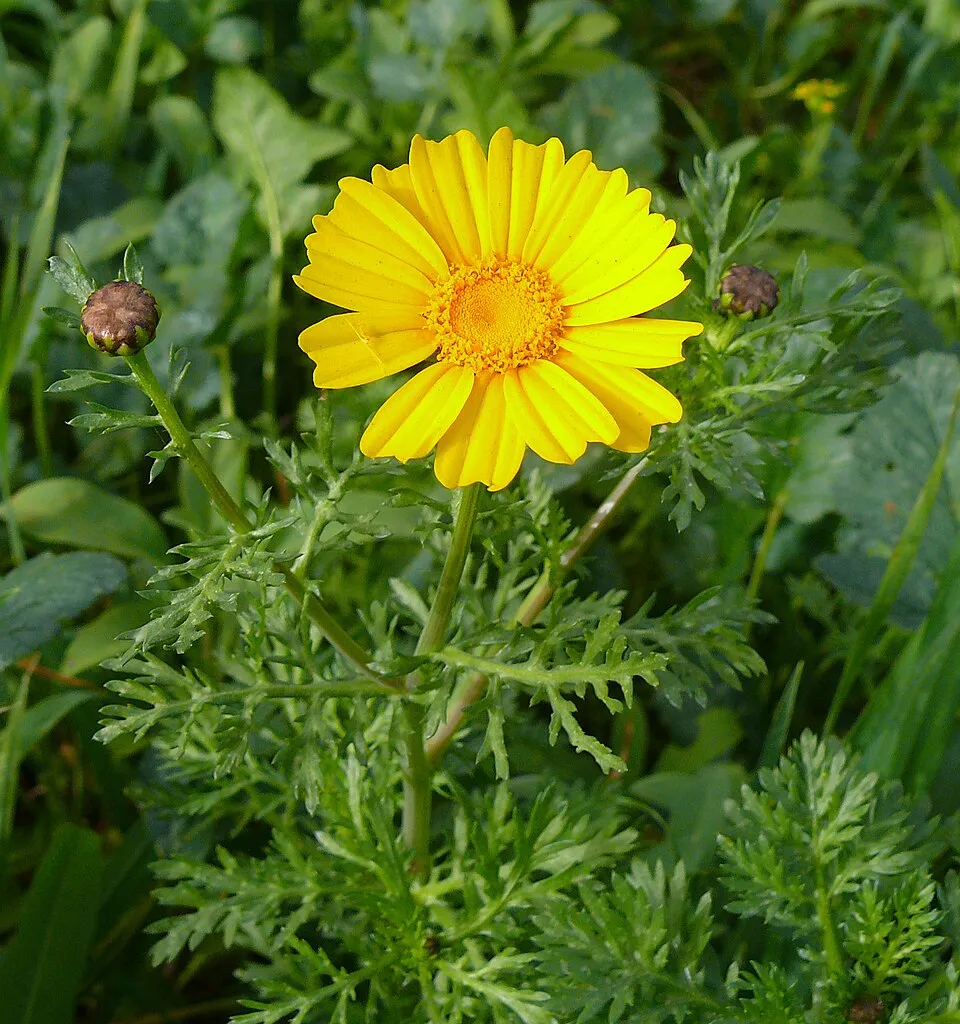
Chrysanthemum coronarium, commonly known as Garland Chrysanthemum, Crown Daisy, or Chop Suey Green, is an annual herbaceous plant belonging to the Asteraceae family. It is native to the Mediterranean region and East Asia, where it has been cultivated for centuries for its culinary and medicinal value. This resilient plant typically grows to a height of 0.5 to 1 meter (1.5 to 3 feet) and spreads about 0.5 meters (1.5 feet). Its lush green foliage consists of ovate to lanceolate leaves, measuring 5 to 10 cm long, often deeply lobed or pinnatifid, and arranged alternately along the stem, giving it a bushy appearance.
The vibrant flowers, which are characteristic of the daisy family, are typically borne as solitary terminal flower heads or in loose clusters. They feature a central yellow disc surrounded by ray florets that can be white, yellow, or a combination, depending on the cultivar. Blooming occurs from late spring through early fall, attracting a variety of pollinators like bees and butterflies. Chrysanthemum coronarium thrives in temperate climates, preferring well-drained, loamy soil rich in organic matter.
It exhibits remarkable adaptability to various soil types and can tolerate both full sun and partial shade. Its notable features include drought resilience once established, making it a favored choice for both ornamental and functional gardens, often used as a border plant, ground cover, or in mixed flower beds.
Trusted Scientific References
1. Authoritative external sources for Chrysanthemum Coronarium
1.1 Wikipedia — Chrysanthemum Coronarium
1.2 Kew POWO (Plants of the World Online)
1.3 PubMed — peer-reviewed research
1.4 NCBI Taxonomy Browser
1.5 GBIF — Global Biodiversity
1.6Chrysanthemum Coronarium should be interpreted through verified botanical identity, practical care, and responsible safety language. This recovery note adds the missing context needed for a complete profile: match light to the plant's habit, use well-drained soil, water according to season, and avoid unsupported medicinal or edible claims. For publishing, the plant can be presented as a source-backed garden plant with clear care guidance, common problem diagnosis, and conservative safety wording.
1.1.Chrysanthemum Coronarium — Key Features
- ✓ <strong>Annual Herbaceous Plant</strong> — Completes its life cycle within one growing season, typically cultivated annually.
- ✓ <strong>Native to Mediterranean & East Asia</strong> — Indigenous to both regions, indicating a wide natural distribution.
- ✓ <strong>Edible Leaves & Flowers</strong> — Young shoots, leaves, and flower petals are commonly consumed in various cuisines.
- ✓ <strong>Rich in Flavonoids & Carotenoids</strong> — Abundant in beneficial phytochemicals with antioxidant properties.
- ✓ <strong>Traditional Medicinal Uses</strong> — Employed in TCM for fever, hypertension, headaches, and inflammatory conditions.
- ✓ <strong>Drought Tolerant (Once Established)</strong> — Exhibits resilience to dry periods, making it suitable for water-wise gardening.
- ✓ <strong>Attracts Pollinators</strong> — Its vibrant flowers are a magnet for bees, butterflies, and other beneficial insects.
- ✓ <strong>Adaptable to Various Soils</strong> — Tolerates a range of soil types, though it prefers well-drained, organic-rich loam.
- ✓ <strong>Ornamental Value</strong> — Valued for its attractive foliage and cheerful, daisy-like flowers in gardens.
- ✓ <strong>Fast Growing</strong> — Known for its relatively quick growth, providing a rapid harvest of greens.
1.2.Chrysanthemum Coronarium — Quick Summary
- ✓ Edible and Medicinal — Widely used in East Asian cuisine and traditional medicine for various ailments.
- ✓ Anti-inflammatory & Antioxidant — Rich in beneficial compounds that combat inflammation and oxidative stress.
- ✓ Digestive & Respiratory Support — Traditional uses include aiding digestion and alleviating respiratory symptoms.
- ✓ Allergic Potential — Belongs to the Asteraceae family, posing allergy risks for sensitive individuals.
- ✓ Easy to Cultivate — An annual plant that thrives in temperate climates with full sun and well-drained soil.
- ✓ Rich in Nutrients — Contains vitamins, minerals, and carotenoids, contributing to its health benefits.
2.Chrysanthemum Coronarium — Scientific Identity
3.Chrysanthemum Coronarium — Quick Facts
4.Chrysanthemum Coronarium — Appearance & Identification
5.Chrysanthemum Coronarium — Native Habitat
6.Chrysanthemum Coronarium — Water Requirements
- ✓ Soil Preference — Thrives in well-drained, fertile, loamy soil rich in organic matter, avoiding heavy clay or overly sandy conditions.
- ✓ Sunlight Requirements — Prefers a sunny location, requiring at least 6 hours of direct sunlight daily for optimal growth and flowering.
- ✓ Watering Schedule — Water regularly to maintain consistent soil moisture, allowing the top inch of soil to dry slightly between waterings.
- ✓ Fertilization — Fertilize bi-annually with a balanced, all-purpose organic fertilizer in spring and mid-summer to promote vigorous growth.
- ✓ Pruning and Deadheading — Prune spent flowers (deadhead) regularly to encourage continuous blooming and maintain a tidy plant appearance.
- ✓ Propagation — Easily propagated from seeds sown directly into the garden after the last frost or from cuttings taken in late spring.
- ✓ Pest and Disease Management — Generally robust, but monitor for common garden pests like aphids; ensure good air circulation to prevent fungal issues.
- ✓ Climate Suitability — Best suited for temperate climates, though it can adapt to various zones as an annual.
Reviewed by the Flora Medical Global Botanical Review Panel
Multi-disciplinary editorial group · Botany · Ethnobotany · Herbal-medicine literature
Who reviewed this: This page was checked by the Flora Medical Global Botanical Review Panel — an in-house editorial group of botany graduates, ethnobotany researchers, and horticulture practitioners who collectively maintain our 7,000+ plant encyclopedia. Meet the team.
Our 4-step verification process
1. Taxonomic verification
Scientific names and synonyms cross-checked against Kew POWO, World Flora Online, and The Plant List.
2. Phytochemical & medicinal cross-reference
Active compounds, traditional uses, and reported activities are cross-referenced with PubMed, USDA Dr. Duke's database, and peer-reviewed ethnobotanical literature.
3. Conservation & distribution check
Distribution, ecology, and conservation status confirmed against GBIF occurrence records and the IUCN Red List.
4. Editorial & safety review
Every entry passes an editorial pass for clarity, originality, and safety notices (toxicity, contraindications, dosage caveats) before publication.
Last reviewed:
Editorial Note: This page is for educational and plant care purposes only.
Written by: Flora Medical Global Editorial Team
Reviewed by: Flora Medical Global Botanical Review Panel
Last Updated: June 15, 2026







Chrysanthemum Coronarium — Comments & Community Reviews
Rate this plant