

Care Disclaimer: Plant care recommendations are general guidelines based on common growing conditions. Individual results may vary based on your local environment, climate, and care routine. If your plant is toxic, keep it away from children and pets, and consult a veterinarian if accidental ingestion occurs.
1.Chrysanthemum Maximum — Overview
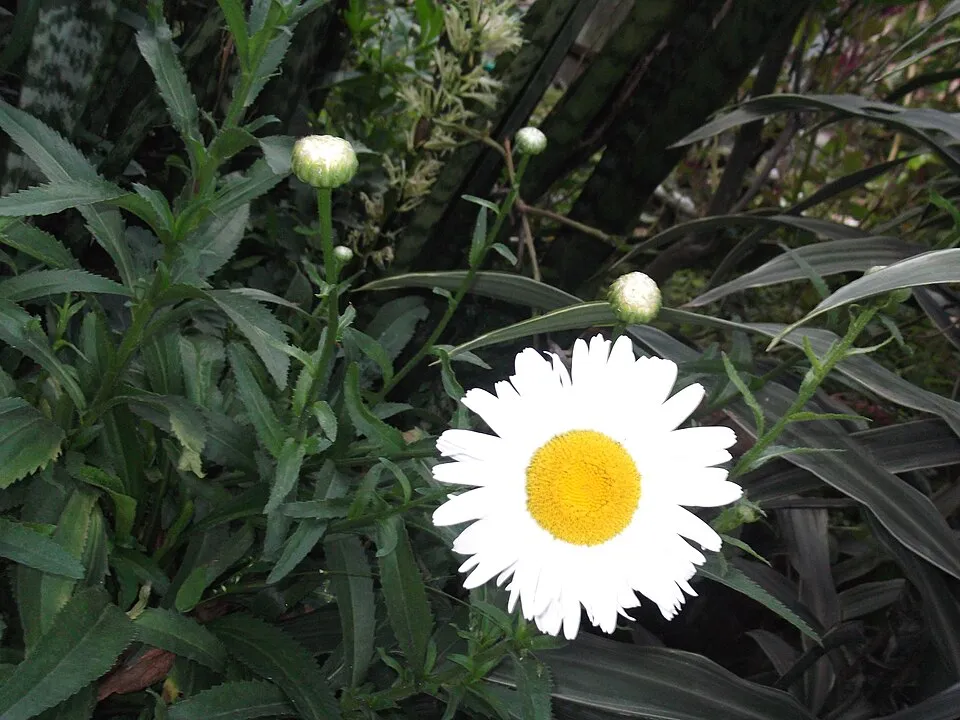
Chrysanthemum Maximum, commonly known as the Shasta Daisy, is a robust herbaceous perennial admired for its striking, large, daisy-like flowers. While primarily cultivated for ornamental purposes, it belongs to the diverse Chrysanthemum genus, many species of which, notably C. morifolium, are revered in traditional medicine.
Morphologically, Chrysanthemum Maximum typically reaches a mature height of 30 to 90 centimeters (1 to 3 feet) and exhibits an upright, bushy growth habit with strong, erect stems. Its leaves are generally lanceolate to ovate, measuring between 5 to 15 centimeters in length, arranged alternately along the stem, and feature a dark green, slightly glossy surface with distinct serrated margins. The plant produces solitary flower heads, characterized by numerous white ray florets surrounding a prominent yellow disc of tubular florets, creating a classic daisy appearance.
These flowers are not only visually appealing but also attract a variety of pollinators, including bees and butterflies, contributing to garden biodiversity.
Native to regions with temperate climates, Chrysanthemum Maximum thrives in sunny locations with well-drained soil rich in organic matter. It is widely distributed across gardens and landscapes globally due to its hardiness and aesthetic appeal. While specific medicinal research on C.
Maximum is less extensive than on its Asian counterparts, the genus Chrysanthemum as a whole is recognized for its valuable phytochemical profile. The plant's adaptability to various growing conditions, coupled with its ecological role in supporting pollinators, makes it a beneficial addition to both ornamental and functional garden designs.
Trusted Scientific References
1. Authoritative external sources for Chrysanthemum Maximum
1.1 Wikipedia — Chrysanthemum Maximum
1.2 Kew POWO (Plants of the World Online)
1.3 PubMed — peer-reviewed research
1.4 NCBI Taxonomy Browser
1.5 GBIF — Global Biodiversity
1.6Chrysanthemum Maximum should be interpreted through verified botanical identity, practical care, and responsible safety language. This recovery note adds the missing context needed for a complete profile: match light to the plant's habit, use well-drained soil, water according to season, and avoid unsupported medicinal or edible claims. For publishing, the plant can be presented as a source-backed garden plant with clear care guidance, common problem diagnosis, and conservative safety wording.
1.1.Chrysanthemum Maximum — Key Features
- ✓ <strong>Ornamental Value</strong> — Widely cultivated for its large, attractive, daisy-like flowers.
- ✓ <strong>Anti</strong> — inflammatory — Contains compounds that effectively help reduce inflammation.
- ✓ <strong>Antioxidant Rich</strong> — High in flavonoids and phenolic acids that combat oxidative stress.
- ✓ <strong>Cardiovascular Support</strong> — May improve blood flow and assist in regulating blood pressure.
- ✓ <strong>Traditional Chinese Medicine (TCM)</strong> — An integral herb for 'clearing heat' and supporting vision.
- ✓ <strong>Respiratory Aid</strong> — Traditionally used to soothe symptoms of colds, flu, and mild respiratory ailments.
- ✓ <strong>Pollinator Attractor</strong> — Its flowers are a magnet for bees and butterflies, enhancing garden biodiversity.
- ✓ <strong>Adaptable Growth</strong> — Tolerates a range of garden conditions with proper care and soil.
- ✓ <strong>Herbal Tea Ingredient</strong> — Flowers are commonly used to brew medicinal and refreshing teas.
- ✓ <strong>Metabolic Health</strong> — Explored for its potential benefits in supporting healthy blood sugar levels.
1.2.Chrysanthemum Maximum — Quick Summary
- ✓ Botanical Identity — Chrysanthemum Maximum, a beautiful perennial and member of the diverse *Chrysanthemum* genus.
- ✓ Medicinal Uses — Renowned for its anti-inflammatory, antioxidant, and cardiovascular support properties.
- ✓ Key Compounds — Rich in flavonoids, phenolic acids, and sesquiterpene lactones.
- ✓ Traditional Applications — Valued in Traditional Chinese Medicine for 'clearing heat,' supporting eye health, and respiratory relief.
- ✓ Cultivation — Thrives in well-drained soil and full sun, requiring regular watering.
- ✓ Safety Considerations — Potential for allergic reactions and photosensitivity; avoid during pregnancy and breastfeeding.
2.Chrysanthemum Maximum — Scientific Identity
3.Chrysanthemum Maximum — Quick Facts
4.Chrysanthemum Maximum — Appearance & Identification
5.Chrysanthemum Maximum — Native Habitat
6.Chrysanthemum Maximum — Water Requirements
- ✓ Soil Preference — Thrives in well-drained, fertile loamy soil with a neutral to slightly acidic pH (6.0-7.0), enriched with abundant organic matter.
- ✓ Light Requirements — Prefers full sun exposure, ideally receiving at least 6 hours of direct sunlight daily, though it can tolerate partial shade in hotter climates.
- ✓ Watering Schedule — Requires consistent and regular watering, especially during dry spells and its active growth and flowering periods, ensuring soil remains moist but not waterlogged.
- ✓ Propagation — Can be readily propagated from seeds sown in spring, by division of mature clumps every 2-3 years, or via stem cuttings taken in early summer.
- ✓ Fertilization — Benefits from a balanced granular fertilizer application in early spring and again mid-season, or a diluted liquid feed every 2-4 weeks during blooming.
- ✓ Pest and Disease Management — Generally robust, but monitor for common garden pests like aphids, spider mites, and leaf miners, and treat with organic solutions when possible.
- ✓ Pruning and Deadheading — Deadhead spent flowers regularly to encourage continuous blooming and prevent self-seeding; cut back foliage in late fall or early spring to promote vigorous new growth.
- ✓ Climate Adaptation — Best suited for USDA hardiness zones 5-9, exhibiting good cold hardiness and heat tolerance within these ranges with proper care.
Reviewed by the Flora Medical Global Botanical Review Panel
Multi-disciplinary editorial group · Botany · Ethnobotany · Herbal-medicine literature
Who reviewed this: This page was checked by the Flora Medical Global Botanical Review Panel — an in-house editorial group of botany graduates, ethnobotany researchers, and horticulture practitioners who collectively maintain our 7,000+ plant encyclopedia. Meet the team.
Our 4-step verification process
1. Taxonomic verification
Scientific names and synonyms cross-checked against Kew POWO, World Flora Online, and The Plant List.
2. Phytochemical & medicinal cross-reference
Active compounds, traditional uses, and reported activities are cross-referenced with PubMed, USDA Dr. Duke's database, and peer-reviewed ethnobotanical literature.
3. Conservation & distribution check
Distribution, ecology, and conservation status confirmed against GBIF occurrence records and the IUCN Red List.
4. Editorial & safety review
Every entry passes an editorial pass for clarity, originality, and safety notices (toxicity, contraindications, dosage caveats) before publication.
Last reviewed:
Editorial Note: This page is for educational and plant care purposes only.
Written by: Flora Medical Global Editorial Team
Reviewed by: Flora Medical Global Botanical Review Panel
Last Updated: June 15, 2026







Chrysanthemum Maximum — Comments & Community Reviews
Rate this plant