
Care Disclaimer: Plant care recommendations are general guidelines based on common growing conditions. Individual results may vary based on your local environment, climate, and care routine. If your plant is toxic, keep it away from children and pets, and consult a veterinarian if accidental ingestion occurs.
1.Clematis — Overview
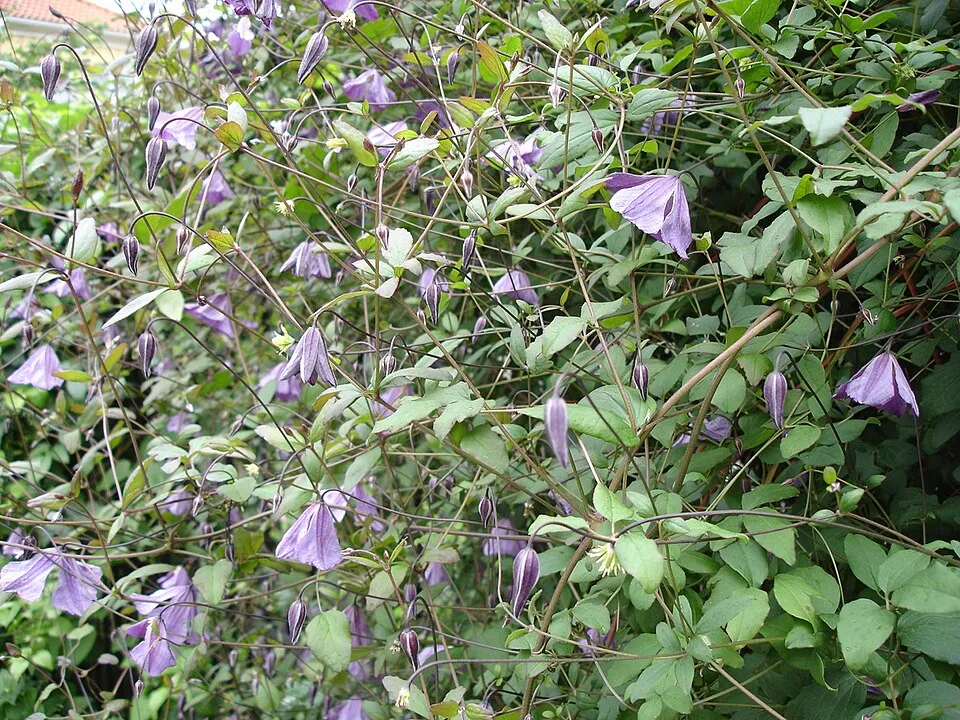
Clematis viticella, commonly known as Italian clematis or Virgin's Bower, is a captivating perennial flowering vine indigenous to Southern Europe and extending into parts of Western Asia, encompassing regions such as Turkey and the Caucasus. As a distinguished member of the diverse Ranunculaceae family, which includes numerous ornamental and medicinally significant plants, this elegant climber typically achieves heights of 2 to 3 meters (6 to 10 feet).
It skillfully utilizes its specialized petioles, or leaf stalks, to twine and grip onto various supporting structures like trellises, fences, or other vegetation. Its stems are initially herbaceous and slender, gradually developing into a more woody and resilient structure towards the base as the plant matures.
The foliage of Clematis viticella is characterized by attractive, compound leaves, generally arranged oppositely along the stem. Each leaf typically comprises three to five ovate-lanceolate leaflets, notable for their smooth margins and vibrant green coloration. The plant's most striking feature is its abundant display of showy, nodding flowers, which adorn the vine from early summer, typically June, through to early autumn, often extending into September.
These blossoms are renowned for their simple yet elegant form, usually consisting of four broad, petal-like sepals that serve as the primary visual attraction, as true petals are either absent or significantly reduced. Flower colors exhibit wide variation among cultivars, ranging from rich shades of purple, deep blue, and rosy pink to pure white, frequently complemented by contrasting stamens that enhance their allure. The fruit produced by the Italian clematis is an achene, typically bearing a characteristic feathery, persistent style that facilitates wind dispersal.
Ecologically, Clematis viticella thrives in a variety of natural habitats, demonstrating a preference for well-drained soils found in woodlands, along hedgerows, in scrubland, and on rocky slopes. Its adaptability to both full sun and partial shade contributes significantly to its widespread cultivation as an ornamental plant.
Trusted Scientific References
1. Authoritative external sources for Clematis viticella
1.1 Wikipedia — Clematis viticella
1.2 Kew POWO (Plants of the World Online)
1.3 PubMed — peer-reviewed research
1.4 NCBI Taxonomy Browser
1.5 GBIF — Global Biodiversity
1.1.Clematis — Key Features
- ✓ <strong>Botanical Beauty</strong> — Known for its captivating, showy flowers in various shades of purple, blue, pink, and white.
- ✓ <strong>Climbing Habit</strong> — A perennial vine that uses petioles to climb, reaching 2-3 meters.
- ✓ <strong>Ranunculaceae Family</strong> — Member of the buttercup family, which includes both ornamental and toxic species.
- ✓ <strong>Native to Europe/Asia</strong> — Indigenous to Southern Europe and parts of Western Asia.
- ✓ <strong>Protoanemonin Content</strong> — Contains a highly irritant and toxic compound in its fresh form.
- ✓ <strong>Traditional Medicinal History</strong> — Historically used in folk medicine for joint pain, skin issues, and other ailments.
- ✓ <strong>High Toxicity</strong> — Fresh plant is severely toxic if ingested or applied topically.
- ✓ <strong>Insufficient Safety Data</strong> — Limited scientific evidence on the safety and efficacy of dried preparations.
- ✓ <strong>Ornamental Value</strong> — Primarily cultivated worldwide for its aesthetic appeal in gardens.
- ✓ <strong>Adaptable Growth</strong> — Thrives in well-drained soils, tolerating full sun to partial shade.
1.2.Clematis — Quick Summary
- ✓ Clematis viticella is a beautiful ornamental vine with historical but highly risky medicinal uses.
- ✓ The fresh plant contains protoanemonin, a potent irritant and toxin.
- ✓ Traditional uses include topical application for joint pain and skin conditions, and internal use for various ailments.
- ✓ Fresh Clematis is UNSAFE for both oral and topical use, causing severe irritation and systemic poisoning.
- ✓ Safety of dried Clematis is not established; therefore, use is NOT recommended.
- ✓ Always consult a healthcare professional before considering any Clematis preparation.
2.Clematis — Scientific Identity
3.Clematis — Quick Facts
4.Clematis — Appearance & Identification
5.Clematis — Native Habitat
6.Clematis — Water Requirements
- ✓ Site Selection — Choose a location with full sun to partial shade, ensuring the plant receives at least 6 hours of sunlight daily for optimal flowering.
- ✓ Soil Requirements — Plant in well-drained, fertile soil that is rich in organic matter. Clematis prefers a neutral to slightly alkaline pH.
- ✓ Support Structure — Provide a sturdy trellis, arbor, fence, or other support for the vine to climb, as it uses its petioles to cling.
- ✓ Watering — Maintain consistent moisture, especially during dry periods, but avoid waterlogging. Deep watering is more effective than frequent shallow watering.
- ✓ Mulching — Apply a layer of organic mulch around the base to keep the roots cool and moist, mimicking its natural woodland habitat.
- ✓ Pruning — Prune in late winter or early spring to remove dead or weak stems and encourage vigorous new growth and abundant flowering.
- ✓ Fertilization — Feed with a balanced, slow-release fertilizer in spring, or a high-potash fertilizer to promote blooms.
- ✓ Pest and Disease Management — Monitor for common pests like aphids and powdery mildew, treating as necessary with appropriate organic or chemical controls.
Reviewed by the Flora Medical Global Botanical Review Panel
Multi-disciplinary editorial group · Botany · Ethnobotany · Herbal-medicine literature
Who reviewed this: This page was checked by the Flora Medical Global Botanical Review Panel — an in-house editorial group of botany graduates, ethnobotany researchers, and horticulture practitioners who collectively maintain our 7,000+ plant encyclopedia. Meet the team.
Our 4-step verification process
1. Taxonomic verification
Scientific names and synonyms cross-checked against Kew POWO, World Flora Online, and The Plant List.
2. Phytochemical & medicinal cross-reference
Active compounds, traditional uses, and reported activities are cross-referenced with PubMed, USDA Dr. Duke's database, and peer-reviewed ethnobotanical literature.
3. Conservation & distribution check
Distribution, ecology, and conservation status confirmed against GBIF occurrence records and the IUCN Red List.
4. Editorial & safety review
Every entry passes an editorial pass for clarity, originality, and safety notices (toxicity, contraindications, dosage caveats) before publication.
Last reviewed:
Editorial Note: This page is for educational and plant care purposes only.
Written by: Flora Medical Global Editorial Team
Reviewed by: Flora Medical Global Botanical Review Panel
Last Updated: June 15, 2026







Clematis — Comments & Community Reviews
Rate this plant