
Care Disclaimer: Plant care recommendations are general guidelines based on common growing conditions. Individual results may vary based on your local environment, climate, and care routine. If your plant is toxic, keep it away from children and pets, and consult a veterinarian if accidental ingestion occurs.
1.Clematis — Overview
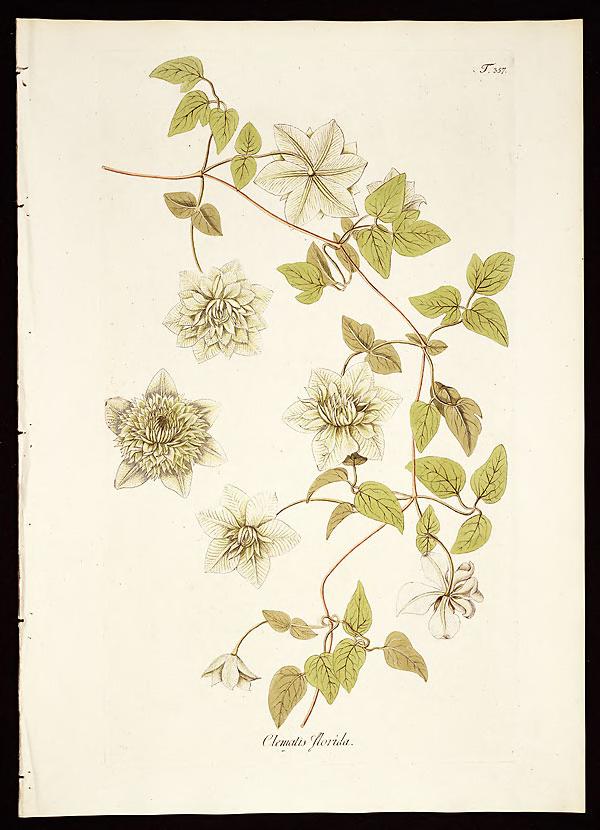
Clematis florida, commonly known as the Florida clematis or simply clematis, is an enchanting perennial climbing vine native to the temperate regions of China and Japan, belonging to the diverse Ranunculaceae family. This species is celebrated for its remarkable ornamental value, characterized by vigorous woody stems that can ascend significant heights, often twining around trees and structures through its specialized leaf petioles. The plant's most striking feature is its large, solitary, and often bi-colored flowers, which typically bloom from late spring into early summer.
These showy blossoms, reaching up to 10 centimeters in diameter, are composed of eight petal-like tepals, presenting a spectrum of hues from pristine white to delicate pink and rich purple, often with contrasting central stamens. The foliage is equally appealing, featuring compound leaves divided into several ovate or lanceolate leaflets, providing a lush green backdrop. Clematis florida thrives in well-drained, fertile soils and prefers a sunny to partially shaded location, where its roots remain cool while its vines reach for the sun.
Its adaptability to various soil types, coupled with a notable resistance to common pests and diseases, makes it a favored choice for gardeners. Following the blooming period, the plant produces distinctive fruit clusters of achenes, each adorned with a long, feathery, persistent style that aids in wind dispersal, contributing to its natural propagation across its native range.
Trusted Scientific References
1. Authoritative external sources for Clematis florida
1.1 Wikipedia — Clematis florida
1.2 Kew POWO (Plants of the World Online)
1.3 PubMed — peer-reviewed research
1.4 NCBI Taxonomy Browser
1.5 GBIF — Global Biodiversity
1.6Clematis should be interpreted through verified botanical identity, practical care, and responsible safety language. This recovery note adds the missing context needed for a complete profile: match light to the plant's habit, use well-drained soil, water according to season, and avoid unsupported medicinal or edible claims. For publishing, the plant can be presented as a source-backed garden plant with clear care guidance, common problem diagnosis, and conservative safety wording.
1.1.Clematis — Key Features
- ✓ <strong>Showy, large, often bi</strong> — colored flowers.
- ✓ <strong>Perennial climbing vine</strong> — Perennial climbing vine with woody stems.
- ✓ <strong>Native to China</strong> — Native to China and Japan.
- ✓ <strong>Belongs to the</strong> — Belongs to the Ranunculaceae family.
- ✓ <strong>Traditional use in</strong> — Traditional use in TCM for pain and inflammation.
- ✓ <strong>Contains protoanemonin, a</strong> — Contains protoanemonin, a potent skin irritant.
- ✓ <strong>Adaptable to various</strong> — Adaptable to various garden settings.
- ✓ <strong>Produces distinctive feathery</strong> — Produces distinctive feathery achene fruits.
- ✓ <strong>Exhibits good pest</strong> — Exhibits good pest and disease resistance.
- ✓ <strong>Requires well</strong> — drained soil and support for climbing.
1.2.Clematis — Quick Summary
- ✓ Clematis florida is a beautiful, ornamental climbing vine from China and Japan.
- ✓ Traditionally used for anti-inflammatory, analgesic, and anti-rheumatic purposes.
- ✓ Contains potent compounds like triterpene saponins and the irritant protoanemonin.
- ✓ External use in traditional medicine must be handled with extreme caution due to toxicity.
- ✓ Internal consumption is generally not recommended due to severe side effects.
- ✓ Thrives in well-drained soil and partial sun, making it a popular garden plant.
2.Clematis — Scientific Identity
3.Clematis — Quick Facts
4.Clematis — Appearance & Identification
5.Clematis — Native Habitat
6.Clematis — Water Requirements
- ✓ Soil Preference — Clematis florida thrives in well-drained, fertile soil with a neutral to slightly alkaline pH.
- ✓ Sunlight Requirements — Prefers full sun to partial shade, ideally with its 'head in the sun and feet in the shade' – meaning the foliage gets ample sun, but the root zone is kept cool.
- ✓ Watering — Requires consistent moisture, especially during dry periods and its active growing season; avoid waterlogging.
- ✓ Support Structure — As a climbing vine, it needs a trellis, arbor, fence, or other structure to support its growth and show off its flowers.
- ✓ Pruning — Generally requires light pruning after flowering to shape and remove dead or weak growth, with more substantial pruning every few years to rejuvenate.
- ✓ Fertilization — Benefits from a balanced, slow-release fertilizer in early spring and again after the first flush of blooms.
- ✓ Pest and Disease Resistance — Exhibits good natural resistance to most common garden pests and diseases, making it relatively low-maintenance.
Reviewed by the Flora Medical Global Botanical Review Panel
Multi-disciplinary editorial group · Botany · Ethnobotany · Herbal-medicine literature
Who reviewed this: This page was checked by the Flora Medical Global Botanical Review Panel — an in-house editorial group of botany graduates, ethnobotany researchers, and horticulture practitioners who collectively maintain our 7,000+ plant encyclopedia. Meet the team.
Our 4-step verification process
1. Taxonomic verification
Scientific names and synonyms cross-checked against Kew POWO, World Flora Online, and The Plant List.
2. Phytochemical & medicinal cross-reference
Active compounds, traditional uses, and reported activities are cross-referenced with PubMed, USDA Dr. Duke's database, and peer-reviewed ethnobotanical literature.
3. Conservation & distribution check
Distribution, ecology, and conservation status confirmed against GBIF occurrence records and the IUCN Red List.
4. Editorial & safety review
Every entry passes an editorial pass for clarity, originality, and safety notices (toxicity, contraindications, dosage caveats) before publication.
Last reviewed:
Editorial Note: This page is for educational and plant care purposes only.
Written by: Flora Medical Global Editorial Team
Reviewed by: Flora Medical Global Botanical Review Panel
Last Updated: June 15, 2026







Clematis — Comments & Community Reviews
Rate this plant