


Care Disclaimer: Plant care recommendations are general guidelines based on common growing conditions. Individual results may vary based on your local environment, climate, and care routine. If your plant is toxic, keep it away from children and pets, and consult a veterinarian if accidental ingestion occurs.
1.Clematis Heracleifolia — Overview
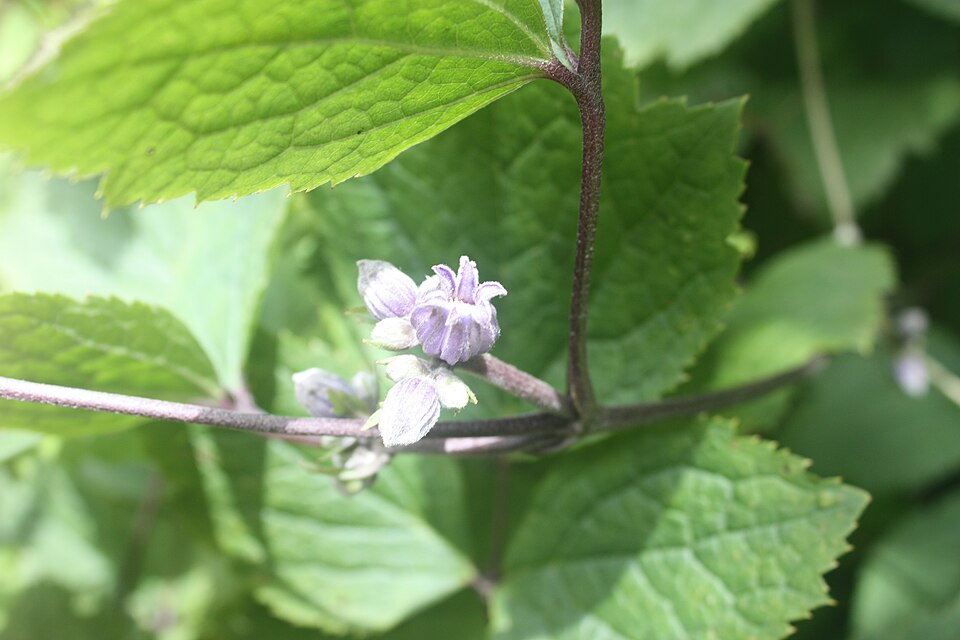
Clematis heracleifolia, often known as the tube clematis or herbaceous clematis, is a distinctive perennial herbaceous plant belonging to the Ranunculaceae family. Unlike its more commonly known climbing relatives, this species exhibits an upright, shrub-like growth habit, typically forming sturdy clumps that can reach heights of 60 to 120 cm (2 to 4 feet).
Its robust stems are adorned with large, deeply lobed leaves that resemble those of the genus Heracleum, hence its specific epithet 'heracleifolia'. The foliage provides a lush green backdrop throughout the growing season, turning to attractive autumnal hues in cooler climates.
Flowering occurs primarily in late summer to early autumn, distinguishing it from many spring-blooming clematis. Clematis heracleifolia produces charming, small, tubular, and often fragrant flowers that are typically blue or purplish-blue, arranged in dense, axillary clusters.
These unique flowers are a magnet for pollinators, including bees and butterflies, contributing significantly to garden biodiversity. Following successful pollination, the plant develops distinctive, fluffy seed heads that extend its ornamental interest well into winter.
Native to parts of East Asia, particularly China, Clematis heracleifolia thrives in temperate regions. It prefers well-drained, fertile soils rich in organic matter, with a slightly acidic to neutral pH. While it can tolerate partial shade, optimal flowering and growth are achieved in full sun.
Its hardiness and unique non-climbing form make it a valuable addition to perennial borders, woodland edges, or as a groundcover where its robust nature can be appreciated. The plant is relatively low-maintenance once established, requiring consistent moisture and protection from extreme heat or drought.
Trusted Scientific References
1. Authoritative external sources for Clematis Heracleifolia
1.1 Wikipedia — Clematis Heracleifolia
1.2 Kew POWO (Plants of the World Online)
1.3 PubMed — peer-reviewed research
1.4 NCBI Taxonomy Browser
1.5 GBIF — Global Biodiversity
1.1.Clematis Heracleifolia — Key Features
- ✓ <strong>Upright Growth Habit</strong> — Unique non-climbing form among Clematis species.
- ✓ <strong>Late Summer Blooms</strong> — Produces blue to purplish-blue tubular flowers from late summer to fall.
- ✓ <strong>Heracleum</strong> — like Leaves — Large, deeply lobed foliage resembling cow parsnip.
- ✓ <strong>Pollinator Attractor</strong> — Flowers are highly attractive to bees and butterflies.
- ✓ <strong>Ornamental and Medicinal</strong> — Valued for both aesthetic appeal and traditional herbal uses.
- ✓ <strong>Contains Saponins and Flavonoids</strong> — Key bioactive compounds contributing to its properties.
- ✓ <strong>Toxicity in Fresh Form</strong> — Fresh plant material is acrid and can cause skin irritation.
- ✓ <strong>Low Maintenance</strong> — Relatively easy to grow once established in suitable conditions.
- ✓ <strong>Cold Hardy</strong> — Tolerates a range of temperate climates.
- ✓ <strong>Distinctive Seed Heads</strong> — Fluffy achenes provide winter interest.
1.2.Clematis Heracleifolia — Quick Summary
- ✓ Upright, non-climbing herbaceous perennial with distinctive blue, tubular flowers.
- ✓ Traditionally used for anti-inflammatory, antioxidant, and digestive support.
- ✓ Contains irritant protoanemonin in fresh plant material; caution advised.
- ✓ Thrives in full sun to partial shade with well-drained, fertile soil.
- ✓ Important pollinator plant, adding late-season interest to gardens.
- ✓ Rich in flavonoids, saponins, and phenolic acids.
2.Clematis Heracleifolia — Scientific Identity
3.Clematis Heracleifolia — Quick Facts
4.Clematis Heracleifolia — Appearance & Identification
5.Clematis Heracleifolia — Native Habitat
6.Clematis Heracleifolia — Water Requirements
- ✓ Soil Preparation — Plant Clematis heracleifolia in rich, well-drained loamy soil with a pH between 6.0 and 7.0, amending with organic compost for fertility.
- ✓ Sunlight Requirements — Position the plant in full sun to partial shade; full sun promotes the most abundant flowering.
- ✓ Watering Regime — Maintain consistently moist soil, especially during dry periods, but ensure good drainage to prevent waterlogging.
- ✓ Fertilization — Apply a balanced organic fertilizer or compost in early spring to support vigorous growth and flowering.
- ✓ Pruning — Deadhead spent flowers to encourage further blooming and prune back dead or weak stems in late winter or early spring.
- ✓ Propagation — Can be propagated by division in early spring or by softwood cuttings taken in late spring to early summer.
- ✓ Pest and Disease Control — Generally resistant to most pests; ensure good air circulation to prevent fungal diseases like powdery mildew.
- ✓ Winter Care — In colder zones, apply a layer of mulch around the base to protect roots from severe freezing temperatures.
Reviewed by the Flora Medical Global Botanical Review Panel
Multi-disciplinary editorial group · Botany · Ethnobotany · Herbal-medicine literature
Who reviewed this: This page was checked by the Flora Medical Global Botanical Review Panel — an in-house editorial group of botany graduates, ethnobotany researchers, and horticulture practitioners who collectively maintain our 7,000+ plant encyclopedia. Meet the team.
Our 4-step verification process
1. Taxonomic verification
Scientific names and synonyms cross-checked against Kew POWO, World Flora Online, and The Plant List.
2. Phytochemical & medicinal cross-reference
Active compounds, traditional uses, and reported activities are cross-referenced with PubMed, USDA Dr. Duke's database, and peer-reviewed ethnobotanical literature.
3. Conservation & distribution check
Distribution, ecology, and conservation status confirmed against GBIF occurrence records and the IUCN Red List.
4. Editorial & safety review
Every entry passes an editorial pass for clarity, originality, and safety notices (toxicity, contraindications, dosage caveats) before publication.
Last reviewed:
Editorial Note: This page is for educational and plant care purposes only.
Written by: Flora Medical Global Editorial Team
Reviewed by: Flora Medical Global Botanical Review Panel
Last Updated: June 15, 2026







Clematis Heracleifolia — Comments & Community Reviews
Rate this plant