
Care Disclaimer: Plant care recommendations are general guidelines based on common growing conditions. Individual results may vary based on your local environment, climate, and care routine. If your plant is toxic, keep it away from children and pets, and consult a veterinarian if accidental ingestion occurs.
1.Clematis Recta — Overview
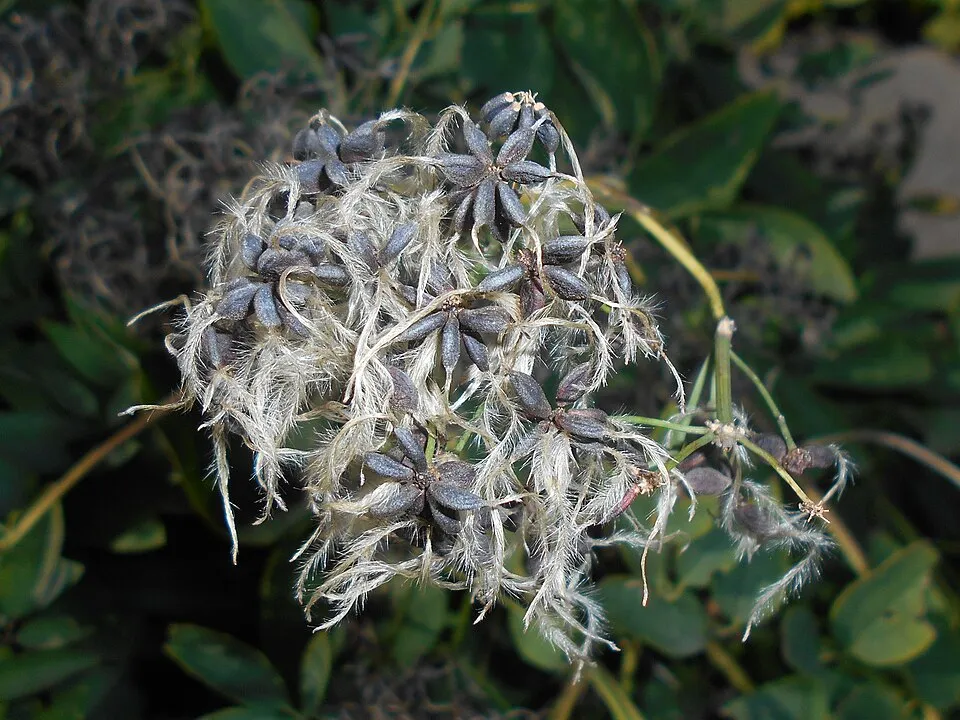
Clematis recta, commonly known as Bush Clematis or Ground Virginsbower, is a deciduous perennial herbaceous plant belonging to the Ranunculaceae family. Native to eastern, southern, and central Europe extending to the Caucasus region, its scientific epithet 'recta' is Latin for 'upright,' accurately describing its growth habit, which typically forms a bushy, non-climbing mound rather than a vining structure.
The plant typically reaches heights of 0.5 to 1.5 meters, presenting erect or slightly spreading stems that emerge from a fibrous root system.
The leaves of Clematis recta are arranged oppositely, pinnately compound, with ovate to lanceolate leaflets that often feature entire or subtly serrated margins and a lush green appearance. During the warmer months, typically from late spring to early summer, the plant produces an abundance of small, fragrant, star-shaped white flowers, often borne in dense, terminal panicles above the foliage.
These delicate blooms are highly attractive to various pollinators, including bees and butterflies, contributing significantly to garden biodiversity. Following flowering, attractive feathery seed heads develop, adding ornamental interest.
Clematis recta thrives in rich, well-drained soils and prefers full sun to partial shade. It demonstrates notable hardiness, capable of tolerating a range of environmental conditions, including short periods of drought once established, though it flourishes best with moderate moisture.
Its natural habitats include open fields, meadows, forest edges, and along roadsides, indicating its adaptability. While appreciated for its ornamental value in landscaping, providing ground cover or a bushy accent, it has also historically been recognized in traditional medicine, albeit with significant safety considerations due to its potent phytochemistry.
Trusted Scientific References
1. Authoritative external sources for Clematis Recta
1.1 Wikipedia — Clematis Recta
1.2 Kew POWO (Plants of the World Online)
1.3 PubMed — peer-reviewed research
1.4 NCBI Taxonomy Browser
1.5 GBIF — Global Biodiversity
1.1.Clematis Recta — Key Features
- ✓ <strong>Botanical Identity</strong> — Deciduous perennial herbaceous plant in the Ranunculaceae family.
- ✓ <strong>Growth Habit</strong> — Upright, bushy form, not a true climbing vine, typically 0.5-1.5 meters tall.
- ✓ <strong>Ornamental Value</strong> — Valued for abundant, fragrant white flowers and feathery seed heads.
- ✓ <strong>Native Range</strong> — Indigenous to central and southern Europe to the Caucasus.
- ✓ <strong>Key Phytochemistry</strong> — Contains ranunculin, which converts to the potent irritant protoanemonin when fresh.
- ✓ <strong>Traditional Uses</strong> — Historically applied topically for pain, gout, and skin issues; rarely ingested in dried forms.
- ✓ <strong>High Toxicity</strong> — Fresh plant material is highly toxic and irritant, causing severe blisters and internal distress.
- ✓ <strong>Safety Concerns</strong> — Considered unsafe for internal use and direct topical application, especially when fresh.
- ✓ <strong>Pollinator Friendly</strong> — Flowers attract bees and butterflies, contributing to garden biodiversity.
- ✓ <strong>SEO Focus</strong> — Important to highlight both traditional applications and critical safety warnings for users searching for 'Clematis recta benefits' or 'Clematis recta side effects'.
1.2.Clematis Recta — Quick Summary
- ✓ Clematis recta is a European perennial known as Bush Clematis, famed for its upright habit and white flowers.
- ✓ Traditionally used for joint pain, headaches, and skin conditions, but with significant safety warnings.
- ✓ Contains highly irritant compounds like protoanemonin, especially when fresh.
- ✓ Fresh plant is considered unsafe for internal or topical use, causing severe irritation and blistering.
- ✓ Lack of scientific evidence supports its efficacy for medicinal claims.
- ✓ Avoid during pregnancy, breastfeeding, and for internal use; use extreme caution with any external application.
2.Clematis Recta — Scientific Identity
3.Clematis Recta — Quick Facts
4.Clematis Recta — Appearance & Identification
5.Clematis Recta — Native Habitat
6.Clematis Recta — Water Requirements
- ✓ Soil Preference — Thrives in rich, well-drained soils with a neutral to slightly alkaline pH.
- ✓ Light Requirements — Prefers full sun to partial shade for optimal growth and flowering.
- ✓ Watering — Requires moderate moisture, especially during dry spells; tolerates short periods of drought once established.
- ✓ Propagation — Can be propagated by seed, division in early spring, or stem cuttings.
- ✓ Pruning — Benefits from pruning in late winter or early spring to remove dead wood and encourage bushy growth.
- ✓ Hardiness — Generally hardy in USDA zones 3-8, tolerating cold winters.
- ✓ Pest and Disease Control — Relatively resistant to most pests and diseases, but good air circulation helps prevent fungal issues.
- ✓ Habitat Mimicry — Mimic its natural habitat of open fields and forest edges by providing adequate space and sunlight.
Reviewed by the Flora Medical Global Botanical Review Panel
Multi-disciplinary editorial group · Botany · Ethnobotany · Herbal-medicine literature
Who reviewed this: This page was checked by the Flora Medical Global Botanical Review Panel — an in-house editorial group of botany graduates, ethnobotany researchers, and horticulture practitioners who collectively maintain our 7,000+ plant encyclopedia. Meet the team.
Our 4-step verification process
1. Taxonomic verification
Scientific names and synonyms cross-checked against Kew POWO, World Flora Online, and The Plant List.
2. Phytochemical & medicinal cross-reference
Active compounds, traditional uses, and reported activities are cross-referenced with PubMed, USDA Dr. Duke's database, and peer-reviewed ethnobotanical literature.
3. Conservation & distribution check
Distribution, ecology, and conservation status confirmed against GBIF occurrence records and the IUCN Red List.
4. Editorial & safety review
Every entry passes an editorial pass for clarity, originality, and safety notices (toxicity, contraindications, dosage caveats) before publication.
Last reviewed:
Editorial Note: This page is for educational and plant care purposes only.
Written by: Flora Medical Global Editorial Team
Reviewed by: Flora Medical Global Botanical Review Panel
Last Updated: June 15, 2026







Clematis Recta — Comments & Community Reviews
Rate this plant