
Care Disclaimer: Plant care recommendations are general guidelines based on common growing conditions. Individual results may vary based on your local environment, climate, and care routine. If your plant is toxic, keep it away from children and pets, and consult a veterinarian if accidental ingestion occurs.
1.Cobaea Scandens — Overview
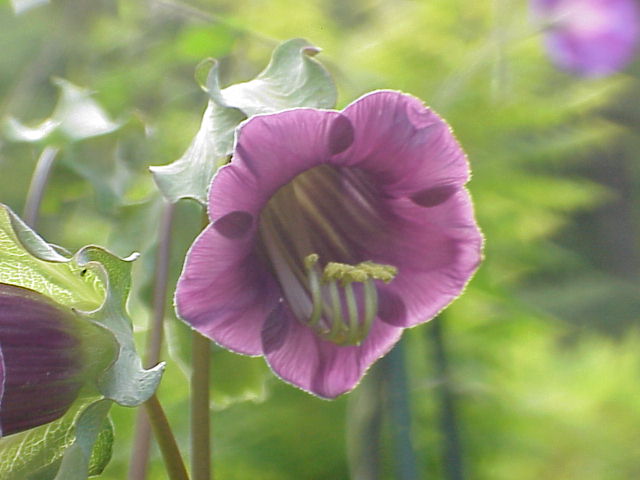
Cobaea scandens, widely recognized as Cathedral Bells or the Cup-and-Saucer Vine, is a captivating perennial climbing vine belonging to the Polemoniaceae family. Native to Central America, specifically Mexico and Guatemala, this plant thrives in tropical and subtropical forested areas and disturbed habitats, where its vigorous stems can ascend impressive heights of up to 20 meters (approximately 65 feet) with adequate support.
The plant exhibits a strong twining growth habit, gracefully wrapping its tendrils around structures as it climbs. Its foliage consists of lush, dark green compound leaves, typically comprising three distinct leaflets, which provide a verdant backdrop for its spectacular blooms.
The most striking feature of Cobaea scandens is its large, bell-shaped flowers, measuring about 5-7 cm (2-3 inches) in length. These exquisite blossoms display a spectrum of colors, ranging from pristine white to various shades of purple and even blue, with the deep purple varieties being the most commonly cultivated. Each flower is characterized by its distinctively protruding stamens and a prominent, saucer-like green calyx that cradles the bell.
Blooming predominantly occurs during the warmer months of summer and fall, attracting a host of pollinators, including buzzing bees and agile hummingbirds. Following successful pollination, the plant produces a capsule-like fruit that matures and bursts open, releasing numerous seeds capable of readily germinating under suitable environmental conditions. Beyond its botanical intrigue, Cobaea scandens is highly prized in horticulture for its rapid growth and exceptional ornamental qualities, making it an ideal choice for adorning trellises, archways, pergolas, and fences, thereby enhancing garden aesthetics and supporting local biodiversity.
Trusted Scientific References
1. Authoritative external sources for Cobaea scandens
1.1 Wikipedia — Cobaea scandens
1.2 Kew POWO (Plants of the World Online)
1.3 PubMed — peer-reviewed research
1.4 NCBI Taxonomy Browser
1.5 GBIF — Global Biodiversity
1.1.Cobaea Scandens — Key Features
- ✓ <strong>Deciduous to semi</strong> — evergreen vigorous climbing vine.
- ✓ <strong>Distinctive large, bell</strong> — shaped flowers with prominent stamens.
- ✓ <strong>Flower colors range from lavender</strong> — purple to white and greenish-cream.
- ✓ <strong>Features lush, dark</strong> — Features lush, dark green compound foliage.
- ✓ <strong>Rapid growth habit, capable of reaching 10</strong> — 20 feet (3-6 meters) annually.
- ✓ <strong>Highly valued for</strong> — Highly valued for its ornamental appeal on trellises, arbors, and fences.
- ✓ <strong>Attracts essential pollinators</strong> — Attracts essential pollinators such as hummingbirds and bees.
- ✓ <strong>Bears a unique,</strong> — Bears a unique, somewhat musky fragrance, especially from fresh flowers.
- ✓ <strong>Awarded the Royal</strong> — Awarded the Royal Horticultural Society's prestigious Award of Garden Merit.
- ✓ <strong>Native to tropical</strong> — Native to tropical regions of Mexico and Central America.
1.2.Cobaea Scandens — Quick Summary
- ✓ Vigorous ornamental climbing vine known for its striking bell-shaped flowers.
- ✓ Native to Mexico and Central America, thriving in warm, frost-free climates.
- ✓ Contains phytochemicals like flavonoids, saponins, and glycosides, yet lacks established traditional medicinal uses.
- ✓ Primarily cultivated for aesthetic appeal in gardens, trellises, and archways.
- ✓ Prefers full sun to partial shade and moist, well-drained, organically rich soil.
- ✓ Propagation is commonly done via seeds or softwood cuttings, showing rapid establishment.
2.Cobaea Scandens — Scientific Identity
3.Cobaea Scandens — Quick Facts
4.Cobaea Scandens — Appearance & Identification
5.Cobaea Scandens — Native Habitat
6.Cobaea Scandens — Water Requirements
- ✓ Soil Requirements — Thrives in moist, well-drained soils that are rich in organic matter, which supports its vigorous growth and nutrient uptake.
- ✓ Light and Location — Prefers full sun exposure for optimal flowering, but benefits from some afternoon shade in regions with intensely hot summer climates to prevent leaf scorch.
- ✓ Planting Time — Best planted in the spring after all danger of frost has definitively passed, allowing the vine ample time to establish itself before the peak growing season.
- ✓ Watering Practices — Requires consistent and regular watering, especially crucial during dry periods and throughout its initial year of establishment, to maintain vigorous growth.
- ✓ Fertilization — Apply a balanced fertilizer every few weeks during the active growing season to promote abundant blooming; however, avoid excessive fertilization which can favor foliage over flowers.
- ✓ Pruning and Maintenance — For evergreen specimens, prune in late winter to shape the plant and remove any diseased or dead growth; regular trimming helps manage its rapid climbing habit.
- ✓ Propagation — Can be readily propagated from seeds, which germinate indoors within approximately 14 days when kept warm (68-72°F or 20-22°C), or via softwood cuttings.
- ✓ Air Circulation — Ensure adequate air circulation around the plant, particularly in humid environments, to minimize the risk of fungal issues such as powdery mildew.
Reviewed by the Flora Medical Global Botanical Review Panel
Multi-disciplinary editorial group · Botany · Ethnobotany · Herbal-medicine literature
Who reviewed this: This page was checked by the Flora Medical Global Botanical Review Panel — an in-house editorial group of botany graduates, ethnobotany researchers, and horticulture practitioners who collectively maintain our 7,000+ plant encyclopedia. Meet the team.
Our 4-step verification process
1. Taxonomic verification
Scientific names and synonyms cross-checked against Kew POWO, World Flora Online, and The Plant List.
2. Phytochemical & medicinal cross-reference
Active compounds, traditional uses, and reported activities are cross-referenced with PubMed, USDA Dr. Duke's database, and peer-reviewed ethnobotanical literature.
3. Conservation & distribution check
Distribution, ecology, and conservation status confirmed against GBIF occurrence records and the IUCN Red List.
4. Editorial & safety review
Every entry passes an editorial pass for clarity, originality, and safety notices (toxicity, contraindications, dosage caveats) before publication.
Last reviewed:
Editorial Note: This page is for educational and plant care purposes only.
Written by: Flora Medical Global Editorial Team
Reviewed by: Flora Medical Global Botanical Review Panel
Last Updated: June 15, 2026







Cobaea Scandens — Comments & Community Reviews
Rate this plant