
Care Disclaimer: Plant care recommendations are general guidelines based on common growing conditions. Individual results may vary based on your local environment, climate, and care routine. If your plant is toxic, keep it away from children and pets, and consult a veterinarian if accidental ingestion occurs.
1.Coreopsis Tinctoria — Overview
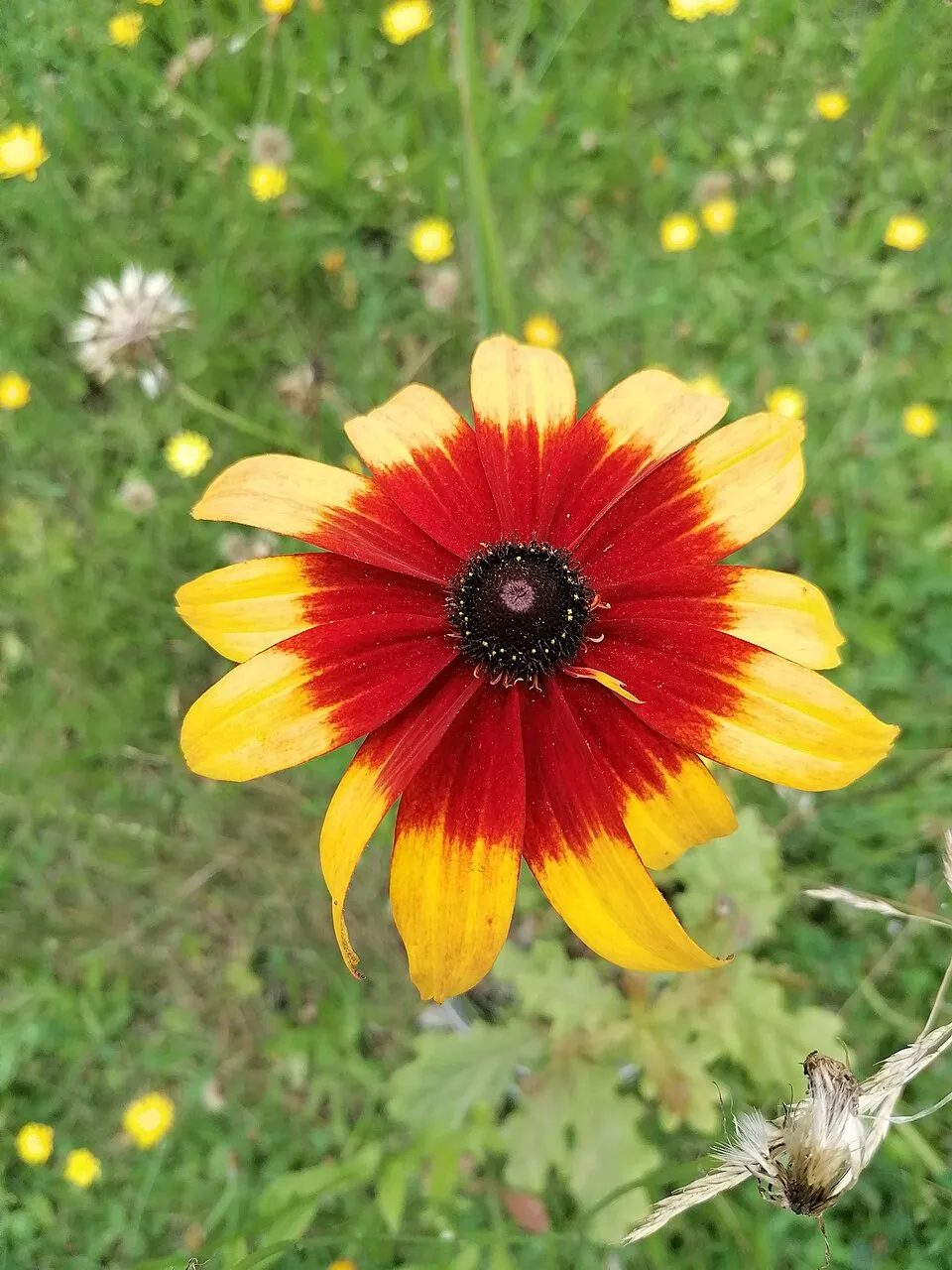
Coreopsis tinctoria, commonly known as Plains Coreopsis or Golden Tickseed, is a vibrant annual herbaceous plant belonging to the Asteraceae family. Native to the central and southern United States and Mexico, it has become widely naturalized across various continents, often thriving in disturbed areas, open fields, meadows, and along roadsides. This species typically grows to a height of 30-100 cm, featuring slender, branching stems and finely divided, linear to lanceolate leaves arranged alternately along the stem.
Its most striking feature is its profusion of daisy-like flower heads, which bloom from late spring through fall. The composite flowers are typically bicolored, displaying bright yellow rays with a distinctive reddish-brown or maroon center, though variations exist. Each flower head measures about 2-4 cm in diameter and attracts a diverse array of pollinators, including bees and butterflies, contributing significantly to local biodiversity.
The plant is well-adapted to various soil types, preferring full sun and demonstrating remarkable drought tolerance once established, making it a resilient and popular choice for ornamental gardens and ecological restoration projects alike. Its widespread distribution and adaptability underscore its ecological importance.
Trusted Scientific References
1. Authoritative external sources for Coreopsis Tinctoria
1.1 Wikipedia — Coreopsis Tinctoria
1.2 Kew POWO (Plants of the World Online)
1.3 PubMed — peer-reviewed research
1.4 NCBI Taxonomy Browser
1.5 GBIF — Global Biodiversity
1.6Coreopsis Tinctoria should be interpreted through verified botanical identity, practical care, and responsible safety language. This recovery note adds the missing context needed for a complete profile: match light to the plant's habit, use well-drained soil, water according to season, and avoid unsupported medicinal or edible claims. For publishing, the plant can be presented as a source-backed garden plant with clear care guidance, common problem diagnosis, and conservative safety wording.
1.1.Coreopsis Tinctoria — Key Features
- ✓ <strong>Annual Flowering Herb</strong> — Completes its life cycle within one year, blooming profusely.
- ✓ <strong>Striking Bicolored Flowers</strong> — Characterized by bright yellow ray florets and reddish-brown central disk florets.
- ✓ <strong>Part of Asteraceae Family</strong> — Belongs to the large daisy family, sharing common botanical traits.
- ✓ <strong>Native to North America</strong> — Indigenous to the central and southern regions of the continent.
- ✓ <strong>Potent Neuroprotective Agent</strong> — Shows promising effects in protecting neuronal cells and supporting brain health.
- ✓ <strong>Significant Antidiabetic Properties</strong> — Traditionally and scientifically recognized for its role in blood sugar regulation.
- ✓ <strong>Rich in Antioxidants</strong> — Contains high levels of flavonoids and phenolic acids combating oxidative stress.
- ✓ <strong>Drought</strong> — Tolerant and Resilient — Thrives in various conditions, making it easy to grow.
- ✓ <strong>Attracts Pollinators</strong> — A valuable plant for supporting local bee and butterfly populations.
- ✓ <strong>Potential for Cardiovascular Support</strong> — Preliminary evidence suggests benefits for blood pressure and lipid levels.
1.2.Coreopsis Tinctoria — Quick Summary
- ✓ Coreopsis tinctoria is an annual flowering herb of the Asteraceae family, known for its vibrant yellow and maroon flowers.
- ✓ It is extensively researched for its significant neuroprotective, antidiabetic, and antioxidant properties.
- ✓ The plant is rich in beneficial phytochemicals, particularly flavonoids like coreopsin, marein, and lanceoletin.
- ✓ Traditionally used in some Asian and North American medicinal systems for various health concerns.
- ✓ Easy to cultivate, it is valued both ornamentally and for its emerging medicinal potential.
- ✓ Requires cautious use, particularly for individuals with allergies or those on specific medications.
2.Coreopsis Tinctoria — Scientific Identity
3.Coreopsis Tinctoria — Quick Facts
4.Coreopsis Tinctoria — Appearance & Identification
5.Coreopsis Tinctoria — Native Habitat
6.Coreopsis Tinctoria — Water Requirements
- ✓ Sunlight — Coreopsis tinctoria thrives in full sun, requiring at least 6-8 hours of direct sunlight daily for optimal growth and flowering.
- ✓ Soil Requirements — It prefers well-drained, average to poor soil fertility. While adaptable, avoid heavy clay or overly rich soils which can lead to leggy growth.
- ✓ Watering — Once established, Coreopsis tinctoria is highly drought-tolerant. Water moderately during prolonged dry spells, ensuring the soil is allowed to dry out between waterings.
- ✓ Propagation — Primarily propagated by seeds. Sow seeds directly outdoors in early spring after the last frost or in late fall for spring germination. It readily self-seeds.
- ✓ Spacing — Plant seedlings or thin established plants to 15-30 cm apart to allow for proper air circulation and growth.
- ✓ Maintenance — Deadhead spent flowers regularly to encourage continuous blooming and prevent excessive self-seeding. No significant fertilization is typically required.
- ✓ Climate — An annual herb, it is adaptable to a wide range of climates but is sensitive to hard frosts. It completes its life cycle within one growing season.
Reviewed by the Flora Medical Global Botanical Review Panel
Multi-disciplinary editorial group · Botany · Ethnobotany · Herbal-medicine literature
Who reviewed this: This page was checked by the Flora Medical Global Botanical Review Panel — an in-house editorial group of botany graduates, ethnobotany researchers, and horticulture practitioners who collectively maintain our 7,000+ plant encyclopedia. Meet the team.
Our 4-step verification process
1. Taxonomic verification
Scientific names and synonyms cross-checked against Kew POWO, World Flora Online, and The Plant List.
2. Phytochemical & medicinal cross-reference
Active compounds, traditional uses, and reported activities are cross-referenced with PubMed, USDA Dr. Duke's database, and peer-reviewed ethnobotanical literature.
3. Conservation & distribution check
Distribution, ecology, and conservation status confirmed against GBIF occurrence records and the IUCN Red List.
4. Editorial & safety review
Every entry passes an editorial pass for clarity, originality, and safety notices (toxicity, contraindications, dosage caveats) before publication.
Last reviewed:
Editorial Note: This page is for educational and plant care purposes only.
Written by: Flora Medical Global Editorial Team
Reviewed by: Flora Medical Global Botanical Review Panel
Last Updated: June 15, 2026







Coreopsis Tinctoria — Comments & Community Reviews
Rate this plant