

Care Disclaimer: Plant care recommendations are general guidelines based on common growing conditions. Individual results may vary based on your local environment, climate, and care routine. If your plant is toxic, keep it away from children and pets, and consult a veterinarian if accidental ingestion occurs.
1.Cosmos Atrosanguineus — Overview
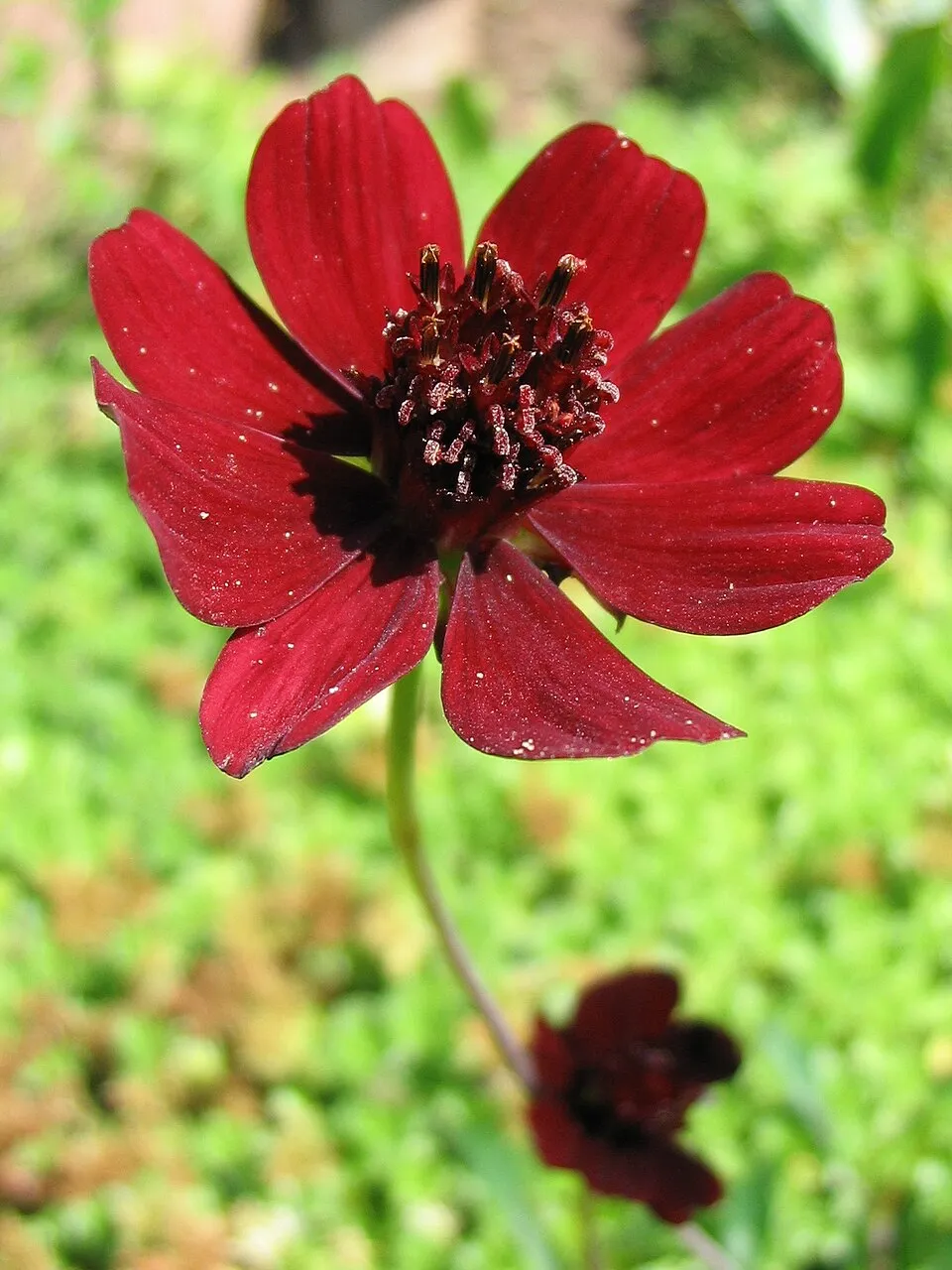
Cosmos Atrosanguineus, commonly known as Chocolate Cosmos, is a captivating perennial herb belonging to the Asteraceae family. This distinctive plant is characterized by its upright, slender stems, typically reaching heights of 40 to 60 centimeters. Its foliage consists of lanceolate to pinnatifid leaves, measuring approximately 5-15 cm in length, often exhibiting a deep green hue.
The most striking feature of Cosmos Atrosanguineus is its unique, velvety, dark reddish-brown to maroon flowers, which emit a delightful fragrance reminiscent of vanilla or dark chocolate, especially pronounced in warm afternoon sun. These solitary or loosely clustered blooms, about 3-5 cm in diameter, appear from mid-summer through autumn, attracting a variety of pollinators, including bees and butterflies, contributing significantly to garden biodiversity.
Native to Mexico, specifically the high pine-oak forests, Chocolate Cosmos thrives in well-drained, fertile soils with a preference for full sun exposure, though it can tolerate light partial shade. It is often found naturally in open woodlands and grasslands. As a tender perennial, it is typically grown as an annual in colder climates or overwintered indoors, as its tubers are not frost-hardy.
The plant forms a tuberous root system, which allows it to persist year after year in suitable environments. Its ornamental appeal, coupled with its distinctive aroma, makes it a cherished addition to borders, containers, and cut flower arrangements, offering both visual and olfactory delight.
Trusted Scientific References
1. Authoritative external sources for Cosmos Atrosanguineus
1.1 Wikipedia — Cosmos Atrosanguineus
1.2 Kew POWO (Plants of the World Online)
1.3 PubMed — peer-reviewed research
1.4 NCBI Taxonomy Browser
1.5 GBIF — Global Biodiversity
1.6Cosmos Atrosanguineus should be interpreted through verified botanical identity, practical care, and responsible safety language. This recovery note adds the missing context needed for a complete profile: match light to the plant's habit, use well-drained soil, water according to season, and avoid unsupported medicinal or edible claims. For publishing, the plant can be presented as a source-backed garden plant with clear care guidance, common problem diagnosis, and conservative safety wording.
1.1.Cosmos Atrosanguineus — Key Features
- ✓ <strong>Distinctive Chocolate Fragrance</strong> — Flowers emit a rich aroma reminiscent of dark chocolate or vanilla.
- ✓ <strong>Velvety Dark Red Flowers</strong> — Blooms are a striking deep reddish-brown to maroon color with a velvety texture.
- ✓ <strong>Ornamental Appeal</strong> — Highly valued for its unique beauty in gardens, borders, and containers.
- ✓ <strong>Pollinator Attractor</strong> — Flowers draw bees, butterflies, and other beneficial insects to the garden.
- ✓ <strong>Perennial in Warm Climates</strong> — Grown as a tender perennial, requiring winter protection in colder zones.
- ✓ <strong>Native to Mexico</strong> — Originates from high-altitude pine-oak forests of central Mexico.
- ✓ <strong>Asteraceae Family Member</strong> — Belongs to the daisy family, sharing characteristics with related species.
- ✓ <strong>Tuberous Root System</strong> — Develops underground tubers allowing for perennial growth and propagation.
- ✓ <strong>Moderate Size</strong> — Typically grows to 40-60 cm in height, suitable for various garden designs.
- ✓ <strong>Low Maintenance</strong> — Relatively easy to grow with proper soil and sun conditions.
1.2.Cosmos Atrosanguineus — Quick Summary
- ✓ Cosmos Atrosanguineus, known as Chocolate Cosmos, is a unique perennial from Mexico.
- ✓ Features velvety, dark red flowers with a distinct chocolate-vanilla fragrance.
- ✓ Traditionally used for inflammation, fever, skin issues, and digestive/respiratory support.
- ✓ Rich in flavonoids, terpenes, phenolic acids, and vanillin.
- ✓ Requires well-drained soil, full sun, and regular watering; not frost-hardy.
- ✓ Exercise caution for allergies and during pregnancy; consult a healthcare provider for medicinal use.
2.Cosmos Atrosanguineus — Scientific Identity
3.Cosmos Atrosanguineus — Quick Facts
4.Cosmos Atrosanguineus — Appearance & Identification
5.Cosmos Atrosanguineus — Native Habitat
6.Cosmos Atrosanguineus — Water Requirements
- ✓ Soil Preparation — Cosmos Atrosanguineus thrives in well-drained, fertile soil enriched with organic matter; a slightly acidic to neutral pH (6.0-7.0) is ideal.
- ✓ Sunlight Requirements — Provide full sun exposure for at least 6-8 hours daily to ensure vigorous growth and abundant flowering, though it tolerates light afternoon shade.
- ✓ Watering Regimen — Maintain consistent soil moisture, especially during dry spells, but avoid waterlogging; water deeply when the top inch of soil feels dry.
- ✓ Fertilization — Feed with a balanced liquid fertilizer every 2-4 weeks during the active growing season (spring to autumn) to promote flowering.
- ✓ Propagation — Propagate primarily from tubers in spring or from seeds, though seed viability can be low for cultivated varieties; stem cuttings can also be rooted.
- ✓ Pest and Disease Management — Generally robust, but monitor for aphids, slugs, and snails; ensure good air circulation to prevent fungal diseases like powdery mildew.
- ✓ Winter Care — In colder climates (below USDA Zone 7-8), lift tubers before the first frost and store in a cool, dry, dark place over winter to replant in spring.
- ✓ Pruning and Deadheading — Regularly deadhead spent flowers to encourage continuous blooming and prune leggy stems to maintain a bushy, compact form.
Reviewed by the Flora Medical Global Botanical Review Panel
Multi-disciplinary editorial group · Botany · Ethnobotany · Herbal-medicine literature
Who reviewed this: This page was checked by the Flora Medical Global Botanical Review Panel — an in-house editorial group of botany graduates, ethnobotany researchers, and horticulture practitioners who collectively maintain our 7,000+ plant encyclopedia. Meet the team.
Our 4-step verification process
1. Taxonomic verification
Scientific names and synonyms cross-checked against Kew POWO, World Flora Online, and The Plant List.
2. Phytochemical & medicinal cross-reference
Active compounds, traditional uses, and reported activities are cross-referenced with PubMed, USDA Dr. Duke's database, and peer-reviewed ethnobotanical literature.
3. Conservation & distribution check
Distribution, ecology, and conservation status confirmed against GBIF occurrence records and the IUCN Red List.
4. Editorial & safety review
Every entry passes an editorial pass for clarity, originality, and safety notices (toxicity, contraindications, dosage caveats) before publication.
Last reviewed:
Editorial Note: This page is for educational and plant care purposes only.
Written by: Flora Medical Global Editorial Team
Reviewed by: Flora Medical Global Botanical Review Panel
Last Updated: June 15, 2026







Cosmos Atrosanguineus — Comments & Community Reviews
Rate this plant