

Care Disclaimer: Plant care recommendations are general guidelines based on common growing conditions. Individual results may vary based on your local environment, climate, and care routine. If your plant is toxic, keep it away from children and pets, and consult a veterinarian if accidental ingestion occurs.
1.Crabapple — Overview
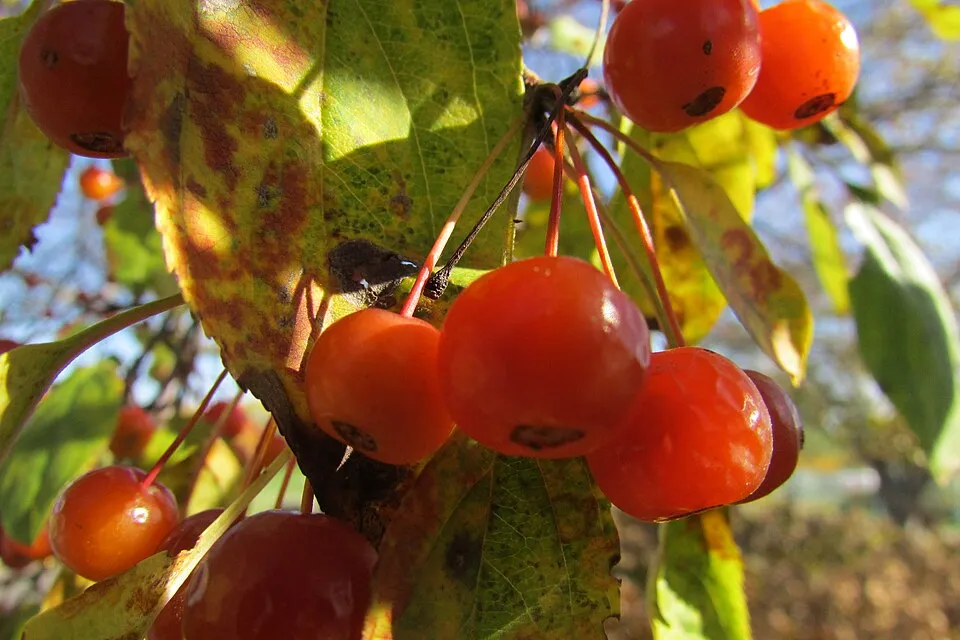
Crabapple, scientifically known as Malus floribunda, is a captivating deciduous tree that typically attains a height of 15 to 25 feet (4.5 to 7.5 meters) with a comparable spread, forming an elegant, rounded crown. Its dense branching structure provides significant visual interest throughout the seasons.
The leaves are characteristically ovate to elliptical, measuring approximately 2 to 5 inches (5 to 12 centimeters) long, displaying a vibrant glossy green in spring and summer before transitioning into striking hues of yellow and orange during the autumn. The bark presents as smooth gray in its juvenile stage, gradually developing a distinct rough, fissured texture as the tree matures.
Late spring heralds a spectacular bloom, with Malus floribunda producing an abundance of highly fragrant flowers, ranging from deep pink in bud to a softer pink or white upon opening. These delicate blossoms, usually about 1 inch (2.5 centimeters) in diameter, are a magnet for various pollinators, supporting local biodiversity. The tree yields small pome fruits, commonly referred to as crabapples, which are typically less than 2 inches (5 centimeters) in diameter.
These fruits mature from late summer into fall, exhibiting a palette of red, yellow, or green, and persist on the branches, providing a valuable food source for wildlife throughout the colder months. Native to Japan, Malus floribunda thrives across diverse environments, from lowland forests to more elevated mountainous regions, showcasing remarkable adaptability. Taxonomically, it is classified within the Rosaceae family and the Malus genus, underscoring its close genetic relationship to cultivated apples and other ornamental species.
This species is highly valued in horticulture for its aesthetic appeal and significant ecological contributions.
Trusted Scientific References
1. Authoritative external sources for Malus floribunda
1.1 Wikipedia — Malus floribunda
1.2 Kew POWO (Plants of the World Online)
1.3 PubMed — peer-reviewed research
1.4 NCBI Taxonomy Browser
1.5 GBIF — Global Biodiversity
1.1.Crabapple — Key Features
- ✓ <strong>Deciduous ornamental tree, reaching 15</strong> — 25 feet in height.
- ✓ <strong>Abundant, fragrant pink</strong> — to-white blossoms in late spring.
- ✓ <strong>Produces small, colorful</strong> — Produces small, colorful pome fruits (crabapples) in late summer to fall.
- ✓ <strong>Native to Japan,</strong> — Native to Japan, highly adaptable to various temperate climates.
- ✓ <strong>Fruit is a</strong> — Fruit is a valuable food source for wildlife, persisting into winter.
- ✓ <strong>Rich in beneficial</strong> — Rich in beneficial compounds, including potent antioxidants and dietary fiber.
- ✓ <strong>Traditional uses include</strong> — Traditional uses include digestive support and general well-being.
- ✓ <strong>Belongs to the</strong> — Belongs to the Rosaceae family, closely related to cultivated apples.
- ✓ <strong>Tolerant of a</strong> — Tolerant of a range of soil types, preferring full sun.
- ✓ <strong>Provides significant aesthetic</strong> — Provides significant aesthetic beauty and ecological benefits to landscapes.
1.2.Crabapple — Quick Summary
- ✓ Malus floribunda is an ornamental tree with significant ecological and potential medicinal value.
- ✓ Its small, tart fruits are rich in antioxidants, dietary fiber, and essential minerals.
- ✓ Traditionally recognized for supporting digestive health and overall well-being.
- ✓ Offers cardiovascular benefits through its fiber and antioxidant compounds.
- ✓ Fruits are versatile for culinary uses like jellies and preserves.
- ✓ Crucially, crabapple seeds contain toxic compounds and must never be consumed.
2.Crabapple — Scientific Identity
3.Crabapple — Quick Facts
4.Crabapple — Appearance & Identification
5.Crabapple — Native Habitat
6.Crabapple — Water Requirements
- ✓ Site Selection — Choose a location with full sun exposure for optimal flowering and fruiting, ideally with good air circulation to prevent fungal diseases.
- ✓ Soil Requirements — Crabapples thrive in medium to heavy soils that are somewhat poorly to well-drained, with a preferred pH of 5.5 or higher.
- ✓ Planting Technique — Plant bare-root seedlings in early spring into weed-free areas prepared a year in advance, ensuring the prepared radius is at least two feet larger than the root ball.
- ✓ Grafted Varieties — If planting grafted stock, ensure the graft union remains above ground level to prevent scion rooting and maintain cultivar characteristics.
- ✓ Watering and Mulching — Provide consistent moisture during establishment; mulching with organic materials like hay or wood shavings helps retain soil moisture and suppress weeds.
- ✓ Pruning Practices — Prune young trees to establish a strong central leader and remove branches forming narrow angles with the trunk; mature trees benefit from dormant pruning to remove dead, diseased, or crossing branches.
- ✓ Pest and Disease Management — Monitor for common issues like apple scab, fireblight, and insect pests; select disease-resistant cultivars when possible and practice good sanitation.
- ✓ Protection from Wildlife — In areas with high rabbit or deer populations, protect young trees with tree guards or fencing to prevent browsing damage.
Reviewed by the Flora Medical Global Botanical Review Panel
Multi-disciplinary editorial group · Botany · Ethnobotany · Herbal-medicine literature
Who reviewed this: This page was checked by the Flora Medical Global Botanical Review Panel — an in-house editorial group of botany graduates, ethnobotany researchers, and horticulture practitioners who collectively maintain our 7,000+ plant encyclopedia. Meet the team.
Our 4-step verification process
1. Taxonomic verification
Scientific names and synonyms cross-checked against Kew POWO, World Flora Online, and The Plant List.
2. Phytochemical & medicinal cross-reference
Active compounds, traditional uses, and reported activities are cross-referenced with PubMed, USDA Dr. Duke's database, and peer-reviewed ethnobotanical literature.
3. Conservation & distribution check
Distribution, ecology, and conservation status confirmed against GBIF occurrence records and the IUCN Red List.
4. Editorial & safety review
Every entry passes an editorial pass for clarity, originality, and safety notices (toxicity, contraindications, dosage caveats) before publication.
Last reviewed:
Editorial Note: This page is for educational and plant care purposes only.
Written by: Flora Medical Global Editorial Team
Reviewed by: Flora Medical Global Botanical Review Panel
Last Updated: June 15, 2026







Crabapple — Comments & Community Reviews
Rate this plant