

Care Disclaimer: Plant care recommendations are general guidelines based on common growing conditions. Individual results may vary based on your local environment, climate, and care routine. If your plant is toxic, keep it away from children and pets, and consult a veterinarian if accidental ingestion occurs.
1.Crossandra Infundibuliformis — Overview
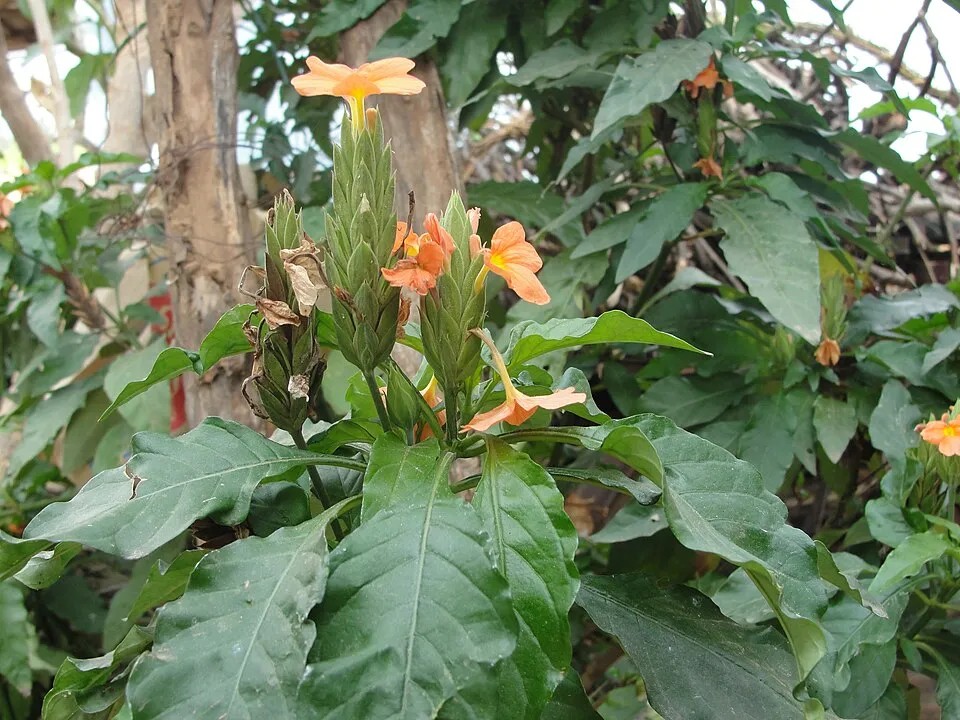
Crossandra infundibuliformis, commonly known as the Firecracker Flower or Aboli, is an exquisite perennial shrub native to the tropical and subtropical regions of Southern India and Sri Lanka. This elegant plant typically attains a modest height of 30 to 60 centimeters, presenting a bushy and compact growth habit. Its foliage consists of glossy, elliptical to lanceolate leaves, measuring approximately 5 to 12 centimeters in length, which are arranged oppositely along the stems and feature entire or slightly undulate margins.
The most striking feature of Crossandra infundibuliformis is its vibrant, funnel-shaped flowers, which typically bloom in brilliant shades of orange, though pale yellow and salmon varieties also exist. These charming blossoms are borne in dense, terminal spikes and attract a variety of pollinators, including butterflies and bees, contributing significantly to local biodiversity. The plant thrives in warm, humid conditions characteristic of tropical monsoon climates, preferring well-drained, slightly acidic to neutral soils rich in organic matter.
Botanically classified under the Kingdom Plantae, Clade Angiosperms, Order Lamiales, and Family Acanthaceae, it belongs to the genus Crossandra and species C. infundibuliformis.
Trusted Scientific References
1. Authoritative external sources for Crossandra Infundibuliformis
1.1 Wikipedia — Crossandra Infundibuliformis
1.2 Kew POWO (Plants of the World Online)
1.3 PubMed — peer-reviewed research
1.4 NCBI Taxonomy Browser
1.5 GBIF — Global Biodiversity
1.6Crossandra Infundibuliformis should be interpreted through verified botanical identity, practical care, and responsible safety language. This recovery note adds the missing context needed for a complete profile: match light to the plant's habit, use well-drained soil, water according to season, and avoid unsupported medicinal or edible claims. For publishing, the plant can be presented as a source-backed garden plant with clear care guidance, common problem diagnosis, and conservative safety wording.
1.1.Crossandra Infundibuliformis — Key Features
- ✓ <strong>Botanical Beauty</strong> — Known for its striking, vibrant orange, funnel-shaped flowers that bloom in dense spikes.
- ✓ <strong>Ayurvedic Heritage</strong> — Deeply rooted in South Indian traditional medicine, particularly Ayurveda, for centuries.
- ✓ <strong>Anti</strong> — inflammatory Action — Contains powerful compounds like terpenoids that help reduce inflammation both internally and externally.
- ✓ <strong>Antioxidant Powerhouse</strong> — Rich in flavonoids and carotenoids that combat oxidative stress and protect cells.
- ✓ <strong>Skin and Hair Benefits</strong> — Traditionally used for soothing skin conditions like dermatitis and promoting healthy hair growth.
- ✓ <strong>Tropical Native</strong> — Indigenous to the warm, humid climates of Southern India and Sri Lanka.
- ✓ <strong>Ornamental Value</strong> — Widely cultivated globally as an attractive garden and potted plant.
- ✓ <strong>Adaptable Growth</strong> — Thrives in well-drained soils and tolerates a range from full sun to partial shade.
- ✓ <strong>Traditional External Use</strong> — Historically applied as poultices, oils, and washes for various topical ailments.
- ✓ <strong>Emerging Research</strong> — Modern studies are beginning to validate many of its traditional therapeutic claims.
1.2.Crossandra Infundibuliformis — Quick Summary
- ✓ Crossandra infundibuliformis, or Firecracker Flower, is a vibrant perennial shrub native to South India and Sri Lanka.
- ✓ Traditionally revered in Ayurveda for its anti-inflammatory, antioxidant, and skin-soothing properties.
- ✓ Rich in flavonoids, terpenoids, and carotenoids, supporting overall health and cellular protection.
- ✓ Used topically for skin conditions, hair growth, and internally for menstrual and digestive comfort.
- ✓ Generally safe with topical and low-dose internal use, but caution advised for pregnancy and certain medications.
- ✓ A beautiful ornamental with significant traditional and emerging medicinal value.
2.Crossandra Infundibuliformis — Scientific Identity
3.Crossandra Infundibuliformis — Quick Facts
4.Crossandra Infundibuliformis — Appearance & Identification
5.Crossandra Infundibuliformis — Native Habitat
6.Crossandra Infundibuliformis — Water Requirements
- ✓ Climate Preference — Thrives in warm, humid tropical conditions with temperatures ideally between 20-30 °C, benefiting from monsoon rains.
- ✓ Soil Requirements — Prefers well-drained, slightly acidic to neutral soils that are rich in organic matter to support robust growth.
- ✓ Light Exposure — Requires full sun to partial shade; full sun promotes more abundant flowering, while partial shade can protect from intense midday heat.
- ✓ Watering Regime — Needs regular and consistent watering, especially during dry periods, but it is crucial to avoid waterlogging the roots.
- ✓ Fertilization — Benefits from a balanced, slow-release fertilizer during its active growing season to support lush foliage and continuous blooming.
- ✓ Pest Management — Regularly inspect for common pests such as aphids, spider mites, and slugs; employ organic pest control methods as needed.
- ✓ Pruning — Light pruning helps maintain a bushy shape, encourages new growth, and promotes a longer flowering season.
- ✓ Propagation — Easily propagated from seeds or stem cuttings, which root readily in warm, moist conditions.
Reviewed by the Flora Medical Global Botanical Review Panel
Multi-disciplinary editorial group · Botany · Ethnobotany · Herbal-medicine literature
Who reviewed this: This page was checked by the Flora Medical Global Botanical Review Panel — an in-house editorial group of botany graduates, ethnobotany researchers, and horticulture practitioners who collectively maintain our 7,000+ plant encyclopedia. Meet the team.
Our 4-step verification process
1. Taxonomic verification
Scientific names and synonyms cross-checked against Kew POWO, World Flora Online, and The Plant List.
2. Phytochemical & medicinal cross-reference
Active compounds, traditional uses, and reported activities are cross-referenced with PubMed, USDA Dr. Duke's database, and peer-reviewed ethnobotanical literature.
3. Conservation & distribution check
Distribution, ecology, and conservation status confirmed against GBIF occurrence records and the IUCN Red List.
4. Editorial & safety review
Every entry passes an editorial pass for clarity, originality, and safety notices (toxicity, contraindications, dosage caveats) before publication.
Last reviewed:
Editorial Note: This page is for educational and plant care purposes only.
Written by: Flora Medical Global Editorial Team
Reviewed by: Flora Medical Global Botanical Review Panel
Last Updated: June 15, 2026







Crossandra Infundibuliformis — Comments & Community Reviews
Rate this plant