


Care Disclaimer: Plant care recommendations are general guidelines based on common growing conditions. Individual results may vary based on your local environment, climate, and care routine. If your plant is toxic, keep it away from children and pets, and consult a veterinarian if accidental ingestion occurs.
1.Cryptomeria Japonica — Overview
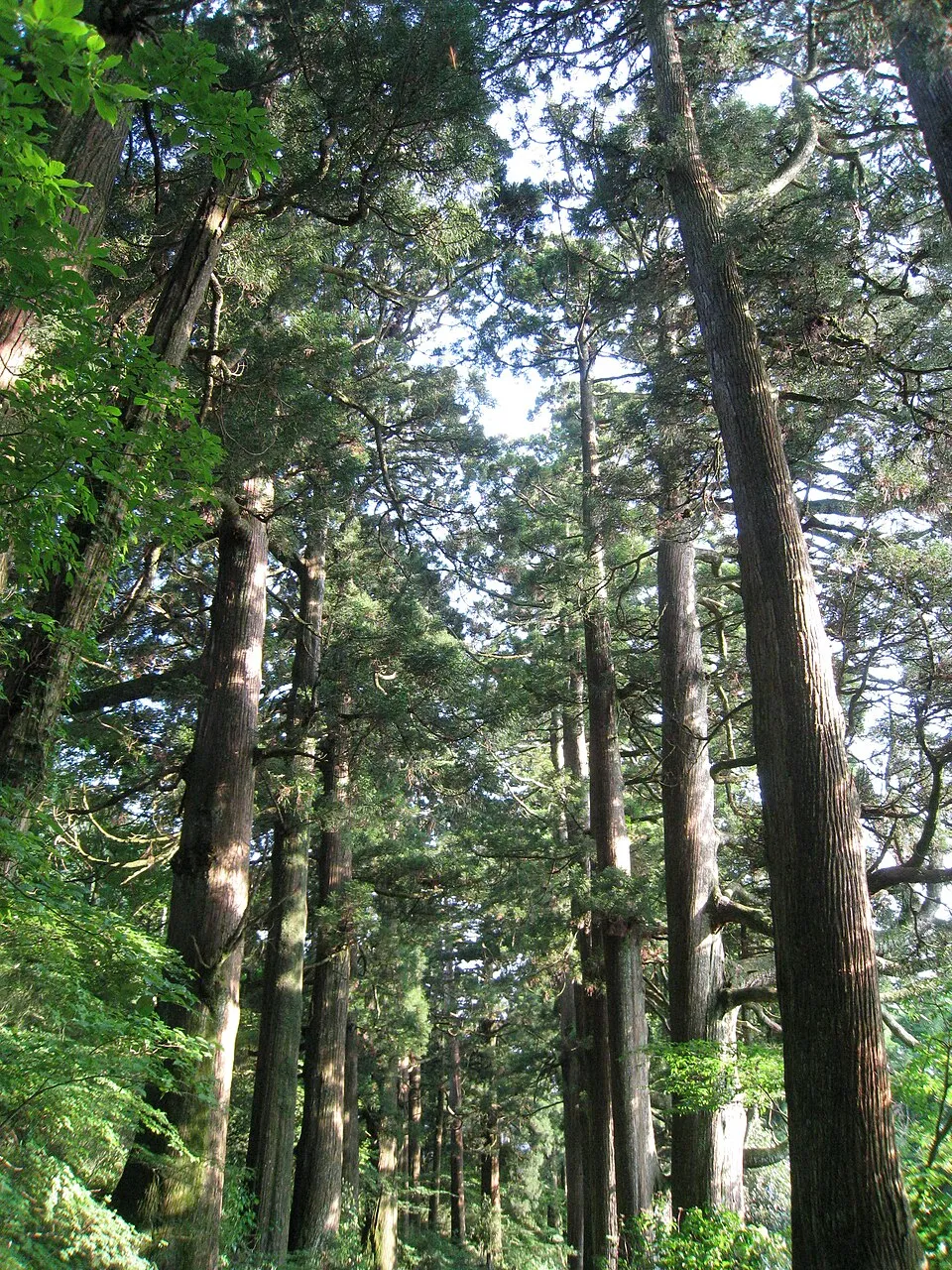
Cryptomeria japonica, widely recognized as Japanese cedar or Sugi in its native Japan, is a commanding, rapidly growing evergreen coniferous tree belonging to the Cupressaceae family. This stately conifer is indigenous to mountainous regions, riverbanks, and extensive plantations across Japan and Taiwan, where it thrives in moist, well-draining, acidic soils. It frequently attains impressive heights of 60 to 70 meters (197 to 230 feet) and can develop a massive trunk diameter reaching up to 4 meters (13 feet). Its bark is a distinctive reddish-brown, characterized by long, vertical strips that peel away, lending it an ancient and rugged aesthetic. The foliage consists of spirally arranged, awl-shaped (subulate), needle-like leaves, typically 1-2 centimeters in length.
These leaves present a vibrant green hue in spring, often transitioning to a bronze or golden shade during colder autumn and winter months, particularly when exposed. The tree exhibits a graceful, conical growth habit with branches that are often tiered and slightly weeping. Cryptomeria japonica is a monoecious species, bearing both male and female cones on the same individual. The male cones are small, yellowish, and clustered at branch tips, releasing copious amounts of pollen in late winter to early spring, a notable allergen in Japan. The female cones are more substantial, oval to globular, woody, and spiny, measuring approximately 2.5-4 centimeters.
They mature from green to brown in late summer and autumn, dispersing winged seeds. Ecologically, it serves as a foundational species, influencing soil composition and providing crucial habitat. Culturally, the Japanese cedar holds profound significance, often planted around temples and shrines as a symbol of longevity, strength, and sacredness.
Trusted Scientific References
1. Authoritative external sources for Cryptomeria japonica
1.1 Wikipedia — Cryptomeria japonica
1.2 Kew POWO (Plants of the World Online)
1.3 PubMed — peer-reviewed research
1.4 NCBI Taxonomy Browser
1.5 GBIF — Global Biodiversity
1.1.Cryptomeria Japonica — Key Features
- ✓ <strong>Majestic Conical Evergreen</strong> — Characterized by its stately, pyramidal to conical form and significant height.
- ✓ <strong>Reddish</strong> — Brown Exfoliating Bark — Features distinctive bark that peels in long, vertical strips, adding to its rugged beauty.
- ✓ <strong>Awl</strong> — Shaped, Spirally Arranged Leaves — Possesses short, needle-like leaves arranged spirally along the branches, changing color with seasons.
- ✓ <strong>Monoecious Reproduction</strong> — Bears both male and female cones on the same tree, with male cones releasing abundant pollen.
- ✓ <strong>Significant Cultural Symbolism</strong> — Holds deep cultural and spiritual importance in Japan, often associated with sacred sites.
- ✓ <strong>Valued for Timber and Landscaping</strong> — Its durable, aromatic wood is highly prized for construction, and it's a popular ornamental tree.
- ✓ <strong>Deer and Salt Tolerant</strong> — Exhibits natural resistance to deer damage and can withstand some levels of salt exposure.
- ✓ <strong>Adaptable to Various Soils</strong> — Thrives in moist, acidic, well-drained soils but shows adaptability to other soil types.
- ✓ <strong>Rich in Bioactive Phytochemicals</strong> — Contains a complex array of compounds like terpenes, flavonoids, and lignans with potential health benefits.
- ✓ <strong>Known Pollen Allergen</strong> — Its copious pollen production is a major seasonal allergen in its native regions.
1.2.Cryptomeria Japonica — Quick Summary
- ✓ Japanese cedar, or Sugi, is a towering evergreen conifer native to Japan and Taiwan, prized for its timber and ornamental value.
- ✓ It is rich in diverse phytochemicals, including terpenes, flavonoids, and lignans, which contribute to its potential medicinal properties.
- ✓ Research suggests antioxidant, antimicrobial, and anti-inflammatory activities from its extracts and essential oils.
- ✓ Cryptomeria japonica pollen is a significant allergen, causing seasonal hay fever in many individuals.
- ✓ Culturally revered in Japan, symbolizing longevity and strength, often planted around temples and shrines.
- ✓ Primarily used externally or aromatically; internal consumption is not recommended without professional guidance.
2.Cryptomeria Japonica — Scientific Identity
3.Cryptomeria Japonica — Quick Facts
4.Cryptomeria Japonica — Appearance & Identification
5.Cryptomeria Japonica — Native Habitat
6.Cryptomeria Japonica — Water Requirements
- ✓ Soil Preference — Thrives in rich, moist, well-drained, and acidic soils, though it adapts to a range of soil types.
- ✓ Light Requirements — Prefers full sun to partial shade, performing best with adequate light exposure for robust growth.
- ✓ Watering — Requires consistent moisture, especially during its establishment phase and prolonged dry periods.
- ✓ Propagation — Can be propagated from seeds, which benefit from cold stratification, or from semi-hardwood cuttings taken in summer.
- ✓ Pruning — Generally low-maintenance; minimal pruning is needed, primarily for shaping or removing dead or damaged branches.
- ✓ Hardiness — Exhibits good cold hardiness and is notably resistant to deer browsing, making it suitable for various landscapes.
- ✓ Pest and Disease Management — Generally robust, but can be susceptible to leaf spot, leaf blight, and certain fungal infections in unfavorable conditions.
- ✓ Environmental Adaptability — Tolerant to some salt exposure, making it suitable for coastal areas, and performs well as a screening or specimen tree.
Reviewed by the Flora Medical Global Botanical Review Panel
Multi-disciplinary editorial group · Botany · Ethnobotany · Herbal-medicine literature
Who reviewed this: This page was checked by the Flora Medical Global Botanical Review Panel — an in-house editorial group of botany graduates, ethnobotany researchers, and horticulture practitioners who collectively maintain our 7,000+ plant encyclopedia. Meet the team.
Our 4-step verification process
1. Taxonomic verification
Scientific names and synonyms cross-checked against Kew POWO, World Flora Online, and The Plant List.
2. Phytochemical & medicinal cross-reference
Active compounds, traditional uses, and reported activities are cross-referenced with PubMed, USDA Dr. Duke's database, and peer-reviewed ethnobotanical literature.
3. Conservation & distribution check
Distribution, ecology, and conservation status confirmed against GBIF occurrence records and the IUCN Red List.
4. Editorial & safety review
Every entry passes an editorial pass for clarity, originality, and safety notices (toxicity, contraindications, dosage caveats) before publication.
Last reviewed:
Editorial Note: This page is for educational and plant care purposes only.
Written by: Flora Medical Global Editorial Team
Reviewed by: Flora Medical Global Botanical Review Panel
Last Updated: June 15, 2026







Cryptomeria Japonica — Comments & Community Reviews
Rate this plant