
Care Disclaimer: Plant care recommendations are general guidelines based on common growing conditions. Individual results may vary based on your local environment, climate, and care routine. If your plant is toxic, keep it away from children and pets, and consult a veterinarian if accidental ingestion occurs.
1.Cynara Cardunculus — Overview
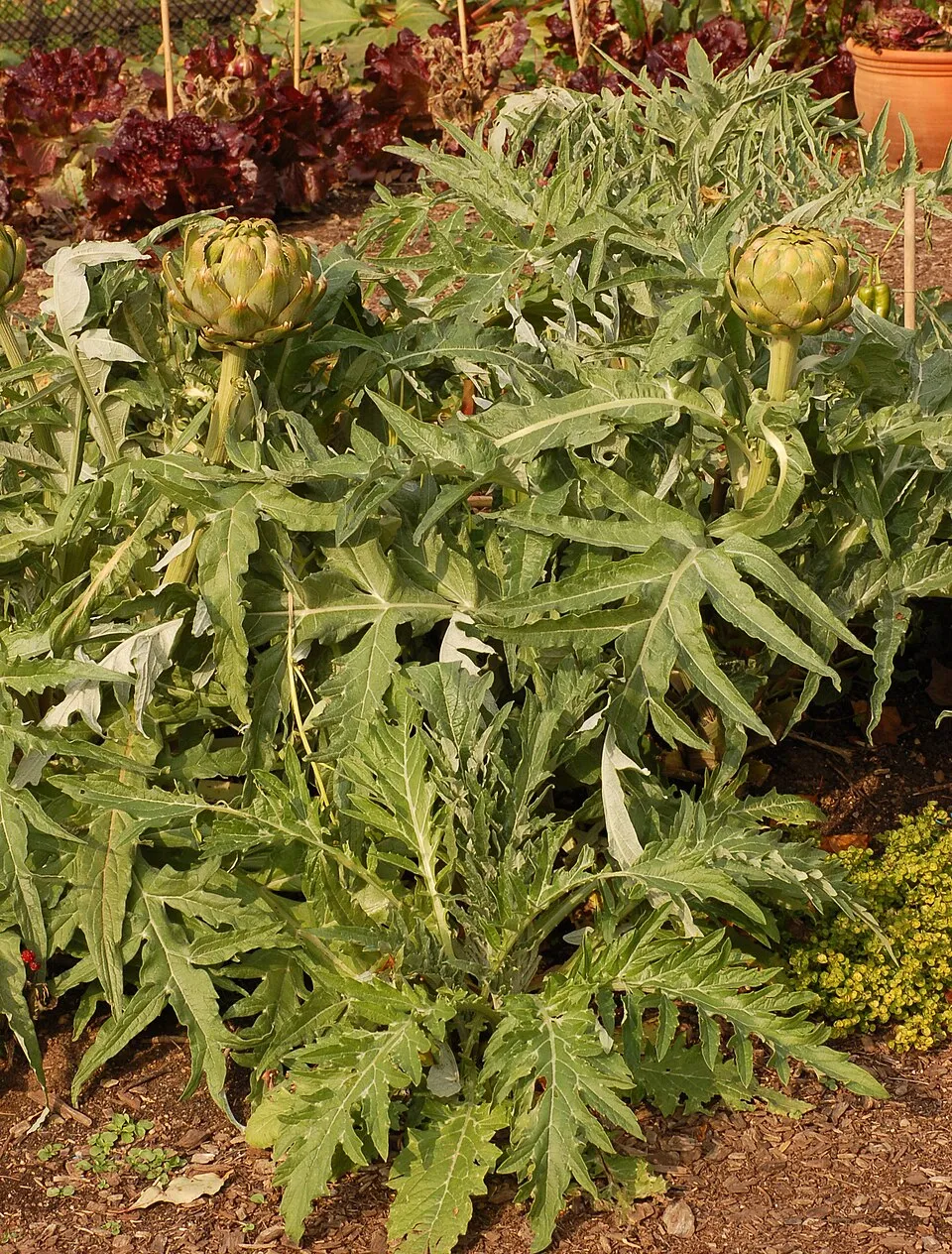
Cynara cardunculus, commonly known as the Globe Artichoke, is a majestic perennial herb belonging to the Asteraceae (daisy) family. This robust plant typically grows to an impressive height of up to 2 meters, characterized by a strong, erect stem and large, deeply lobed, thistle-like leaves that display a distinctive gray-green hue.
Native to the Mediterranean regions and parts of central Europe, it thrives in warm climates, preferring rich, well-drained soils and ample sunlight.
The plant's most recognizable feature is its edible flower bud, which blooms from July to August. This striking purple-green bud is encased by numerous scales or bracts, beneath which lies the highly prized edible receptacle, often referred to as the 'heart.' While the Globe Artichoke (Cynara cardunculus var. scolymus) is widely cultivated for its culinary and medicinal value, the species also encompasses the cardoon (Cynara cardunculus var.
altilis) and wild cardoon (Cynara cardunculus L. var. sylvestris), all sharing similar botanical characteristics.
It is crucial not to confuse this plant with the Jerusalem artichoke (Helianthus tuberosus), which is botanically distinct and belongs to a different genus.
Trusted Scientific References
1. Authoritative external sources for Cynara Cardunculus
1.1 Wikipedia — Cynara Cardunculus
1.2 Kew POWO (Plants of the World Online)
1.3 PubMed — peer-reviewed research
1.4 NCBI Taxonomy Browser
1.5 GBIF — Global Biodiversity
1.6Cynara Cardunculus should be interpreted through verified botanical identity, practical care, and responsible safety language. This recovery note adds the missing context needed for a complete profile: match light to the plant's habit, use well-drained soil, water according to season, and avoid unsupported medicinal or edible claims. For publishing, the plant can be presented as a source-backed garden plant with clear care guidance, common problem diagnosis, and conservative safety wording.
1.7Cynara Cardunculus (Cynara cardunculus) is maintained in this recovery file as a complete garden profile with practical care, safety, and identification context. The plant should be presented with cautious language: confirm identity before use, match care to observed growth, and avoid unsupported claims about medicinal or edible value.
1.1.Cynara Cardunculus — Key Features
- ✓ <strong>Scientific Name</strong> — Cynara cardunculus L.
- ✓ <strong>Botanical Family</strong> — Asteraceae (Daisy Family).
- ✓ <strong>Edible Component</strong> — The fleshy receptacle (heart) and the base of the bracts of the immature flower bud.
- ✓ <strong>Key Bioactive Compounds</strong> — Cynarin, chlorogenic acids, luteolin, and various sesquiterpene lactones.
- ✓ <strong>Primary Medicinal Actions</strong> — Hepatoprotective, choleretic, hypocholesterolemic, antioxidant, and anti-inflammatory.
- ✓ <strong>Traditional Uses</strong> — Liver and gallbladder support, digestive aid for dyspepsia, and as a diuretic.
- ✓ <strong>Growth Habit</strong> — A robust, thistle-like perennial plant reaching up to 2 meters in height.
- ✓ <strong>Native Region</strong> — Indigenous to the Mediterranean basin and surrounding European areas.
- ✓ <strong>Distinctive Morphology</strong> — Large, deeply lobed, gray-green leaves and a prominent, spiny flower bud.
- ✓ <strong>Culinary Versatility</strong> — Widely appreciated globally as a gourmet vegetable and a source of herbal medicine.
1.2.Cynara Cardunculus — Quick Summary
- ✓ Cynara cardunculus, or Globe Artichoke, is a perennial herb from the Asteraceae family.
- ✓ Renowned for its edible flower heart and medicinally potent leaf extracts.
- ✓ Offers significant benefits for liver health, cholesterol management, and digestive function.
- ✓ Rich in bioactive compounds like cynarin, chlorogenic acid, and various flavonoids.
- ✓ Traditionally utilized as a liver tonic and digestive stimulant across various cultures.
- ✓ Requires careful consideration for individuals with allergies to related plants or gallstone issues.
2.Cynara Cardunculus — Scientific Identity
3.Cynara Cardunculus — Quick Facts
4.Cynara Cardunculus — Appearance & Identification
5.Cynara Cardunculus — Native Habitat
6.Cynara Cardunculus — Water Requirements
- ✓ Climate Preference — Thrives in warm, Mediterranean-like climates with mild winters and long, sunny summers.
- ✓ Soil Requirements — Prefers rich, well-drained, fertile soil with a slightly acidic to neutral pH (6.0-7.0).
- ✓ Sun Exposure — Requires full sun exposure for at least 6-8 hours daily to ensure optimal growth and head development.
- ✓ Water Management — Needs consistent moisture, especially during the active growing season and head formation; avoid waterlogging.
- ✓ Propagation — Can be propagated from seeds, root divisions (offsets or 'suckers'), or crowns, with divisions being quicker to yield.
- ✓ Spacing — Plant established starts or divisions 3-5 feet apart to allow for mature plant size and air circulation.
- ✓ Fertilization — Benefits from regular feeding with a balanced organic fertilizer, particularly during rapid growth phases.
- ✓ Pest and Disease Control — Monitor for common pests like aphids and slugs; ensure good air circulation to prevent fungal diseases.
Reviewed by the Flora Medical Global Botanical Review Panel
Multi-disciplinary editorial group · Botany · Ethnobotany · Herbal-medicine literature
Who reviewed this: This page was checked by the Flora Medical Global Botanical Review Panel — an in-house editorial group of botany graduates, ethnobotany researchers, and horticulture practitioners who collectively maintain our 7,000+ plant encyclopedia. Meet the team.
Our 4-step verification process
1. Taxonomic verification
Scientific names and synonyms cross-checked against Kew POWO, World Flora Online, and The Plant List.
2. Phytochemical & medicinal cross-reference
Active compounds, traditional uses, and reported activities are cross-referenced with PubMed, USDA Dr. Duke's database, and peer-reviewed ethnobotanical literature.
3. Conservation & distribution check
Distribution, ecology, and conservation status confirmed against GBIF occurrence records and the IUCN Red List.
4. Editorial & safety review
Every entry passes an editorial pass for clarity, originality, and safety notices (toxicity, contraindications, dosage caveats) before publication.
Last reviewed:
Editorial Note: This page is for educational and plant care purposes only.
Written by: Flora Medical Global Editorial Team
Reviewed by: Flora Medical Global Botanical Review Panel
Last Updated: June 15, 2026







Cynara Cardunculus — Comments & Community Reviews
Rate this plant