
Care Disclaimer: Plant care recommendations are general guidelines based on common growing conditions. Individual results may vary based on your local environment, climate, and care routine. If your plant is toxic, keep it away from children and pets, and consult a veterinarian if accidental ingestion occurs.
1.Cypella Herbertii — Overview
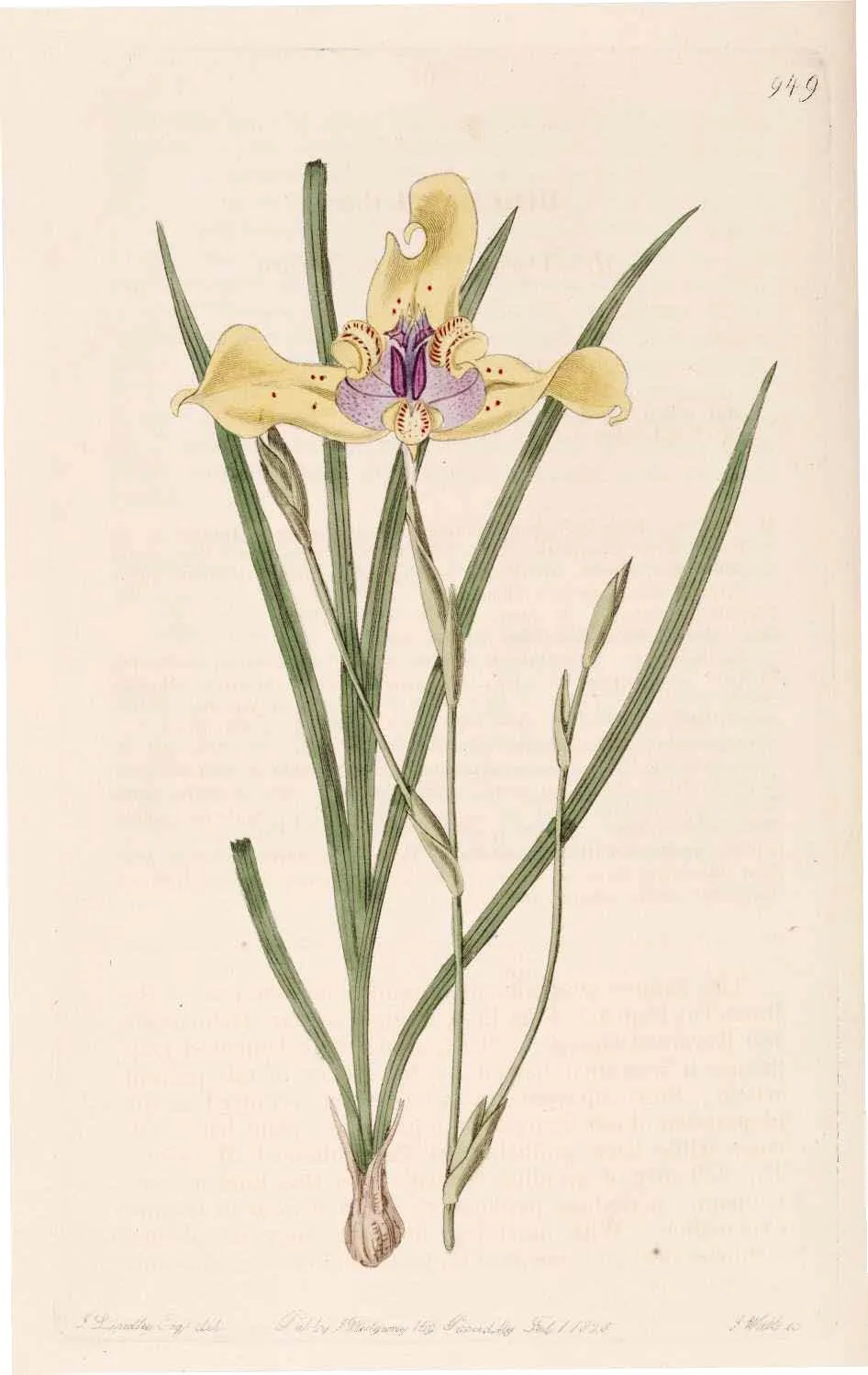
Cypella herbertii (Lindl.) Herb., commonly known as Herbert's Cypella, is an elegant perennial herbaceous plant belonging to the Iridaceae family, which includes irises and gladioli. This species is indigenous to the grasslands and hills of South America, primarily found across Argentina, Uruguay, and parts of Southern Brazil. It typically grows from a corm, reaching heights of 50 cm to an impressive 1.2 meters, making it a prominent feature in its native habitats. The foliage consists of slender, sword-shaped leaves that emerge from the base, contributing to its graceful, upright habit. During its flowering season, which spans from mid-summer to late summer, Cypella herbertii produces striking, short-lived flowers, often vibrant orange or yellow, with intricate markings.
These delicate blooms, though ephemeral individually, appear sequentially on wiry stems, allowing for a continuous display over several months when the plant is well-established. The plant's robust nature and adaptability to various well-drained soil conditions have contributed to its widespread distribution within its native range. There are four recognized subspecies, including Cypella herbertii ssp. brevicristata, ssp. herbertii, ssp.
reflexa, and ssp. wolffhuegeli, each with subtle distinctions in flower color, stigma lobe length, and geographical distribution. While primarily valued for its ornamental appeal, its resilient growth habit and ease of propagation from seed or corm make it a rewarding addition to specialized bulb collections and garden landscapes.
Trusted Scientific References
1. Authoritative external sources for Cypella Herbertii
1.1 Wikipedia — Cypella Herbertii
1.2 Kew POWO (Plants of the World Online)
1.3 PubMed — peer-reviewed research
1.4 NCBI Taxonomy Browser
1.5 GBIF — Global Biodiversity
1.6Cypella Herbertii should be interpreted through verified botanical identity, practical care, and responsible safety language. This recovery note adds the missing context needed for a complete profile: match light to the plant's habit, use well-drained soil, water according to season, and avoid unsupported medicinal or edible claims. For publishing, the plant can be presented as a source-backed garden plant with clear care guidance, common problem diagnosis, and conservative safety wording.
1.1.Cypella Herbertii — Key Features
- ✓ <strong>Striking Floral Display</strong> — Produces vibrant orange or yellow flowers from mid to late summer.
- ✓ <strong>Perennial Corm Plant</strong> — Grows from a bulb-like corm, ensuring perennial growth.
- ✓ <strong>Sword</strong> — Shaped Leaves — Distinctive, slender foliage characteristic of the Iris family.
- ✓ <strong>South American Endemic</strong> — Native to Argentina, Uruguay, and Southern Brazil grasslands.
- ✓ <strong>Adaptable Growth</strong> — Thrives in well-drained soil and varied light conditions.
- ✓ <strong>Continuous Blooms</strong> — Flowers sequentially on wiry stems, providing a prolonged display.
- ✓ <strong>Easy to Propagate</strong> — Readily grows from seeds, with some flowering in the first year.
- ✓ <strong>Ornamental Appeal</strong> — Highly valued in horticulture for its unique beauty.
- ✓ <strong>Multiple Subspecies</strong> — Features four recognized subspecies with subtle variations.
- ✓ <strong>Moderate Height</strong> — Reaches between 50 cm and 1.2 meters tall at maturity.
1.2.Cypella Herbertii — Quick Summary
- ✓ South American Native — Originates from grasslands in Argentina, Uruguay, and Brazil.
- ✓ Iridaceae Family Member — A relative of irises and gladioli, growing from a corm.
- ✓ Ornamental Value — Prized for its vibrant orange or yellow, short-lived, yet continuously blooming flowers.
- ✓ Easy Cultivation — Adaptable to well-drained soil, full sun, and container growing.
- ✓ Traditional Uses (Limited) — Historically, similar plants or 'Planta hortensis var. 67' were used for anti-inflammatory, antioxidant, and digestive support.
- ✓ Caution Advised — Medicinal use requires professional guidance due to limited specific research on Cypella herbertii.
2.Cypella Herbertii — Scientific Identity
3.Cypella Herbertii — Quick Facts
4.Cypella Herbertii — Appearance & Identification
5.Cypella Herbertii — Native Habitat
6.Cypella Herbertii — Water Requirements
- ✓ Soil Preference — Grow in a well-draining mix, ideally a 1:1 ratio of organic matter to inorganic material, to prevent waterlogging.
- ✓ Watering Regime — Keep the soil consistently moist during the active summer growing season, but allow it to dry out significantly in winter, especially if dormant.
- ✓ Light Requirements — Thrives in full sun to partial shade; adequate sunlight encourages prolific flowering.
- ✓ Winter Dormancy — In colder climates (Zone 6 or lower), plants may go completely dormant if water is withheld during winter; protect corms from freezing.
- ✓ Propagation — Easily grown from seeds sown in spring; vigorous seedlings can flower in their first year. Can also be propagated by division of corms.
- ✓ Container Growing — Excellent for container displays; planting multiple corms in a gallon-sized pot (approx. 3L) enhances the visual impact of its ephemeral blooms.
- ✓ Fertilization — Fertilize occasionally with a balanced liquid feed during periods of active growth to support robust development and flowering.
- ✓ Spacing — When planting in the ground, allow adequate spacing to ensure good air circulation and prevent overcrowding.
Reviewed by the Flora Medical Global Botanical Review Panel
Multi-disciplinary editorial group · Botany · Ethnobotany · Herbal-medicine literature
Who reviewed this: This page was checked by the Flora Medical Global Botanical Review Panel — an in-house editorial group of botany graduates, ethnobotany researchers, and horticulture practitioners who collectively maintain our 7,000+ plant encyclopedia. Meet the team.
Our 4-step verification process
1. Taxonomic verification
Scientific names and synonyms cross-checked against Kew POWO, World Flora Online, and The Plant List.
2. Phytochemical & medicinal cross-reference
Active compounds, traditional uses, and reported activities are cross-referenced with PubMed, USDA Dr. Duke's database, and peer-reviewed ethnobotanical literature.
3. Conservation & distribution check
Distribution, ecology, and conservation status confirmed against GBIF occurrence records and the IUCN Red List.
4. Editorial & safety review
Every entry passes an editorial pass for clarity, originality, and safety notices (toxicity, contraindications, dosage caveats) before publication.
Last reviewed:
Editorial Note: This page is for educational and plant care purposes only.
Written by: Flora Medical Global Editorial Team
Reviewed by: Flora Medical Global Botanical Review Panel
Last Updated: June 15, 2026







Cypella Herbertii — Comments & Community Reviews
Rate this plant