
Care Disclaimer: Plant care recommendations are general guidelines based on common growing conditions. Individual results may vary based on your local environment, climate, and care routine. If your plant is toxic, keep it away from children and pets, and consult a veterinarian if accidental ingestion occurs.
1.Dahlia — Overview
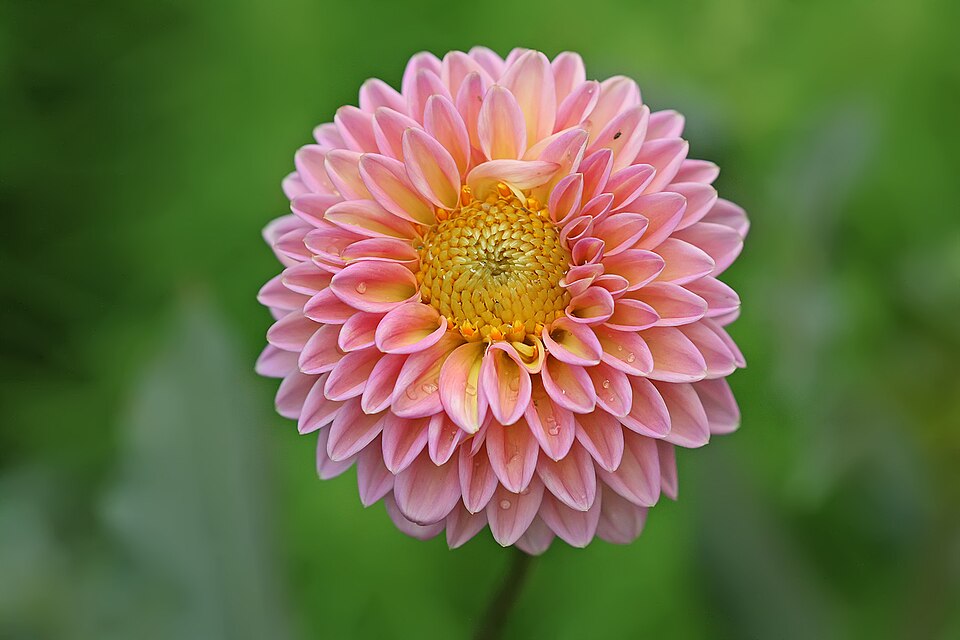
Dahlia, a captivating genus within the extensive Asteraceae family, encompasses over 42 species of bushy, tuberous, herbaceous perennial plants. Native to the mountainous regions of Mexico and Central America, Dahlias thrive in temperate climates, often at altitudes exceeding 1000 meters above sea level. This genus is celebrated for its extraordinary morphological diversity, boasting thousands of cultivated varieties (cultivars) that exhibit an astonishing spectrum of flower forms, sizes, and colors.
Botanically, Dahlia species are characterized by their distinctive composite flower heads, a hallmark of the Asteraceae family. These heads are composed of numerous individual florets: fertile central disk florets and often sterile, showy ray florets that form the prominent 'petals.' The leaves are typically pinnate or bipinnate, presenting in shades from deep green to rich burgundy, providing a striking contrast to the vibrant blooms. The plant's most notable feature for medicinal and nutritional purposes is its tuberous root system, which serves as a storage organ for carbohydrates.
Historically, the Aztec civilization, referring to it as 'Acocoxochitl' or 'Chichipatl,' revered Dahlia not only for its aesthetic appeal but also for its edible tubers and traditional medicinal applications, including uses for epilepsy and as a diuretic. Its introduction to Europe in the late 18th century by Spanish botanists marked its transition from a regional staple to a global horticultural sensation, named in honor of Swedish botanist Anders Dahl. Today, while primarily an ornamental, modern research is re-evaluating its potential as a functional food source due to its unique nutritional profile.
Trusted Scientific References
1. Authoritative external sources for Dahlia spp.
1.1 Wikipedia — Dahlia spp.
1.2 Kew POWO (Plants of the World Online)
1.3 PubMed — peer-reviewed research
1.4 NCBI Taxonomy Browser
1.5 GBIF — Global Biodiversity
1.6Dahlia should be interpreted through verified botanical identity, practical care, and responsible safety language. This recovery note adds the missing context needed for a complete profile: match light to the plant's habit, use well-drained soil, water according to season, and avoid unsupported medicinal or edible claims. For publishing, the plant can be presented as a source-backed garden plant with clear care guidance, common problem diagnosis, and conservative safety wording.
1.1.Dahlia — Key Features
- ✓ <strong>Diverse Genus</strong> — Over 42 species and thousands of cultivars, offering vast botanical variety.
- ✓ <strong>Tuberous Roots</strong> — Primary storage organs, rich in inulin and other beneficial compounds.
- ✓ <strong>Asteraceae Family</strong> — Characterized by composite flower heads with disk and ray florets.
- ✓ <strong>Native to Mexico</strong> — Deep historical and cultural significance in Mesoamerican civilizations.
- ✓ <strong>Edible Tubers</strong> — Valued for their nutritional content and unique flavor, historically a staple food.
- ✓ <strong>Inulin Source</strong> — A key prebiotic fiber, supporting gut health and blood sugar management.
- ✓ <strong>Ornamental Value</strong> — Widely cultivated globally for its stunning and varied blooms.
- ✓ <strong>Traditional Medicinal Uses</strong> — Historically employed for conditions like epilepsy, as a diuretic, and for infections.
- ✓ <strong>Potential Antibiotic Properties</strong> — Compounds in tuber skin show promise for antimicrobial action.
- ✓ <strong>Antioxidant Rich</strong> — Flowers and tubers contain flavonoids and phenolic acids for cellular protection.
1.2.Dahlia — Quick Summary
- ✓ Dahlia is a diverse genus in the Asteraceae family, native to Mexico, known for its ornamental beauty and historical medicinal/edible uses.
- ✓ Its tubers are a significant source of inulin, a prebiotic fiber beneficial for gut health and blood sugar regulation.
- ✓ Traditionally, Dahlia was used by Aztecs for food, medicine (epilepsy, diuretic), and for its antibiotic properties.
- ✓ Modern research acknowledges its potential as a functional food and source of antioxidants and antimicrobial compounds.
- ✓ Cultivation is popular worldwide, but its medicinal potential is only now being fully re-explored.
- ✓ Caution is advised for individuals with Asteraceae allergies or those managing blood sugar levels.
2.Dahlia — Scientific Identity
3.Dahlia — Quick Facts
4.Dahlia — Appearance & Identification
5.Dahlia — Native Habitat
6.Dahlia — Water Requirements
- ✓ Tuber Planting — Plant Dahlia tubers in spring after the last frost, ensuring the 'eye' faces upwards, about 4-6 inches deep.
- ✓ Soil Requirements — Requires well-draining, fertile soil with a slightly acidic to neutral pH (6.0-7.0); amend heavy clay soils with organic matter.
- ✓ Sunlight Exposure — Thrives in full sun, needing at least 6-8 hours of direct sunlight daily for optimal flowering and tuber development.
- ✓ Watering — Provide consistent moisture, especially during dry periods; aim for deep watering rather than frequent shallow applications.
- ✓ Fertilization — Fertilize regularly with a low-nitrogen, high-phosphorus, and potassium fertilizer once plants are established and during blooming.
- ✓ Staking and Support — Taller varieties often require staking or caging to support heavy blooms and prevent stems from breaking.
- ✓ Pest and Disease Management — Monitor for common pests like aphids and slugs; ensure good air circulation to prevent fungal diseases like powdery mildew.
- ✓ Overwintering Tubers — In cold climates, lift tubers after the first frost, clean, dry, and store in a cool, dark, frost-free location for winter.
Reviewed by the Flora Medical Global Botanical Review Panel
Multi-disciplinary editorial group · Botany · Ethnobotany · Herbal-medicine literature
Who reviewed this: This page was checked by the Flora Medical Global Botanical Review Panel — an in-house editorial group of botany graduates, ethnobotany researchers, and horticulture practitioners who collectively maintain our 7,000+ plant encyclopedia. Meet the team.
Our 4-step verification process
1. Taxonomic verification
Scientific names and synonyms cross-checked against Kew POWO, World Flora Online, and The Plant List.
2. Phytochemical & medicinal cross-reference
Active compounds, traditional uses, and reported activities are cross-referenced with PubMed, USDA Dr. Duke's database, and peer-reviewed ethnobotanical literature.
3. Conservation & distribution check
Distribution, ecology, and conservation status confirmed against GBIF occurrence records and the IUCN Red List.
4. Editorial & safety review
Every entry passes an editorial pass for clarity, originality, and safety notices (toxicity, contraindications, dosage caveats) before publication.
Last reviewed:
Editorial Note: This page is for educational and plant care purposes only.
Written by: Flora Medical Global Editorial Team
Reviewed by: Flora Medical Global Botanical Review Panel
Last Updated: June 15, 2026







Dahlia — Comments & Community Reviews
Rate this plant