

Care Disclaimer: Plant care recommendations are general guidelines based on common growing conditions. Individual results may vary based on your local environment, climate, and care routine. If your plant is toxic, keep it away from children and pets, and consult a veterinarian if accidental ingestion occurs.
1.Dahlia Pompom — Overview
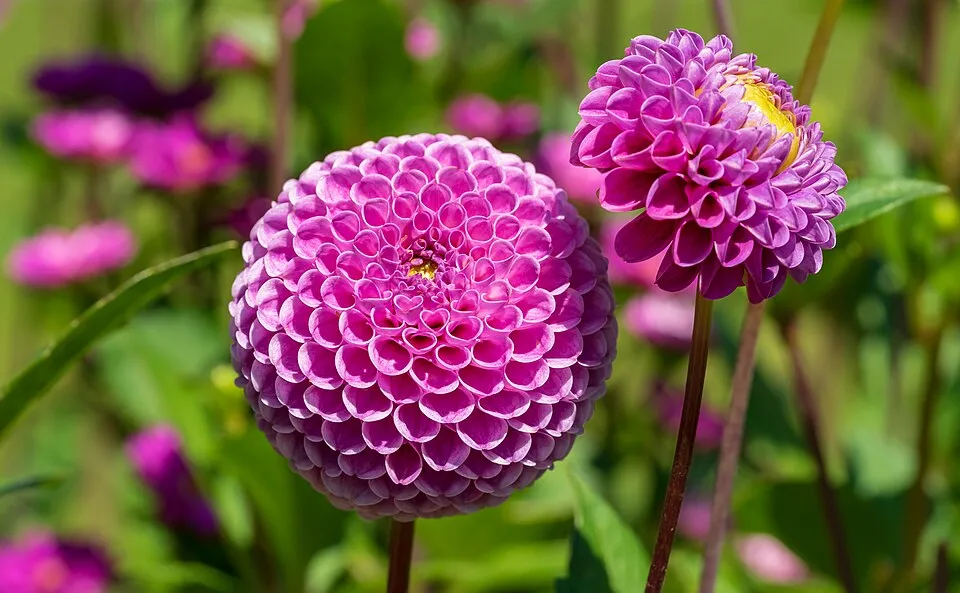
Dahlia Pompon, scientifically known as Dahlia Pompon and a cherished member of the Asteraceae family, is a captivating perennial flowering plant renowned for its distinctive, compact blooms. This variety is characterized by its bushy growth habit, typically reaching heights of 1 to 4 feet, depending on the cultivar and environmental conditions. Its dense foliage comprises somewhat lobed, dark green leaves that provide a lush backdrop to its vibrant flowers.
The 'pompon' designation refers to its unique, spherical or ball-shaped flowers, which feature tightly packed, incurved petals creating a perfectly rounded form. These exquisite blooms display a broad spectrum of colors, ranging from pure whites and sunny yellows to intense pinks, fiery reds, and deep purples, often with intriguing bicolors or blends.
Native to the highlands of central Mexico, Yucatan, and Guatemala, where its tubers were historically a vital food source and medicinal plant for pre-Columbian civilizations, Dahlia Pompon thrives in well-drained soil generously enriched with organic matter. This ensures adequate moisture retention without succumbing to waterlogging, crucial for healthy root development. For optimal growth and prolific flowering, the plant demands full sun exposure, requiring a minimum of six hours of direct sunlight daily.
Blooming from mid-summer through the first significant frost, it offers a continuous display of color, making it a popular choice for garden borders, container plantings, and as an exceptional cut flower. Beyond its ornamental appeal, Dahlia Pompon actively supports local biodiversity by attracting beneficial pollinators like butterflies and bees. Proper care involves consistent watering, especially during dry periods, and regular fertilization throughout the growing season to encourage robust foliage and abundant, long-lasting blooms.
Its striking appearance and relatively straightforward cultivation make Pompon Dahlias a favorite among gardeners worldwide.
Trusted Scientific References
1. Authoritative external sources for Dahlia Pompon
1.1 Wikipedia — Dahlia Pompon
1.2 Kew POWO (Plants of the World Online)
1.3 PubMed — peer-reviewed research
1.4 NCBI Taxonomy Browser
1.5 GBIF — Global Biodiversity
1.1.Dahlia Pompom — Key Features
- ✓ <strong>Botanical Name</strong> — Dahlia Pompon
- ✓ <strong>Family</strong> — Asteraceae (Daisy family)
- ✓ <strong>Common Names</strong> — Pompon Dahlia, Dahlia
- ✓ <strong>Edible Parts</strong> — Tubers (historically consumed)
- ✓ <strong>Medicinal Uses</strong> — Digestive aid, antimicrobial, antioxidant, anti-inflammatory, antidiabetic potential.
- ✓ <strong>Key Compounds</strong> — Inulin, flavonoids, anthocyanins, phenolic acids, alkaloids.
- ✓ <strong>Origin</strong> — Central Mexico, Yucatan, and Guatemala.
- ✓ <strong>Growth Habit</strong> — Perennial, bushy, producing compact, ball-shaped flowers.
- ✓ <strong>Bloom Time</strong> — Mid-summer through the first frost, offering extended color.
- ✓ <strong>Ornamental Value</strong> — Highly prized for its striking appearance in gardens and as a cut flower.
1.2.Dahlia Pompom — Quick Summary
- ✓ Ancient Food & Medicine — Valued by pre-Columbian cultures for its nutritious tubers and antibiotic properties.
- ✓ Rich in Inulin — Tubers are a significant source of prebiotic fiber, supporting gut health and blood sugar.
- ✓ Phytochemical Powerhouse — Flowers contain potent antioxidants (flavonoids, anthocyanins) and anti-inflammatory compounds.
- ✓ Ornamental & Edible — A stunning garden plant with historical culinary uses, offering both beauty and potential health benefits.
- ✓ Potential Antimicrobial — Tuber skin traditionally used for its compounds with antibiotic activity, warranting further study.
- ✓ Exercise Caution — Limited modern research on medicinal efficacy and safety necessitates professional guidance for therapeutic use.
2.Dahlia Pompom — Scientific Identity
3.Dahlia Pompom — Quick Facts
4.Dahlia Pompom — Appearance & Identification
5.Dahlia Pompom — Native Habitat
6.Dahlia Pompom — Water Requirements
- ✓ Soil Preparation — Plant in well-drained, fertile soil enriched with ample organic matter to ensure good aeration and moisture retention.
- ✓ Sunlight Requirements — Ensure full sun exposure, meaning at least 6-8 hours of direct sunlight daily, for optimal flowering and growth.
- ✓ Planting Tubers — Plant tubers horizontally 4-6 inches deep with the 'eye' pointing upwards, after the last spring frost when soil temperatures are consistently warm.
- ✓ Watering Regimen — Provide consistent and deep watering, especially during dry spells and the flowering period, but avoid waterlogging.
- ✓ Fertilization Schedule — Apply a balanced, low-nitrogen fertilizer every 3-4 weeks once plants are established, to encourage bloom production over excessive foliage.
- ✓ Staking and Support — Taller Dahlia Pompon varieties may require staking or caging to support heavy blooms and prevent stems from breaking.
- ✓ Deadheading Practices — Regularly remove spent flowers (deadhead) to promote continuous blooming and redirect plant energy into new flower development.
- ✓ Winter Storage — In regions with cold winters (below USDA Zone 8), carefully dig up tubers after the first frost, clean, and store them in a cool, dark, and dry place over winter.
Reviewed by the Flora Medical Global Botanical Review Panel
Multi-disciplinary editorial group · Botany · Ethnobotany · Herbal-medicine literature
Who reviewed this: This page was checked by the Flora Medical Global Botanical Review Panel — an in-house editorial group of botany graduates, ethnobotany researchers, and horticulture practitioners who collectively maintain our 7,000+ plant encyclopedia. Meet the team.
Our 4-step verification process
1. Taxonomic verification
Scientific names and synonyms cross-checked against Kew POWO, World Flora Online, and The Plant List.
2. Phytochemical & medicinal cross-reference
Active compounds, traditional uses, and reported activities are cross-referenced with PubMed, USDA Dr. Duke's database, and peer-reviewed ethnobotanical literature.
3. Conservation & distribution check
Distribution, ecology, and conservation status confirmed against GBIF occurrence records and the IUCN Red List.
4. Editorial & safety review
Every entry passes an editorial pass for clarity, originality, and safety notices (toxicity, contraindications, dosage caveats) before publication.
Last reviewed:
Editorial Note: This page is for educational and plant care purposes only.
Written by: Flora Medical Global Editorial Team
Reviewed by: Flora Medical Global Botanical Review Panel
Last Updated: June 15, 2026







Dahlia Pompom — Comments & Community Reviews
Rate this plant