
Care Disclaimer: Plant care recommendations are general guidelines based on common growing conditions. Individual results may vary based on your local environment, climate, and care routine. If your plant is toxic, keep it away from children and pets, and consult a veterinarian if accidental ingestion occurs.
1.Daylily Happy Returns — Overview
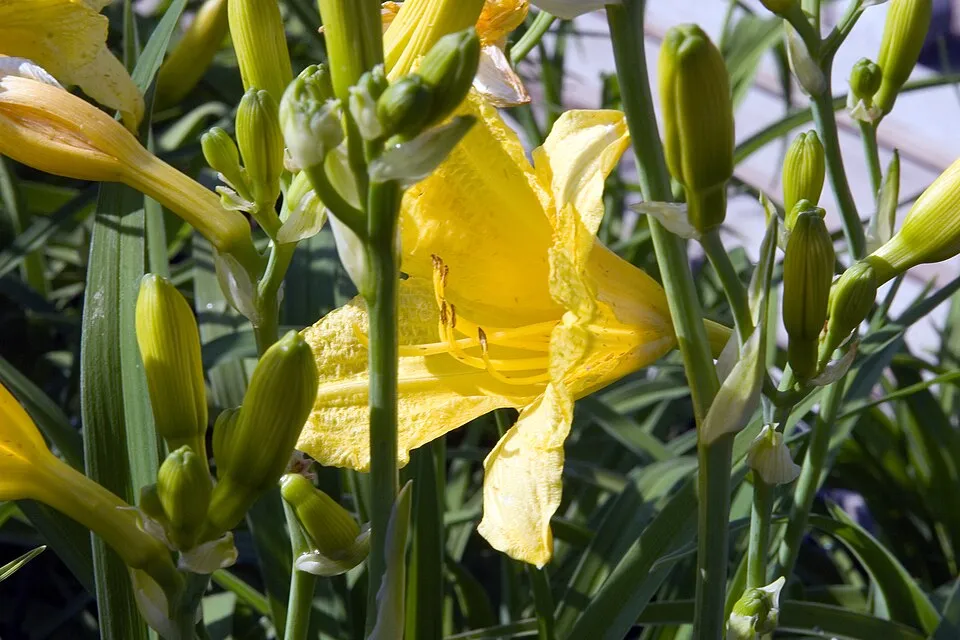
Hemerocallis 'Happy Returns', commonly known as Daylily 'Happy Returns', is a distinguished herbaceous perennial cultivar belonging to the genus Hemerocallis within the family Asphodelaceae, and previously classified under Hemerocallidaceae. This particular cultivar is celebrated for its remarkable reblooming characteristic, offering a prolonged display of brilliant yellow, trumpet-shaped flowers throughout the summer and often into early autumn.
Each flower, typically 3-4 inches across, features six tepals (three petals and three sepals that look alike), often with a slightly ruffled edge, opening in the morning and senescing by evening, hence the common name 'Daylily'.
The plant forms a dense clump of arching, strap-like leaves that are typically bright green, ranging from 12 to 18 inches in length. These leaves provide a lush, textural backdrop for the vibrant blooms and contribute to the plant's overall tidy appearance.
Mature plants generally reach a height of 18 to 24 inches with a similar spread, making them versatile for various landscape applications, from mass plantings to border fronts or as specimen plants. The root system consists of fleshy, fibrous roots that help the plant withstand periods of drought once established.
Native to East Asia, the genus Hemerocallis has been extensively hybridized, leading to numerous cultivars like 'Happy Returns'. While the species Hemerocallis are found in diverse habitats, this cultivar thrives in a wide range of cultivated conditions.
Its resilience and adaptability to various soil types, provided they are well-drained, and its preference for full sun to partial shade, underscore its popularity among gardeners. This adaptability, combined with its aesthetic appeal and low maintenance requirements, makes Hemerocallis 'Happy Returns' a highly valued ornamental plant globally.
Trusted Scientific References
1. Authoritative external sources for Hemerocallis Happy Returns
1.1 Wikipedia — Hemerocallis Happy Returns
1.2 Kew POWO (Plants of the World Online)
1.3 PubMed — peer-reviewed research
1.4 NCBI Taxonomy Browser
1.5 GBIF — Global Biodiversity
1.1.Daylily Happy Returns — Key Features
- ✓ <strong>Reblooming Perennial</strong> — Offers extended flowering throughout summer and fall.
- ✓ <strong>Vibrant Yellow Blooms</strong> — Trumpet-shaped flowers provide a bright garden accent.
- ✓ <strong>Low Maintenance</strong> — Drought-tolerant once established and adaptable to various conditions.
- ✓ <strong>Attracts Pollinators</strong> — Flowers attract bees, butterflies, and other beneficial insects.
- ✓ <strong>Hardy and Resilient</strong> — Thrives in USDA Zones 4-9, tolerating a range of climates.
- ✓ <strong>Strap</strong> — like Foliage — Forms a neat clump of arching green leaves, providing good texture.
- ✓ <strong>Versatile Landscaping</strong> — Suitable for borders, mass plantings, or container gardening.
- ✓ <strong>Edible Flowers (of some Hemerocallis species)</strong> — Flowers can be used in salads or as garnishes.
- ✓ <strong>Traditional Medicinal Uses</strong> — Historically used for various ailments in some cultures.
- ✓ <strong>Antioxidant Rich</strong> — Contains beneficial compounds like flavonoids and carotenoids.
1.2.Daylily Happy Returns — Quick Summary
- ✓ Hemerocallis 'Happy Returns' is a popular reblooming yellow daylily cultivar.
- ✓ Primarily ornamental, it offers vibrant, low-maintenance garden beauty.
- ✓ General Hemerocallis species have traditional uses as diuretics and anti-inflammatories.
- ✓ Rich in antioxidants like flavonoids and carotenoids.
- ✓ Edible flowers and buds of some Daylily species are consumed for nutrition.
- ✓ Caution advised for consumption due to potential mild toxicity in some species and for pets.
2.Daylily Happy Returns — Scientific Identity
3.Daylily Happy Returns — Quick Facts
4.Daylily Happy Returns — Appearance & Identification
5.Daylily Happy Returns — Native Habitat
6.Daylily Happy Returns — Water Requirements
- ✓ Soil Preference — Thrives in fertile, well-drained loamy soils, but adaptable to various soil types including clay and sand, as long as drainage is adequate.
- ✓ Light Requirements — Prefers full sun (at least 6 hours direct sunlight) for optimal flowering, but tolerates partial shade, especially in hot climates, though flowering may be reduced.
- ✓ Watering — Requires regular watering during dry periods, particularly when establishing. Once established, Hemerocallis 'Happy Returns' exhibits good drought tolerance.
- ✓ Fertilization — Benefits from a balanced granular fertilizer in early spring as new growth emerges, and potentially again after the first flush of blooms to encourage reblooming.
- ✓ Propagation — Primarily propagated by division of the root clump in early spring or late fall, which also helps rejuvenate older plants and maintain vigor.
- ✓ Pest and Disease Management — Generally resistant to most serious pests and diseases, but watch for aphids, thrips, and daylily rust; ensure good air circulation to prevent fungal issues.
- ✓ Deadheading — Removing spent flowers (deadheading) encourages continuous blooming and maintains a tidy appearance, particularly important for reblooming cultivars like 'Happy Returns'.
- ✓ Winter Care — In colder climates (below USDA Zone 4), a layer of mulch can provide winter protection, though 'Happy Returns' is generally very hardy.
Reviewed by the Flora Medical Global Botanical Review Panel
Multi-disciplinary editorial group · Botany · Ethnobotany · Herbal-medicine literature
Who reviewed this: This page was checked by the Flora Medical Global Botanical Review Panel — an in-house editorial group of botany graduates, ethnobotany researchers, and horticulture practitioners who collectively maintain our 7,000+ plant encyclopedia. Meet the team.
Our 4-step verification process
1. Taxonomic verification
Scientific names and synonyms cross-checked against Kew POWO, World Flora Online, and The Plant List.
2. Phytochemical & medicinal cross-reference
Active compounds, traditional uses, and reported activities are cross-referenced with PubMed, USDA Dr. Duke's database, and peer-reviewed ethnobotanical literature.
3. Conservation & distribution check
Distribution, ecology, and conservation status confirmed against GBIF occurrence records and the IUCN Red List.
4. Editorial & safety review
Every entry passes an editorial pass for clarity, originality, and safety notices (toxicity, contraindications, dosage caveats) before publication.
Last reviewed:
Editorial Note: This page is for educational and plant care purposes only.
Written by: Flora Medical Global Editorial Team
Reviewed by: Flora Medical Global Botanical Review Panel
Last Updated: June 15, 2026







Daylily Happy Returns — Comments & Community Reviews
Rate this plant