
Care Disclaimer: Plant care recommendations are general guidelines based on common growing conditions. Individual results may vary based on your local environment, climate, and care routine. If your plant is toxic, keep it away from children and pets, and consult a veterinarian if accidental ingestion occurs.
1.Delphinium Elatum — Overview
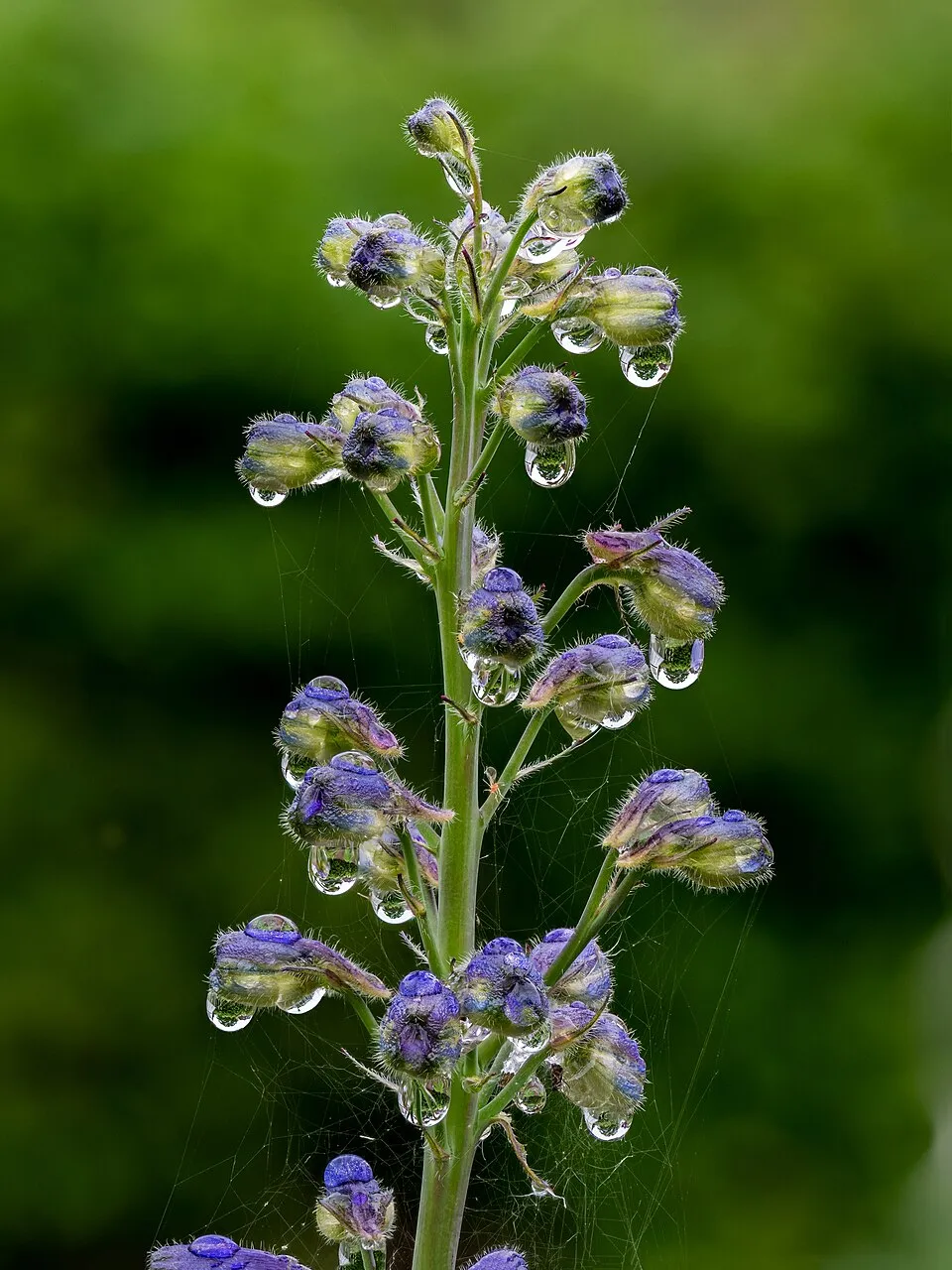
Delphinium elatum, commonly known as the tall larkspur, is a striking perennial herbaceous flowering plant belonging to the Ranunculaceae family. This species is celebrated for its impressive vertical presence, often reaching heights of up to 2 meters (6 feet) with sturdy, erect stems. Its foliage consists of deeply lobed, palmate leaves that can measure up to 20 cm (8 inches) across, providing a lush green backdrop to its vibrant blooms.
The most captivating feature of D. elatum is its dense racemes of flowers, which display a remarkable spectrum of colors from deep blue and purple to less common white or pink varieties. Each flower is uniquely structured with five petal-like sepals, creating a dramatic visual display from late spring to early summer when the plant is in full bloom.
Ecologically, Delphinium elatum thrives in temperate regions, preferring cool climates and habitats characterized by moist, well-draining soils. It is frequently encountered in woodland edges, open meadows, and grasslands across its native ranges in Europe and North America. This adaptability makes it a favored choice for gardens in USDA hardiness zones 3 to 7.
While highly valued in horticulture for its aesthetic appeal in borders and cutting gardens, and for its role in attracting pollinators such as bees and butterflies, it is critical to note that all parts of the tall larkspur are considered highly toxic if ingested. This necessitates careful placement and handling, particularly in environments with children or pets, making safety a paramount concern when cultivating this beautiful, yet dangerous, plant.
Trusted Scientific References
1. Authoritative external sources for Delphinium elatum
1.1 Wikipedia — Delphinium elatum
1.2 Kew POWO (Plants of the World Online)
1.3 PubMed — peer-reviewed research
1.4 NCBI Taxonomy Browser
1.5 GBIF — Global Biodiversity
1.6Delphinium Elatum should be interpreted through verified botanical identity, practical care, and responsible safety language. This recovery note adds the missing context needed for a complete profile: match light to the plant's habit, use well-drained soil, water according to season, and avoid unsupported medicinal or edible claims. For publishing, the plant can be presented as a source-backed garden plant with clear care guidance, common problem diagnosis, and conservative safety wording.
1.1.Delphinium Elatum — Key Features
- ✓ <strong>Flower Color</strong> — Exhibits vibrant blooms ranging from deep blue and purple to occasional white or pink, forming dense racemes.
- ✓ <strong>Height</strong> — Reaches an impressive stature of up to 2 meters (6 feet), providing significant vertical interest in gardens.
- ✓ <strong>Leaves</strong> — Features deeply lobed, palmate leaves that can extend up to 20 cm (8 inches) wide.
- ✓ <strong>Growth Form</strong> — Characterized as a tall, erect herbaceous perennial with sturdy stems.
- ✓ <strong>Season of Interest</strong> — Displays its most notable floral display from late spring through early summer.
- ✓ <strong>Habitat Preference</strong> — Thrives in moist, well-draining soils found in woodland edges, meadows, and grasslands of cooler temperate climates.
- ✓ <strong>Pollinator Friendly</strong> — Attracts various pollinators, including bees and butterflies, enhancing garden biodiversity.
- ✓ <strong>Toxicity</strong> — All components of the plant are highly toxic upon ingestion, posing a significant risk to humans and animals.
- ✓ <strong>Garden Use</strong> — Primarily utilized in ornamental horticulture for borders, cutting gardens, and as a striking vertical accent.
- ✓ <strong>Hardiness Zones</strong> — Adaptable to a range of temperate conditions, typically hardy in USDA zones 3 to 7.
1.2.Delphinium Elatum — Quick Summary
- ✓ Delphinium elatum, or tall larkspur, is a striking perennial known for its towering blue-to-purple flower spikes.
- ✓ Belongs to the Ranunculaceae family and is native to temperate regions of Europe and North America.
- ✓ All parts of the plant are highly toxic if ingested, primarily due to potent diterpenoid alkaloids like delphinine.
- ✓ Cultivated primarily as an ornamental garden plant, valued for its aesthetic appeal and ability to attract pollinators.
- ✓ Despite historical traditional uses, modern science deems it unsafe for medicinal application due to severe adverse effects.
- ✓ Requires well-drained soil, full sun to partial shade, and often staking for its tall flower stalks.
2.Delphinium Elatum — Scientific Identity
3.Delphinium Elatum — Quick Facts
4.Delphinium Elatum — Appearance & Identification
5.Delphinium Elatum — Native Habitat
6.Delphinium Elatum — Water Requirements
- ✓ Soil Requirements — Thrives in rich, well-draining soil with a slightly acidic to neutral pH (6.0-7.0), benefiting from the incorporation of organic matter.
- ✓ Light Conditions — Prefers full sun to partial shade, requiring at least 6 hours of direct sunlight daily for optimal flowering, especially in cooler climates.
- ✓ Watering — Requires consistent moisture, particularly during dry spells and flowering periods; avoid waterlogging, which can lead to root rot.
- ✓ Temperature and Hardiness — Best suited for temperate regions, hardy in USDA zones 3 to 7, and can struggle in extreme heat or humidity.
- ✓ Support — Due to its tall stature, staking or providing structural support for the flower stalks is often necessary to prevent flopping from wind or heavy rain.
- ✓ Propagation — Can be propagated by seed (often requiring cold stratification), division of mature clumps in early spring, or basal cuttings.
- ✓ Fertilization — Benefits from a balanced granular fertilizer in early spring and a high-potassium feed during flowering to promote vigorous blooms.
- ✓ Pruning — Deadhead spent flower spikes to encourage reblooming; cut back foliage after frost in autumn.
Reviewed by the Flora Medical Global Botanical Review Panel
Multi-disciplinary editorial group · Botany · Ethnobotany · Herbal-medicine literature
Who reviewed this: This page was checked by the Flora Medical Global Botanical Review Panel — an in-house editorial group of botany graduates, ethnobotany researchers, and horticulture practitioners who collectively maintain our 7,000+ plant encyclopedia. Meet the team.
Our 4-step verification process
1. Taxonomic verification
Scientific names and synonyms cross-checked against Kew POWO, World Flora Online, and The Plant List.
2. Phytochemical & medicinal cross-reference
Active compounds, traditional uses, and reported activities are cross-referenced with PubMed, USDA Dr. Duke's database, and peer-reviewed ethnobotanical literature.
3. Conservation & distribution check
Distribution, ecology, and conservation status confirmed against GBIF occurrence records and the IUCN Red List.
4. Editorial & safety review
Every entry passes an editorial pass for clarity, originality, and safety notices (toxicity, contraindications, dosage caveats) before publication.
Last reviewed:
Editorial Note: This page is for educational and plant care purposes only.
Written by: Flora Medical Global Editorial Team
Reviewed by: Flora Medical Global Botanical Review Panel
Last Updated: June 15, 2026







Delphinium Elatum — Comments & Community Reviews
Rate this plant