
Care Disclaimer: Plant care recommendations are general guidelines based on common growing conditions. Individual results may vary based on your local environment, climate, and care routine. If your plant is toxic, keep it away from children and pets, and consult a veterinarian if accidental ingestion occurs.
1.Deschampsia — Overview
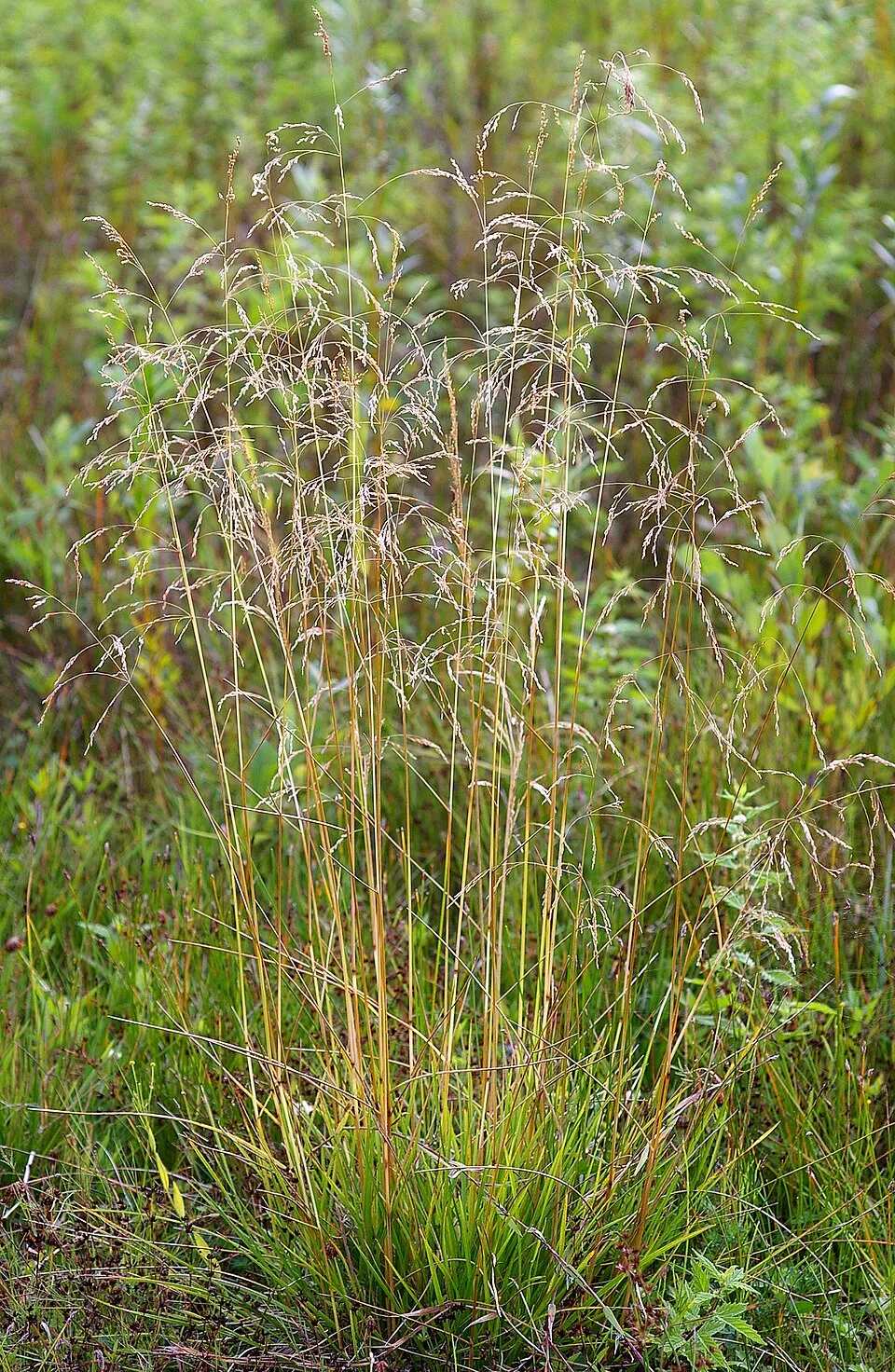
Deschampsia cespitosa, commonly known as tufted hairgrass, is a highly variable and widely distributed perennial cool-season grass species belonging to the Poaceae family. This robust plant typically forms dense, tussock-like clumps, reaching heights of 0.5 to 1.5 meters, though some populations can grow up to 60 inches. Its leaves are slender, linear, and elongated, often exhibiting a characteristic green to bluish-green hue, with widths ranging from 0.06 to 0.16 inches.
The most striking feature is its inflorescence—a graceful, open, and loosely branched panicle that can be upright to nodding, giving a feathery appearance when in full bloom. Flowering generally occurs from late spring through early autumn, typically May to September, with seeds maturing from late June to September depending on geographic location.
D. cespitosa is a remarkably adaptable species, thriving in a diverse range of habitats from sea level to alpine elevations of 14,000 feet. It is commonly found in moist to seasonally wet environments such as meadows, grasslands, coastal terraces, upper tidal marshes, and the edges of wetlands, preferring soils that retain consistent moisture.
While adaptable to various soil types, some populations exhibit extraordinary tolerance to highly acidic soils and heavy metal contamination, making it a valuable species for ecological restoration and bioremediation efforts. Its extensive distribution across arctic and temperate regions globally underscores its ecological resilience and importance.
Trusted Scientific References
1. Authoritative external sources for Deschampsia cespitosa
1.1 Wikipedia — Deschampsia cespitosa
1.2 Kew POWO (Plants of the World Online)
1.3 PubMed — peer-reviewed research
1.4 NCBI Taxonomy Browser
1.5 GBIF — Global Biodiversity
1.6Deschampsia should be interpreted through verified botanical identity, practical care, and responsible safety language. This recovery note adds the missing context needed for a complete profile: match light to the plant's habit, use well-drained soil, water according to season, and avoid unsupported medicinal or edible claims. For publishing, the plant can be presented as a source-backed garden plant with clear care guidance, common problem diagnosis, and conservative safety wording.
1.1.Deschampsia — Key Features
- ✓ <strong>Botanical Classification</strong> — A perennial cool-season grass belonging to the Poaceae family.
- ✓ <strong>Growth Habit</strong> — Forms dense, tussock-like clumps, reaching impressive heights of up to 1.5 meters.
- ✓ <strong>Inflorescence</strong> — Characterized by an elegant, open, and feathery panicle, giving it a distinctive ornamental quality.
- ✓ <strong>Ecological Role</strong> — Crucial for soil stabilization, erosion control, and providing habitat/forage for wildlife.
- ✓ <strong>Environmental Adaptability</strong> — Thrives in a wide range of moist to wet habitats and diverse soil types, including challenging acidic and heavy metal-rich conditions.
- ✓ <strong>Bioremediation Potential</strong> — Some populations demonstrate a unique ability to tolerate and accumulate heavy metals, useful for environmental clean-up.
- ✓ <strong>Phytochemical Profile</strong> — Rich in phenolic acids, flavonoids, and essential fatty acids, contributing to its biological activities.
- ✓ <strong>Non</strong> — toxic Nature — Generally considered safe for livestock and human exposure, with minimal known adverse effects.
- ✓ <strong>Ornamental Value</strong> — Numerous cultivars are cultivated for landscaping due to their attractive form and resilience.
- ✓ <strong>Wide Distribution</strong> — Found across vast arctic and temperate regions globally, from sea level to high altitudes.
1.2.Deschampsia — Quick Summary
- ✓ Widely distributed perennial grass known for its dense, tufted growth.
- ✓ Ecologically significant for soil stabilization and wildlife support.
- ✓ Contains phenolic compounds, flavonoids, and essential fatty acids.
- ✓ Traditionally used in folk medicine for general antioxidant and digestive support.
- ✓ Adaptable to diverse habitats, including acidic and heavy metal-contaminated soils.
- ✓ Generally considered non-toxic, with caution for allergies and specific populations.
2.Deschampsia — Scientific Identity
3.Deschampsia — Quick Facts
4.Deschampsia — Appearance & Identification
5.Deschampsia — Native Habitat
6.Deschampsia — Water Requirements
- ✓ Soil Preference — Thrives in a wide variety of soil types, from fine to coarse, but shows a strong preference for moist, nutrient-rich, and well-drained loams.
- ✓ pH Range — Adaptable to a broad pH range, from acidic 3.5 to neutral 7.5, with some populations exhibiting extreme tolerance to very acidic conditions.
- ✓ Light Requirements — Prefers full sun to partial shade, performing best with adequate light exposure but tolerating some degree of shading.
- ✓ Moisture Consistency — Requires consistent moisture and can tolerate moderately moist to seasonally flooded conditions, making it suitable for riparian zones and rain gardens.
- ✓ Propagation by Seed — Seeds can be sown in early spring or fall; low elevation sources typically have low dormancy, while alpine seeds may benefit from fall sowing for stratification.
- ✓ Seed Depth and Germination — Light enhances germination, so seeds should be covered very lightly, approximately 1/8 inch deep.
- ✓ Clump Division — Established clumps can be effectively divided in fall or early spring to propagate new plants, ensuring genetic continuity.
- ✓ Grazing Management — Once established, rotational, moderate grazing is recommended as continuous, season-long use can lead to decline; defer grazing in spring until soils are dry.
Reviewed by the Flora Medical Global Botanical Review Panel
Multi-disciplinary editorial group · Botany · Ethnobotany · Herbal-medicine literature
Who reviewed this: This page was checked by the Flora Medical Global Botanical Review Panel — an in-house editorial group of botany graduates, ethnobotany researchers, and horticulture practitioners who collectively maintain our 7,000+ plant encyclopedia. Meet the team.
Our 4-step verification process
1. Taxonomic verification
Scientific names and synonyms cross-checked against Kew POWO, World Flora Online, and The Plant List.
2. Phytochemical & medicinal cross-reference
Active compounds, traditional uses, and reported activities are cross-referenced with PubMed, USDA Dr. Duke's database, and peer-reviewed ethnobotanical literature.
3. Conservation & distribution check
Distribution, ecology, and conservation status confirmed against GBIF occurrence records and the IUCN Red List.
4. Editorial & safety review
Every entry passes an editorial pass for clarity, originality, and safety notices (toxicity, contraindications, dosage caveats) before publication.
Last reviewed:
Editorial Note: This page is for educational and plant care purposes only.
Written by: Flora Medical Global Editorial Team
Reviewed by: Flora Medical Global Botanical Review Panel
Last Updated: June 15, 2026







Deschampsia — Comments & Community Reviews
Rate this plant