
Care Disclaimer: Plant care recommendations are general guidelines based on common growing conditions. Individual results may vary based on your local environment, climate, and care routine. If your plant is toxic, keep it away from children and pets, and consult a veterinarian if accidental ingestion occurs.
1.Dianella Tasmanica — Overview
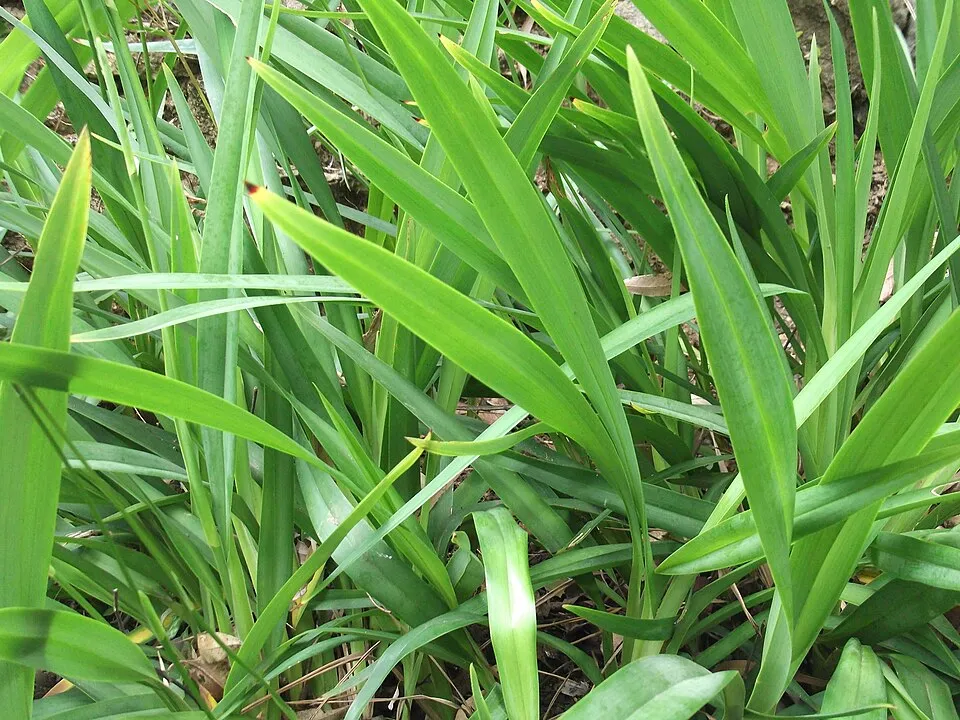
Dianella tasmanica, commonly known as the Tasman Flax-lily or Flax Lily, is a resilient evergreen perennial belonging to the family Phormiaceae. Native to the temperate forests of Australia, particularly Tasmania, Victoria, and New South Wales, this species thrives in woodland understories and along sunny edges. It typically grows to an upright clump, reaching heights of up to 1 meter (3 feet 3 inches) and spreading about 0.5 meters (1 foot 8 inches) wide. The plant features striking, strap-like leaves that are glossy green, often with a subtle blue-green hue, forming a dense basal clump.
These leaves are robust and persistent throughout the year, contributing to its ornamental appeal. During late spring to late summer (May to July in the Northern Hemisphere), Dianella tasmanica produces delicate, star-shaped flowers that are typically blue, sometimes with yellow stamens, borne on tall, slender stalks above the foliage. These flowers are hermaphroditic, containing both male and female organs, and are followed by attractive, iridescent blue berries. While visually appealing, it is important to note that the fruit can cause irritation to the digestive tract if ingested.
This species prefers well-drained, mildly acid to neutral soils and can adapt to conditions ranging from full sun to dappled shade, although it thrives best with some sun exposure. Its robust nature and aesthetic qualities make it a popular choice for ornamental landscaping, particularly in woodland gardens, borders, and as an underplanting.
Trusted Scientific References
1. Authoritative external sources for Dianella Tasmanica
1.1 Wikipedia — Dianella Tasmanica
1.2 Kew POWO (Plants of the World Online)
1.3 PubMed — peer-reviewed research
1.4 NCBI Taxonomy Browser
1.5 GBIF — Global Biodiversity
1.6Dianella Tasmanica should be interpreted through verified botanical identity, practical care, and responsible safety language. This recovery note adds the missing context needed for a complete profile: match light to the plant's habit, use well-drained soil, water according to season, and avoid unsupported medicinal or edible claims. For publishing, the plant can be presented as a source-backed garden plant with clear care guidance, common problem diagnosis, and conservative safety wording.
1.1.Dianella Tasmanica — Key Features
- ✓ <strong>Botanical Name</strong> — *Dianella tasmanica* Hook.f.
- ✓ <strong>Common Names</strong> — Tasman Flax-lily, Flax Lily.
- ✓ <strong>Family</strong> — Phormiaceae.
- ✓ <strong>Native Range</strong> — Australia (Tasmania, Victoria, New South Wales).
- ✓ <strong>Growth Habit</strong> — Evergreen perennial, forming clumps up to 1m tall and 0.5m wide.
- ✓ <strong>Foliage</strong> — Glossy green, strap-like leaves.
- ✓ <strong>Flowers</strong> — Blue, star-shaped, blooming from late spring to late summer.
- ✓ <strong>Fruit</strong> — Iridescent blue berries, known to cause digestive irritation if ingested.
- ✓ <strong>Hardiness</strong> — Hardy to USDA zones 8-9.
- ✓ <strong>Uses</strong> — Primarily ornamental, also used for fiber (basketry, cordage).
1.2.Dianella Tasmanica — Quick Summary
- ✓ Tasman Flax-lily (*Dianella tasmanica*) is an evergreen perennial native to Australia.
- ✓ Primarily valued for ornamental landscaping and its strong leaf fibers.
- ✓ Features glossy green, strap-like leaves and attractive blue flowers followed by iridescent blue berries.
- ✓ The fruit is known to cause digestive tract irritation if ingested.
- ✓ Prefers well-drained soil, tolerates full sun to partial shade, and is relatively low maintenance.
- ✓ No scientifically validated medicinal uses are widely documented for this species.
2.Dianella Tasmanica — Scientific Identity
3.Dianella Tasmanica — Quick Facts
4.Dianella Tasmanica — Appearance & Identification
5.Dianella Tasmanica — Native Habitat
6.Dianella Tasmanica — Water Requirements
- ✓ Soil Preference — Thrives in fertile, well-drained soil enriched with organic matter; tolerates mildly acid to neutral pH levels.
- ✓ Light Requirements — Prefers full sun to partial shade; a sunny, sheltered position is ideal, though it can tolerate dappled shade.
- ✓ Watering Regimen — Requires regular watering, especially during dry spells, to maintain moist soil conditions but avoids waterlogging.
- ✓ Fertilization — Benefits from a balanced fertilization regimen during its active growing season to support robust growth.
- ✓ Hardiness Zone — Hardy to USDA zones 8-9 and UK zone 9, tolerant of moderate cold but prefers stable environments.
- ✓ Propagation by Seed — Pre-soak seeds for 24 hours in lukewarm water, then sow in spring in gentle heat (around 25°C) in a greenhouse; germination can take 1-3 months.
- ✓ Seedling Care — Prick out seedlings into individual pots once large enough to handle and grow on in a greenhouse for at least two years before planting out.
- ✓ Division — Established clumps can be divided in spring as plants come into growth; larger divisions can be planted directly, while smaller ones benefit from potting up first.
Reviewed by the Flora Medical Global Botanical Review Panel
Multi-disciplinary editorial group · Botany · Ethnobotany · Herbal-medicine literature
Who reviewed this: This page was checked by the Flora Medical Global Botanical Review Panel — an in-house editorial group of botany graduates, ethnobotany researchers, and horticulture practitioners who collectively maintain our 7,000+ plant encyclopedia. Meet the team.
Our 4-step verification process
1. Taxonomic verification
Scientific names and synonyms cross-checked against Kew POWO, World Flora Online, and The Plant List.
2. Phytochemical & medicinal cross-reference
Active compounds, traditional uses, and reported activities are cross-referenced with PubMed, USDA Dr. Duke's database, and peer-reviewed ethnobotanical literature.
3. Conservation & distribution check
Distribution, ecology, and conservation status confirmed against GBIF occurrence records and the IUCN Red List.
4. Editorial & safety review
Every entry passes an editorial pass for clarity, originality, and safety notices (toxicity, contraindications, dosage caveats) before publication.
Last reviewed:
Editorial Note: This page is for educational and plant care purposes only.
Written by: Flora Medical Global Editorial Team
Reviewed by: Flora Medical Global Botanical Review Panel
Last Updated: June 15, 2026







Dianella Tasmanica — Comments & Community Reviews
Rate this plant