

Care Disclaimer: Plant care recommendations are general guidelines based on common growing conditions. Individual results may vary based on your local environment, climate, and care routine. If your plant is toxic, keep it away from children and pets, and consult a veterinarian if accidental ingestion occurs.
1.Dianthus Barbatus — Overview
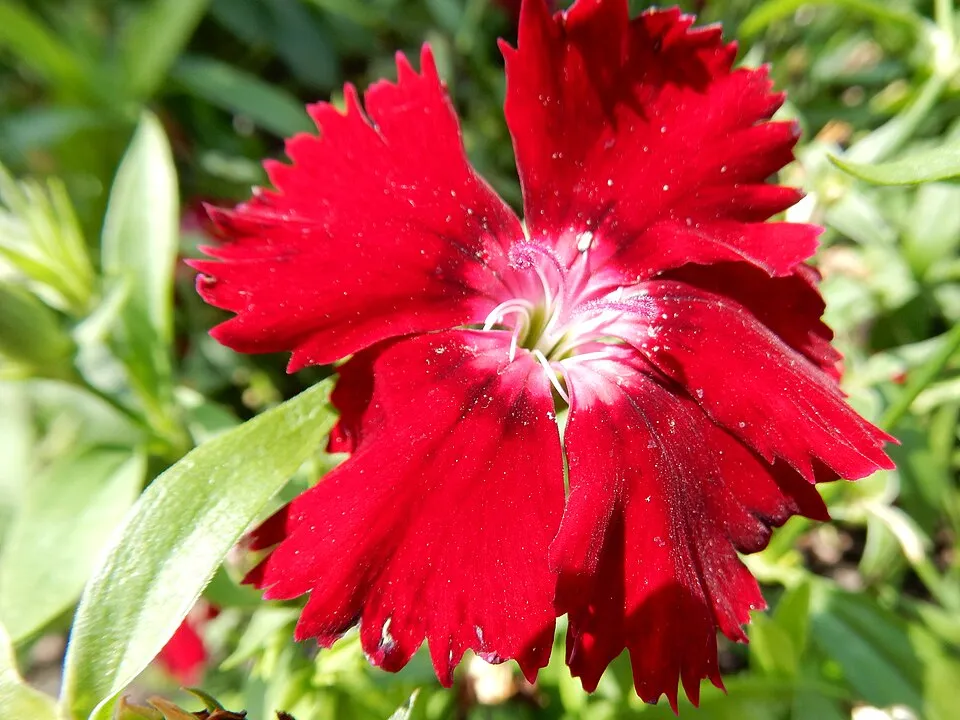
Dianthus barbatus, widely recognized by its common names Sweet William and Sweet John, is a charming herbaceous plant belonging to the Caryophyllaceae family. This species typically behaves as a biennial or a short-lived perennial, often cultivated as an annual in various temperate garden settings.
It forms a dense, bushy clump, usually reaching a mature height of 30 to 60 centimeters. The foliage consists of lanceolate, often glaucous green leaves with smooth margins, providing a lush backdrop to its vibrant floral display.
The most striking feature of Sweet William is its inflorescence—dense, rounded clusters of flowers, known as cymes, that bloom profusely from late spring through early fall. The individual flowers are relatively small but present a spectacular array of colors, ranging from pure white, various shades of pink and red, to deep purple, and frequently exhibit attractive bicolor patterns or contrasting 'eyes'.
A distinctive characteristic referenced in its scientific epithet 'barbatus' is the presence of beard-like tufts of hairs at the throat of the petals, adding to its unique aesthetic.
Native to southern Europe and parts of Asia, Dianthus barbatus has been widely naturalized and cultivated across the globe due to its ornamental value and adaptability. It thrives in well-drained, loamy soils that are slightly alkaline and prefers locations with full sun to partial shade, requiring at least six hours of sunlight daily for optimal growth and flowering.
While primarily celebrated as an ornamental, its historical presence in traditional herbal practices hints at a broader significance beyond its visual appeal.
Trusted Scientific References
1. Authoritative external sources for Dianthus Barbatus
1.1 Wikipedia — Dianthus Barbatus
1.2 Kew POWO (Plants of the World Online)
1.3 PubMed — peer-reviewed research
1.4 NCBI Taxonomy Browser
1.5 GBIF — Global Biodiversity
1.6Dianthus Barbatus should be interpreted through verified botanical identity, practical care, and responsible safety language. This recovery note adds the missing context needed for a complete profile: match light to the plant's habit, use well-drained soil, water according to season, and avoid unsupported medicinal or edible claims. For publishing, the plant can be presented as a source-backed garden plant with clear care guidance, common problem diagnosis, and conservative safety wording.
1.1.Dianthus Barbatus — Key Features
- ✓ <strong>Botanical Identity</strong> — Dianthus barbatus, commonly known as Sweet William, a member of the Caryophyllaceae family.
- ✓ <strong>Growth Habit</strong> — Biennial or short-lived perennial, forming bushy clumps up to 60 cm tall.
- ✓ <strong>Distinctive Flowers</strong> — Dense, rounded clusters of vibrant, often bicolor flowers with 'bearded' petals.
- ✓ <strong>Medicinal Properties</strong> — Noted for anti-inflammatory, antiseptic, and antioxidant actions.
- ✓ <strong>Traditional Applications</strong> — Used in Ayurveda for digestion and skin, and TCM for respiratory health.
- ✓ <strong>Phytochemical Richness</strong> — Contains beneficial flavonoids, saponins, and essential oils.
- ✓ <strong>Cultivation Ease</strong> — Adaptable garden plant thriving in well-drained soil and moderate sunlight.
- ✓ <strong>Pollinator Attractor</strong> — Flowers attract various pollinators, enhancing garden biodiversity.
- ✓ <strong>Low Toxicity Profile</strong> — Generally considered low toxicity, but caution advised for ingestion.
- ✓ <strong>Ornamental Value</strong> — Highly valued for its colorful blooms in cottage gardens and floral arrangements.
1.2.Dianthus Barbatus — Quick Summary
- ✓ Dianthus barbatus, or Sweet William, is a vibrant biennial/perennial known for its ornamental and traditional medicinal uses.
- ✓ Rich in flavonoids and saponins, offering anti-inflammatory, antiseptic, and antioxidant benefits.
- ✓ Historically used in Ayurveda and TCM for digestive, skin, and respiratory support.
- ✓ Requires well-drained soil and sun to partial shade for cultivation.
- ✓ Potential for mild skin irritation or gastrointestinal upset if ingested in large amounts.
- ✓ Not recommended for pregnant/lactating individuals or young children without professional advice.
2.Dianthus Barbatus — Scientific Identity
3.Dianthus Barbatus — Quick Facts
4.Dianthus Barbatus — Appearance & Identification
5.Dianthus Barbatus — Native Habitat
6.Dianthus Barbatus — Water Requirements
- ✓ Soil Preference — Sweet William thrives in well-draining, loamy soil enriched with organic matter; it prefers a slightly alkaline pH.
- ✓ Sunlight Requirements — Best grown in full sun to partial shade, ideally receiving at least 6 hours of direct sunlight daily for robust flowering.
- ✓ Watering Regime — Maintain consistent moisture, especially during dry spells and the blooming period, but avoid waterlogging to prevent root rot.
- ✓ Fertilization — Apply a balanced organic fertilizer every few weeks during the active growing season to promote vigorous growth and abundant blooms.
- ✓ Pruning and Deadheading — Regular deadheading of spent flowers encourages continuous blooming and prevents self-seeding; pruning helps maintain plant shape and remove damaged foliage.
- ✓ Pest and Disease Management — Be vigilant for common issues like crown rot and rust, particularly in poorly drained conditions; protect against snails and slugs, especially in shaded areas.
- ✓ Propagation — Can be propagated by seeds, which are typically sown in late summer or early spring for blooms the following year, or by cuttings from established plants.
- ✓ Winter Care — In colder climates, provide a layer of mulch to protect the root crown of perennial varieties through winter.
Reviewed by the Flora Medical Global Botanical Review Panel
Multi-disciplinary editorial group · Botany · Ethnobotany · Herbal-medicine literature
Who reviewed this: This page was checked by the Flora Medical Global Botanical Review Panel — an in-house editorial group of botany graduates, ethnobotany researchers, and horticulture practitioners who collectively maintain our 7,000+ plant encyclopedia. Meet the team.
Our 4-step verification process
1. Taxonomic verification
Scientific names and synonyms cross-checked against Kew POWO, World Flora Online, and The Plant List.
2. Phytochemical & medicinal cross-reference
Active compounds, traditional uses, and reported activities are cross-referenced with PubMed, USDA Dr. Duke's database, and peer-reviewed ethnobotanical literature.
3. Conservation & distribution check
Distribution, ecology, and conservation status confirmed against GBIF occurrence records and the IUCN Red List.
4. Editorial & safety review
Every entry passes an editorial pass for clarity, originality, and safety notices (toxicity, contraindications, dosage caveats) before publication.
Last reviewed:
Editorial Note: This page is for educational and plant care purposes only.
Written by: Flora Medical Global Editorial Team
Reviewed by: Flora Medical Global Botanical Review Panel
Last Updated: June 15, 2026







Dianthus Barbatus — Comments & Community Reviews
Rate this plant