

Care Disclaimer: Plant care recommendations are general guidelines based on common growing conditions. Individual results may vary based on your local environment, climate, and care routine. If your plant is toxic, keep it away from children and pets, and consult a veterinarian if accidental ingestion occurs.
1.Dicentra Eximia — Overview
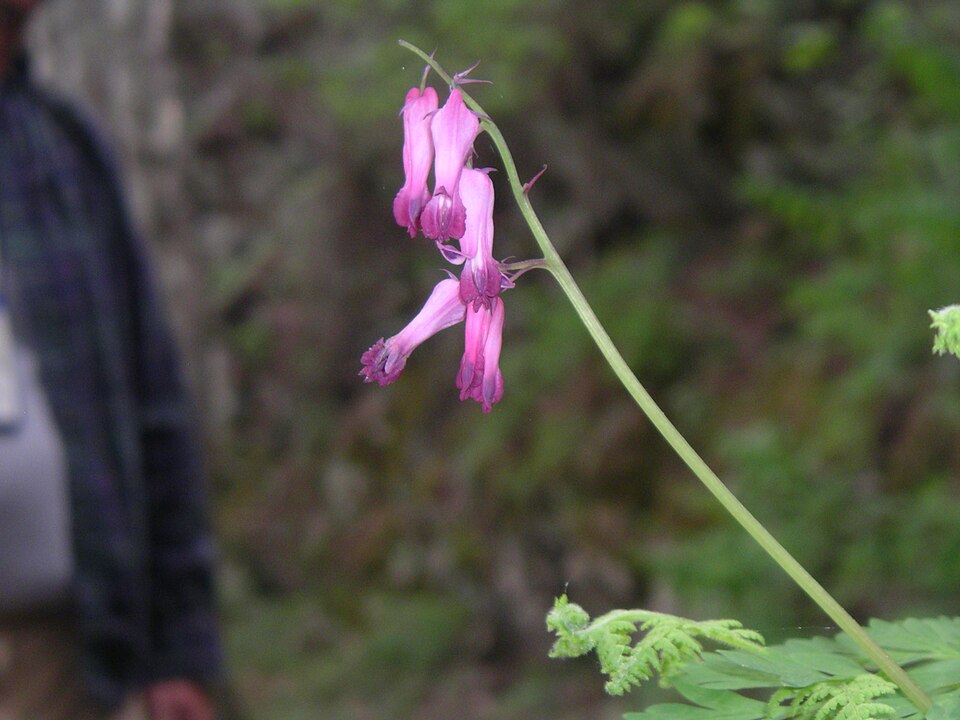
Dicentra eximia, commonly known as Fringed Bleeding Heart or Wild Bleeding Heart, is a captivating native herbaceous perennial celebrated for its delicate beauty. This striking plant typically reaches a height of 30 to 45 centimeters (12 to 18 inches), forming attractive arching mounds. Its foliage is a distinctive feature, characterized by finely dissected, fern-like, ternately decompound leaves that often exhibit a lovely bluish-green hue, providing a soft texture to the garden.
During an extended blooming period from late spring well into fall, and sometimes reblooming in warmer climates, Dicentra eximia produces numerous heart-shaped flowers. These pendulous blooms, typically pink to purplish-pink, measure approximately 2 to 3 centimeters across and are borne on slender, erect-spreading flower scapes that rise gracefully above the lacy foliage.
Ecologically, Dicentra eximia is indigenous to the forest floors, rocky woods, and ledges of the Appalachian Mountains in eastern North America, particularly noted as a native species in North Carolina. It thrives in temperate climates, preferring rich, moist, well-drained soils that are abundant in organic matter. While it flourishes in partial to full shade, it can tolerate more direct sunlight if consistently provided with ample moisture.
The plant readily naturalizes in suitable conditions, often propagating through seed dispersal aided by ants, making it an excellent choice for native plant gardens, woodland settings, and shaded rockeries. Taxonomically, Dicentra eximia belongs to the Papaveraceae family, specifically the Fumarioideae subfamily, a classification that underscores its botanical relationship to other poppy-like plants.
Trusted Scientific References
1. Authoritative external sources for Dicentra Eximia
1.1 Wikipedia — Dicentra Eximia
1.2 Kew POWO (Plants of the World Online)
1.3 PubMed — peer-reviewed research
1.4 NCBI Taxonomy Browser
1.5 GBIF — Global Biodiversity
1.6Dicentra Eximia should be interpreted through verified botanical identity, practical care, and responsible safety language. This recovery note adds the missing context needed for a complete profile: match light to the plant's habit, use well-drained soil, water according to season, and avoid unsupported medicinal or edible claims. For publishing, the plant can be presented as a source-backed garden plant with clear care guidance, common problem diagnosis, and conservative safety wording.
1.1.Dicentra Eximia — Key Features
- ✓ <strong>Native Appalachian perennial</strong> — Native Appalachian perennial wildflower.
- ✓ <strong>Distinctive heart</strong> — shaped pink to purplish-pink pendulous flowers.
- ✓ <strong>Elegant, finely dissected, fern</strong> — like foliage, often with a bluish-green tint.
- ✓ <strong>Contains toxic isoquinoline</strong> — Contains toxic isoquinoline alkaloids throughout all plant parts.
- ✓ <strong>Blooms prolifically from</strong> — Blooms prolifically from late spring through fall, offering extended garden interest.
- ✓ <strong>Highly attractive to</strong> — Highly attractive to hummingbirds, bees, and other beneficial pollinators.
- ✓ <strong>Excellent choice for</strong> — Excellent choice for shade gardens, rock gardens, and native plant landscapes.
- ✓ <strong>Known for being a low</strong> — maintenance plant with minimal pest or disease issues.
- ✓ <strong>Exhibits natural resistance</strong> — Exhibits natural resistance to browsing by deer and rabbits.
- ✓ <strong>Capable of naturalizing</strong> — Capable of naturalizing through seed dispersal, often aided by ants.
1.2.Dicentra Eximia — Quick Summary
- ✓ Ornamental perennial native to the Appalachian Mountains, known as Fringed Bleeding Heart.
- ✓ Features delicate, fern-like leaves and distinctive heart-shaped pink to purplish-pink flowers.
- ✓ Thrives in moist, shaded, well-drained garden environments, making it ideal for woodland settings.
- ✓ All plant parts are toxic due to the presence of isoquinoline alkaloids; it is not safe for consumption.
- ✓ Valued primarily for its aesthetic appeal in gardens and its role as an important pollinator plant.
- ✓ Generally low maintenance, naturally resistant to deer and rabbits, and can naturalize easily.
2.Dicentra Eximia — Scientific Identity
3.Dicentra Eximia — Quick Facts
4.Dicentra Eximia — Appearance & Identification
5.Dicentra Eximia — Native Habitat
6.Dicentra Eximia — Water Requirements
- ✓ Soil Preparation — Requires rich, well-drained soil generously amended with organic matter to ensure adequate moisture retention and aeration, mimicking its native woodland habitat.
- ✓ Light Requirements — Thrives best in partial to full shade, especially in hotter climates, though it can tolerate more sun if consistently provided with abundant water.
- ✓ Watering — Maintain consistently moist soil throughout the growing season; avoid waterlogging, particularly during winter, which can lead to detrimental root rot.
- ✓ Climate & Hardiness — Hardy in USDA zones 3-9, preferring cool, moist conditions characteristic of its native Appalachian Mountain environment.
- ✓ Propagation — Can be readily propagated by seed, often dispersed naturally by ants (myrmecochory), or by carefully dividing established clumps in early spring or fall.
- ✓ Garden Placement — Ideal for woodland gardens, shaded borders, rock gardens, native plant landscapes, and naturalized areas where its delicate foliage can flourish.
- ✓ Maintenance — Generally low-maintenance; deadheading spent blooms can encourage further flowering, and it exhibits natural resistance to deer and rabbit browsing.
- ✓ Winter Care — Ensure excellent drainage during winter months to prevent root damage from excessive moisture, particularly in regions experiencing cold and wet conditions.
Reviewed by the Flora Medical Global Botanical Review Panel
Multi-disciplinary editorial group · Botany · Ethnobotany · Herbal-medicine literature
Who reviewed this: This page was checked by the Flora Medical Global Botanical Review Panel — an in-house editorial group of botany graduates, ethnobotany researchers, and horticulture practitioners who collectively maintain our 7,000+ plant encyclopedia. Meet the team.
Our 4-step verification process
1. Taxonomic verification
Scientific names and synonyms cross-checked against Kew POWO, World Flora Online, and The Plant List.
2. Phytochemical & medicinal cross-reference
Active compounds, traditional uses, and reported activities are cross-referenced with PubMed, USDA Dr. Duke's database, and peer-reviewed ethnobotanical literature.
3. Conservation & distribution check
Distribution, ecology, and conservation status confirmed against GBIF occurrence records and the IUCN Red List.
4. Editorial & safety review
Every entry passes an editorial pass for clarity, originality, and safety notices (toxicity, contraindications, dosage caveats) before publication.
Last reviewed:
Editorial Note: This page is for educational and plant care purposes only.
Written by: Flora Medical Global Editorial Team
Reviewed by: Flora Medical Global Botanical Review Panel
Last Updated: June 15, 2026







Dicentra Eximia — Comments & Community Reviews
Rate this plant