

Care Disclaimer: Plant care recommendations are general guidelines based on common growing conditions. Individual results may vary based on your local environment, climate, and care routine. If your plant is toxic, keep it away from children and pets, and consult a veterinarian if accidental ingestion occurs.
1.Dicentra Formosa — Overview
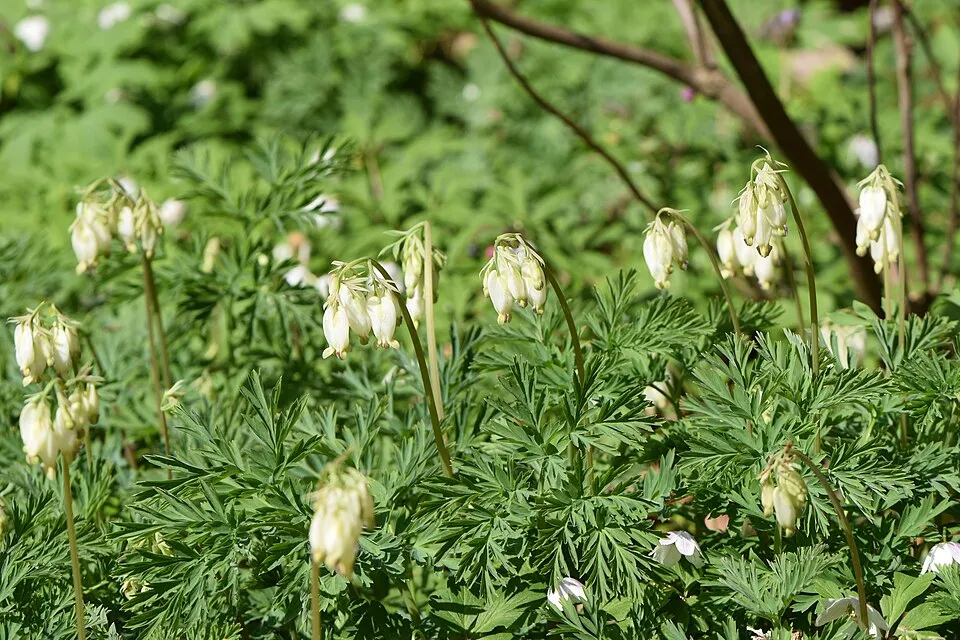
Dicentra formosa, commonly known as Pacific Bleeding Heart, is an enchanting herbaceous perennial native to the temperate woodlands and forest edges of western North America, particularly abundant in the Pacific Northwest. This delicate yet resilient plant typically rises 6 to 18 inches (15-45 cm) from stout, elongated rhizomes that enable it to survive harsh winters and spread gracefully. Its most distinctive feature is the cluster of drooping, heart-shaped flowers, ranging in color from rose-purple to pink, often flushed with lavender. Each blossom showcases two prominent outer petals that reflex backward, creating a characteristic spurred appearance, which is reflected in the genus name 'Dicentra' meaning 'double spurred' in Greek.
These captivating flowers, numbering from 2 to 30, are borne terminally on leafless (scapose) stems, creating an airy display. The foliage is equally striking, with soft, fern-like leaves that are entirely basal and exhibit a lovely bluish-green hue. These finely dissected leaves are generally hairless, providing a smooth contrast to the plant's delicate blooms. Pacific Bleeding Heart thrives in well-drained, humus-rich soils and prefers partial to full shade, though it can tolerate some morning sun in cooler climates.
Blooming from March through June, it provides an early spring and summer floral spectacle, attracting various pollinators like bees and butterflies to its nectar-rich flowers. Taxonomically, Dicentra formosa belongs to the family Papaveraceae, specifically within the subfamily Fumarioideae, which was formerly recognized as the independent family Fumariaceae. Its presence adds a touch of ethereal beauty to shaded garden landscapes and native plant restorations.
Trusted Scientific References
1. Authoritative external sources for Dicentra Formosa
1.1 Wikipedia — Dicentra Formosa
1.2 Kew POWO (Plants of the World Online)
1.3 PubMed — peer-reviewed research
1.4 NCBI Taxonomy Browser
1.5 GBIF — Global Biodiversity
1.6Dicentra Formosa should be interpreted through verified botanical identity, practical care, and responsible safety language. This recovery note adds the missing context needed for a complete profile: match light to the plant's habit, use well-drained soil, water according to season, and avoid unsupported medicinal or edible claims. For publishing, the plant can be presented as a source-backed garden plant with clear care guidance, common problem diagnosis, and conservative safety wording.
1.1.Dicentra Formosa — Key Features
- ✓ <strong>Distinctive Heart</strong> — Shaped Flowers — Iconic rose-purple or pink blossoms.
- ✓ <strong>Fern</strong> — Like Basal Foliage — Soft, bluish-green, deeply dissected leaves.
- ✓ <strong>Native to Pacific Northwest</strong> — Thrives in temperate woodland environments.
- ✓ <strong>Rhizomatous Perennial</strong> — Spreads via underground stems, ensuring winter survival.
- ✓ <strong>Rich in Isoquinoline Alkaloids</strong> — Primary active compounds responsible for both effects and toxicity.
- ✓ <strong>Traditional Analgesic and Nervine</strong> — Historically used for pain and nervous conditions.
- ✓ <strong>Potential for Skin Irritation</strong> — Direct contact with sap can cause mild dermal reactions.
- ✓ <strong>Early Spring to Summer Bloomer</strong> — Provides vibrant color from March to June.
- ✓ <strong>Attracts Pollinators</strong> — Flowers are a source of nectar for bees and butterflies.
- ✓ <strong>Scapose Flowering Stems</strong> — Flowers borne on leafless stalks above the foliage.
1.2.Dicentra Formosa — Quick Summary
- ✓ Pacific Bleeding Heart (*Dicentra formosa*) is a beautiful, rhizomatous perennial native to western North America.
- ✓ Known for its distinctive heart-shaped, rose-purple flowers and fern-like basal foliage.
- ✓ Contains potent isoquinoline alkaloids, rendering all plant parts poisonous if ingested.
- ✓ Historically used in traditional medicine as an analgesic, nervine, and tonic, but with extreme caution.
- ✓ Ingestion can cause severe gastrointestinal, neurological, and respiratory symptoms.
- ✓ Medicinal use is strictly contraindicated without expert medical herbalism guidance due to its high toxicity.
2.Dicentra Formosa — Scientific Identity
3.Dicentra Formosa — Quick Facts
4.Dicentra Formosa — Appearance & Identification
5.Dicentra Formosa — Native Habitat
6.Dicentra Formosa — Water Requirements
- ✓ Site Selection — Choose a location with partial to full shade, mimicking its natural woodland habitat, ideally with protection from harsh afternoon sun.
- ✓ Soil Preparation — Ensure well-drained, humus-rich soil with a slightly acidic to neutral pH (6.0-7.0); amend heavy clays with organic matter to improve drainage.
- ✓ Planting — Plant rhizomes or nursery-grown plants in spring or fall, ensuring the crown is at soil level and spaced 12-18 inches apart to allow for spread.
- ✓ Watering — Provide consistent moisture, especially during dry periods and the first growing season; avoid waterlogging, which can lead to root rot.
- ✓ Fertilization — Apply a balanced, slow-release organic fertilizer in early spring, or top-dress with compost to enrich the soil.
- ✓ Propagation — Easily propagated by division of its rhizomes in late summer or early spring, or by fresh seed, though seed germination can be slow.
- ✓ Pest and Disease Management — Generally pest-resistant, but watch for slugs and snails; ensure good air circulation to prevent fungal issues in humid conditions.
- ✓ Winter Care — In colder zones (USDA 4-8), apply a layer of mulch in late fall to protect rhizomes from deep freezes, though it is quite cold hardy.
Reviewed by the Flora Medical Global Botanical Review Panel
Multi-disciplinary editorial group · Botany · Ethnobotany · Herbal-medicine literature
Who reviewed this: This page was checked by the Flora Medical Global Botanical Review Panel — an in-house editorial group of botany graduates, ethnobotany researchers, and horticulture practitioners who collectively maintain our 7,000+ plant encyclopedia. Meet the team.
Our 4-step verification process
1. Taxonomic verification
Scientific names and synonyms cross-checked against Kew POWO, World Flora Online, and The Plant List.
2. Phytochemical & medicinal cross-reference
Active compounds, traditional uses, and reported activities are cross-referenced with PubMed, USDA Dr. Duke's database, and peer-reviewed ethnobotanical literature.
3. Conservation & distribution check
Distribution, ecology, and conservation status confirmed against GBIF occurrence records and the IUCN Red List.
4. Editorial & safety review
Every entry passes an editorial pass for clarity, originality, and safety notices (toxicity, contraindications, dosage caveats) before publication.
Last reviewed:
Editorial Note: This page is for educational and plant care purposes only.
Written by: Flora Medical Global Editorial Team
Reviewed by: Flora Medical Global Botanical Review Panel
Last Updated: June 15, 2026







Dicentra Formosa — Comments & Community Reviews
Rate this plant