
Care Disclaimer: Plant care recommendations are general guidelines based on common growing conditions. Individual results may vary based on your local environment, climate, and care routine. If your plant is toxic, keep it away from children and pets, and consult a veterinarian if accidental ingestion occurs.
1.Dicentra Spectabilis — Overview
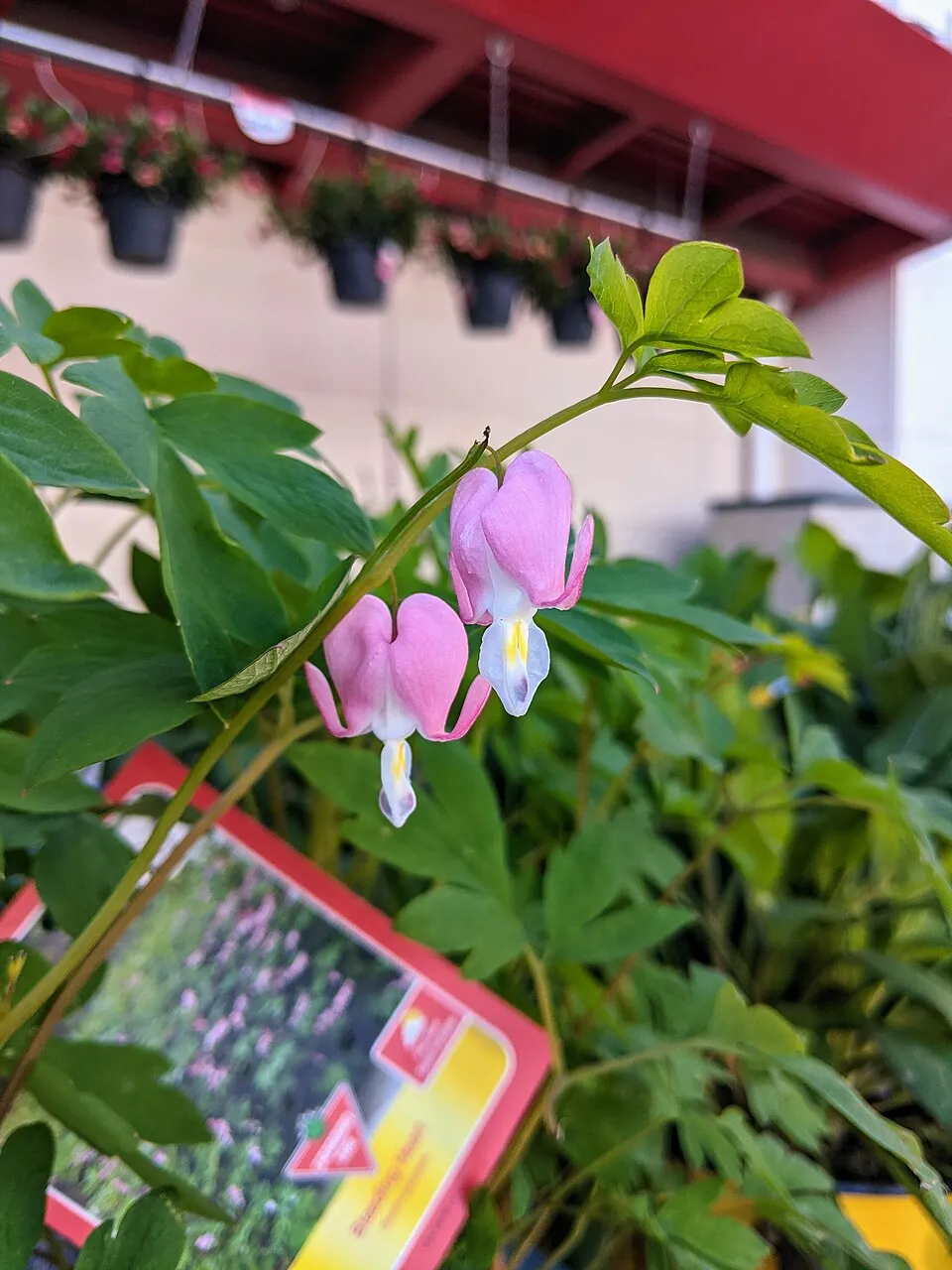
Dicentra spectabilis, now botanically recognized as Lamprocapnos spectabilis, is an exquisite herbaceous perennial belonging to the Fumariaceae family. Commonly known as Bleeding Heart, Chinese Pants, or Lady’s Locket, it is native to the woodlands of Eastern Asia, specifically northern China, Korea, and Japan.
This plant forms lush, bushy clumps, typically reaching heights of up to 3 feet and spreading outwards to 4 feet. Its distinctive reddish new foliage emerges in very early spring, rapidly developing into powdery-green leaves deeply divided into three leaflets, which remain attractive until the plant enters its summer dormancy.
The most striking feature of Dicentra spectabilis is its unique, heart-shaped pendant flowers, which are typically 1 to 2 inches long. Each delicate bloom showcases two rose-pink outer petals that pouch outwards, with two white inner petals gracefully protruding from the bottom, accompanied by a small white stamen. These captivating flowers dangle in a one-sided horizontal raceme from arching, leafless stems, blooming from late spring into early summer.
Following flowering, the plant produces elongate seed pods. Adaptable and hardy in USDA zones 2-8, Bleeding Heart thrives in light shade and consistently moist, well-drained soils rich in organic matter, making it a beloved ornamental in cottage and woodland gardens worldwide. Its tendency to senesce and go dormant by mid-summer, especially in hotter or drier conditions, is a key characteristic of its growth cycle.
Trusted Scientific References
1. Authoritative external sources for Dicentra Spectabilis
1.1 Wikipedia — Dicentra Spectabilis
1.2 Kew POWO (Plants of the World Online)
1.3 PubMed — peer-reviewed research
1.4 NCBI Taxonomy Browser
1.5 GBIF — Global Biodiversity
1.6Dicentra Spectabilis should be interpreted through verified botanical identity, practical care, and responsible safety language. This recovery note adds the missing context needed for a complete profile: match light to the plant's habit, use well-drained soil, water according to season, and avoid unsupported medicinal or edible claims. For publishing, the plant can be presented as a source-backed garden plant with clear care guidance, common problem diagnosis, and conservative safety wording.
1.1.Dicentra Spectabilis — Key Features
- ✓ <strong>Distinctive heart</strong> — shaped, pendant flowers in pink or white.
- ✓ <strong>Early spring blooming</strong> — Early spring blooming period, often one of the first perennials to flower.
- ✓ <strong>Foliage typically senesces and goes dormant by mid</strong> — summer.
- ✓ <strong>Hardy in USDA Zones 2</strong> — 8, adapting to various temperate climates.
- ✓ <strong>Prefers light shade</strong> — Prefers light shade and consistently moist, organically rich soil.
- ✓ <strong>Contains toxic isoquinoline</strong> — Contains toxic isoquinoline alkaloids throughout all plant parts.
- ✓ <strong>Primarily cultivated for</strong> — Primarily cultivated for its significant ornamental and aesthetic garden value.
- ✓ <strong>Forms bushy clumps,</strong> — Forms bushy clumps, reaching up to 3 feet in height and 4 feet in width.
- ✓ <strong>Relatively low maintenance</strong> — Relatively low maintenance once established in its preferred growing conditions.
- ✓ <strong>Ideal for woodland</strong> — Ideal for woodland gardens, shaded borders, and cottage garden designs.
1.2.Dicentra Spectabilis — Quick Summary
- ✓ Ornamental perennial known for distinctive heart-shaped flowers.
- ✓ Native to Eastern Asia, thrives in light shade and moist, well-drained soil.
- ✓ All plant parts are toxic due to the presence of isoquinoline alkaloids.
- ✓ Not used in traditional or modern internal medicine due to its toxicity.
- ✓ Provides vibrant early spring garden interest before entering summer dormancy.
- ✓ Requires minimal maintenance once established in suitable conditions.
2.Dicentra Spectabilis — Scientific Identity
3.Dicentra Spectabilis — Quick Facts
4.Dicentra Spectabilis — Appearance & Identification
5.Dicentra Spectabilis — Native Habitat
6.Dicentra Spectabilis — Water Requirements
- ✓ Site Selection — Plant in a location offering light to partial shade, ideally with morning sun and protection from intense afternoon heat; full sun is tolerated only in consistently cool, moist climates.
- ✓ Soil Requirements — Ensure well-drained soil rich in organic matter; while adaptable to clay or sandy soils, proper moisture management is critical to prevent waterlogging or excessive dryness.
- ✓ Watering — Maintain consistent soil moisture throughout the growing season, especially during dry spells, but avoid overly saturated conditions which can lead to root rot.
- ✓ Propagation — Propagate primarily by dividing the fleshy roots in late fall or very early spring, or by sowing fresh seeds, which require cold stratification.
- ✓ Seed Germination — Fresh seeds need a period of cold, moist stratification for several weeks to months to overcome dormancy and promote successful germination.
- ✓ Post-Flowering Care — Consider cutting back the foliage hard after the blooming period to potentially delay its natural summer dormancy, though this is not always necessary.
- ✓ Pest and Disease Management — Generally a robust plant with few serious pests; however, monitor for occasional aphid infestations on inflorescences and slug damage on leaves.
- ✓ Winter Protection — In colder regions, applying a layer of organic mulch around the plant base in late fall can provide additional root protection, though it is hardy to Zone 2.
Reviewed by the Flora Medical Global Botanical Review Panel
Multi-disciplinary editorial group · Botany · Ethnobotany · Herbal-medicine literature
Who reviewed this: This page was checked by the Flora Medical Global Botanical Review Panel — an in-house editorial group of botany graduates, ethnobotany researchers, and horticulture practitioners who collectively maintain our 7,000+ plant encyclopedia. Meet the team.
Our 4-step verification process
1. Taxonomic verification
Scientific names and synonyms cross-checked against Kew POWO, World Flora Online, and The Plant List.
2. Phytochemical & medicinal cross-reference
Active compounds, traditional uses, and reported activities are cross-referenced with PubMed, USDA Dr. Duke's database, and peer-reviewed ethnobotanical literature.
3. Conservation & distribution check
Distribution, ecology, and conservation status confirmed against GBIF occurrence records and the IUCN Red List.
4. Editorial & safety review
Every entry passes an editorial pass for clarity, originality, and safety notices (toxicity, contraindications, dosage caveats) before publication.
Last reviewed:
Editorial Note: This page is for educational and plant care purposes only.
Written by: Flora Medical Global Editorial Team
Reviewed by: Flora Medical Global Botanical Review Panel
Last Updated: June 15, 2026







Dicentra Spectabilis — Comments & Community Reviews
Rate this plant