
Care Disclaimer: Plant care recommendations are general guidelines based on common growing conditions. Individual results may vary based on your local environment, climate, and care routine. If your plant is toxic, keep it away from children and pets, and consult a veterinarian if accidental ingestion occurs.
1.Dimorphotheca — Overview
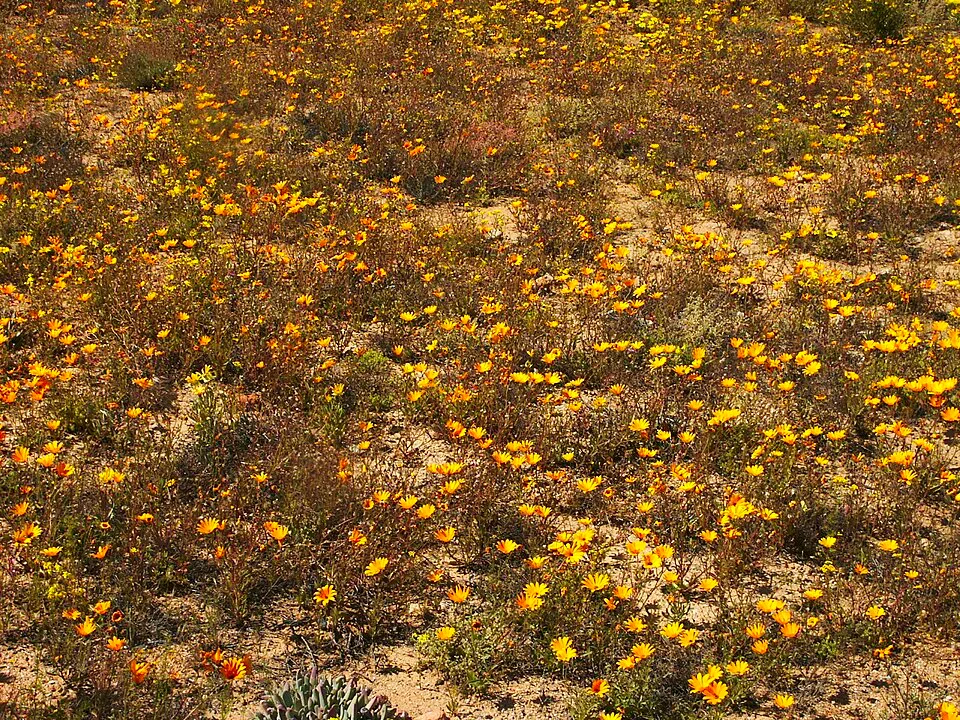
Dimorphotheca sinuata, commonly known as the African daisy or Cape Marigold, is a captivating annual herbaceous plant belonging to the Asteraceae family. Native to the arid and semi-arid regions of South Africa, particularly the Namaqualand desert, it has naturalized in various parts of the world, including California, Arizona, and Oregon in the United States. This species typically grows in a rosette formation, producing slender, spoon-shaped leaves with shallowly lobed or sinuate margins, which are often light green and can reach up to 3 inches in length.
The plant's most striking feature is its abundant, daisy-like capitula (flower heads) borne on long, graceful stems that elevate them above the foliage. These vibrant flowers, measuring 2-2.5 inches in diameter, display a spectacular palette of colors including bright yellow, orange, and occasionally white or pink, often with a contrasting central disc. A unique characteristic is their heliotropic nature, opening fully in direct sunlight and closing at night or on cloudy days.
Dimorphotheca sinuata is well-adapted to challenging conditions, thriving in full sun and well-drained, sandy or loamy soils, demonstrating remarkable drought tolerance. Its flowering season spans from spring through summer, providing a continuous display of color and acting as a strong attractant for various pollinators like bees and butterflies, thereby significantly contributing to local biodiversity in garden and natural settings.
Trusted Scientific References
1. Authoritative external sources for Dimorphotheca sinuata
1.1 Wikipedia — Dimorphotheca sinuata
1.2 Kew POWO (Plants of the World Online)
1.3 PubMed — peer-reviewed research
1.4 NCBI Taxonomy Browser
1.5 GBIF — Global Biodiversity
1.6Dimorphotheca should be interpreted through verified botanical identity, practical care, and responsible safety language. This recovery note adds the missing context needed for a complete profile: match light to the plant's habit, use well-drained soil, water according to season, and avoid unsupported medicinal or edible claims. For publishing, the plant can be presented as a source-backed garden plant with clear care guidance, common problem diagnosis, and conservative safety wording.
1.1.Dimorphotheca — Key Features
- ✓ <strong>Vibrant, daisy</strong> — like flowers in yellow, orange, white, or pink.
- ✓ <strong>Heliotropic blooms that</strong> — Heliotropic blooms that close at night and on cloudy days.
- ✓ <strong>Excellent drought tolerance,</strong> — Excellent drought tolerance, ideal for xeriscaping.
- ✓ <strong>Attracts essential pollinators</strong> — Attracts essential pollinators like bees and butterflies.
- ✓ <strong>Annual plant with</strong> — Annual plant with a long blooming season from spring to summer.
- ✓ <strong>Low maintenance requirements,</strong> — Low maintenance requirements, suitable for beginner gardeners.
- ✓ <strong>Thrives in full sun and well</strong> — drained, sandy or loamy soils.
- ✓ <strong>Readily self</strong> — seeds, often returning year after year.
- ✓ <strong>Native to South</strong> — Native to South Africa, naturalized in parts of the US.
- ✓ <strong>Used extensively in</strong> — Used extensively in rock gardens, borders, and containers.
1.2.Dimorphotheca — Quick Summary
- ✓ African daisy, a vibrant annual from South Africa, known for striking flowers.
- ✓ Primarily ornamental, valued for aesthetic appeal and attracting pollinators.
- ✓ Drought-tolerant and thrives in full sun and well-drained soils.
- ✓ Contains flavonoids, phenolic acids, and carotenoids, typical of Asteraceae.
- ✓ Easy to cultivate, self-seeds readily, and requires low maintenance.
- ✓ Not documented for traditional medicinal uses; focus on ecological and well-being benefits.
2.Dimorphotheca — Scientific Identity
3.Dimorphotheca — Quick Facts
4.Dimorphotheca — Appearance & Identification
5.Dimorphotheca — Native Habitat
6.Dimorphotheca — Water Requirements
- ✓ Seed Starting — Sow Dimorphotheca sinuata seeds indoors 6-8 weeks before the last expected frost, or directly outdoors in spring after all danger of frost has passed.
- ✓ Sunlight Requirements — Select a location that receives full sun, meaning at least 6 or more hours of direct sunlight daily, for optimal blooming and plant health.
- ✓ Soil Preferences — Ensure well-drained soil; sandy or loamy compositions are ideal, as the plant is tolerant of poor, nutrient-deficient conditions.
- ✓ Watering Regimen — Water seedlings regularly to establish them; once mature, Dimorphotheca sinuata is highly drought-tolerant and requires infrequent watering.
- ✓ Fertilization — Generally, fertilization is not necessary. If growth seems slow, a low-nitrogen, high-phosphorus fertilizer can be applied sparingly to encourage more abundant flowering.
- ✓ Deadheading for Continuous Bloom — Regularly remove faded or spent flowers (deadhead) to promote the production of new blooms throughout the growing season.
- ✓ Self-Seeding — Allow some flowers to go to seed if natural reseeding for subsequent years is desired; this plant readily self-sows in favorable conditions.
Reviewed by the Flora Medical Global Botanical Review Panel
Multi-disciplinary editorial group · Botany · Ethnobotany · Herbal-medicine literature
Who reviewed this: This page was checked by the Flora Medical Global Botanical Review Panel — an in-house editorial group of botany graduates, ethnobotany researchers, and horticulture practitioners who collectively maintain our 7,000+ plant encyclopedia. Meet the team.
Our 4-step verification process
1. Taxonomic verification
Scientific names and synonyms cross-checked against Kew POWO, World Flora Online, and The Plant List.
2. Phytochemical & medicinal cross-reference
Active compounds, traditional uses, and reported activities are cross-referenced with PubMed, USDA Dr. Duke's database, and peer-reviewed ethnobotanical literature.
3. Conservation & distribution check
Distribution, ecology, and conservation status confirmed against GBIF occurrence records and the IUCN Red List.
4. Editorial & safety review
Every entry passes an editorial pass for clarity, originality, and safety notices (toxicity, contraindications, dosage caveats) before publication.
Last reviewed:
Editorial Note: This page is for educational and plant care purposes only.
Written by: Flora Medical Global Editorial Team
Reviewed by: Flora Medical Global Botanical Review Panel
Last Updated: June 15, 2026







Dimorphotheca — Comments & Community Reviews
Rate this plant