
Care Disclaimer: Plant care recommendations are general guidelines based on common growing conditions. Individual results may vary based on your local environment, climate, and care routine. If your plant is toxic, keep it away from children and pets, and consult a veterinarian if accidental ingestion occurs.
1.Dimorphotheca Sinuata — Overview
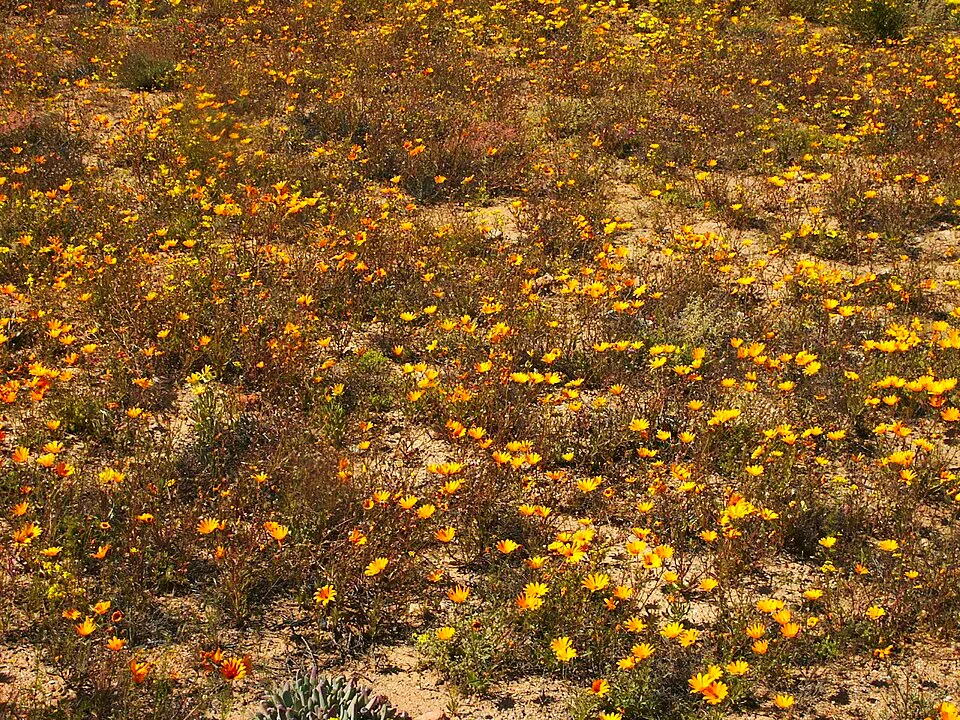
Dimorphotheca sinuata, commonly known as Cape Marigold or Namaqualand Daisy, is a vibrant annual herbaceous species native to the arid and semi-arid regions of southern Africa, particularly Namibia and the Cape Province. Belonging to the large Asteraceae family, it is characterized by its robust, erect growth habit, typically reaching heights of 30-60 cm. The plant features light green, slender, spoon-shaped leaves arranged alternately along the stem, often with shallowly lobed or sinuate margins, giving rise to its species epithet 'sinuata'. Its root system consists of a shallow taproot with numerous fibrous secondary roots, enabling efficient nutrient absorption and anchoring in sandy soils.
The most striking feature of Dimorphotheca sinuata is its effusive floral display. Flowers are daisy-like capitula, 2-2.5 inches in diameter, borne singly on long peduncles. The ray florets exhibit a remarkable range of colors, primarily brilliant shades of yellow and orange, often with a contrasting darker center, while some cultivars may present white or pink hues. A distinctive physiological trait is that these sun-facing blooms close at night and on cloudy days, reopening with sunlight.
Ecologically, Dimorphotheca sinuata is a valuable addition to pollinator gardens, highly attractive to honeybees, bumblebees, and various butterfly species. It thrives in full sun and well-drained, sandy soils, demonstrating exceptional drought tolerance. The plant readily self-seeds, allowing it to naturalize and return yearly in suitable climates, such as parts of California, Arizona, and Oregon.
Trusted Scientific References
1. Authoritative external sources for Dimorphotheca Sinuata
1.1 Wikipedia — Dimorphotheca Sinuata
1.2 Kew POWO (Plants of the World Online)
1.3 PubMed — peer-reviewed research
1.4 NCBI Taxonomy Browser
1.5 GBIF — Global Biodiversity
1.6Dimorphotheca Sinuata should be interpreted through verified botanical identity, practical care, and responsible safety language. This recovery note adds the missing context needed for a complete profile: match light to the plant's habit, use well-drained soil, water according to season, and avoid unsupported medicinal or edible claims. For publishing, the plant can be presented as a source-backed garden plant with clear care guidance, common problem diagnosis, and conservative safety wording.
1.1.Dimorphotheca Sinuata — Key Features
- ✓ <strong>Showy Daisy</strong> — like Flowers — Produces abundant, brightly colored yellow and orange blooms, often with a contrasting dark center.
- ✓ <strong>Drought Tolerant</strong> — Exceptionally resilient in dry conditions, requiring minimal watering once established.
- ✓ <strong>Full Sun Lover</strong> — Thrives in locations receiving ample direct sunlight throughout the day.
- ✓ <strong>Self</strong> — Seeding Annual — Naturally reseeds itself, ensuring continuous displays in suitable climates year after year.
- ✓ <strong>Pollinator Magnet</strong> — Highly attractive to bees, butterflies, and other beneficial insects, supporting garden biodiversity.
- ✓ <strong>Native to Southern Africa</strong> — Originates from arid regions of Namibia and the Cape Province.
- ✓ <strong>Sandy Soil Preference</strong> — Performs best in well-drained, sandy, or loamy soil types.
- ✓ <strong>Day</strong> — Night Bloom Cycle — Flowers characteristically open with sunlight and close during cloudy weather or at night.
- ✓ <strong>Low Maintenance</strong> — Requires minimal care, making it ideal for various garden styles including rock gardens.
- ✓ <strong>Compact Growth Habit</strong> — Typically grows to a manageable height of 30-60 cm, suitable for borders and containers.
1.2.Dimorphotheca Sinuata — Quick Summary
- ✓ Vibrant annual Cape Marigold from Southern Africa.
- ✓ Features showy yellow/orange daisy-like flowers that close at night.
- ✓ Highly drought-tolerant and thrives in full sun and sandy soils.
- ✓ Excellent for pollinator gardens, attracting bees and butterflies.
- ✓ Self-seeds readily, making it a low-maintenance garden favorite.
- ✓ Primarily ornamental; no documented traditional medicinal uses.
2.Dimorphotheca Sinuata — Scientific Identity
3.Dimorphotheca Sinuata — Quick Facts
4.Dimorphotheca Sinuata — Appearance & Identification
5.Dimorphotheca Sinuata — Native Habitat
6.Dimorphotheca Sinuata — Water Requirements
- ✓ Site Selection — Choose a location that receives full sun exposure for at least 6 hours daily to ensure prolific flowering.
- ✓ Soil Requirements — Plant in well-drained soil, ideally sandy or loamy, as Dimorphotheca sinuata is highly intolerant of waterlogged conditions.
- ✓ Watering Regimen — Once established, Cape Marigold is drought-tolerant; water sparingly, allowing the soil to dry out between waterings.
- ✓ Propagation — Easily grown from seed; sow seeds directly into the garden after the last frost or start indoors 4-6 weeks prior.
- ✓ Deadheading — Regularly remove spent flowers (deadheading) to encourage continuous blooming throughout the growing season.
- ✓ Fertilization — Generally, minimal fertilization is needed; excessive nutrients can lead to lush foliage at the expense of flowers.
- ✓ Reseeding — Allow some flowers to go to seed at the end of the season if natural reseeding for the following year is desired.
- ✓ Pest and Disease Management — Dimorphotheca sinuata is relatively pest-free; ensure good air circulation to prevent fungal issues in humid climates.
Reviewed by the Flora Medical Global Botanical Review Panel
Multi-disciplinary editorial group · Botany · Ethnobotany · Herbal-medicine literature
Who reviewed this: This page was checked by the Flora Medical Global Botanical Review Panel — an in-house editorial group of botany graduates, ethnobotany researchers, and horticulture practitioners who collectively maintain our 7,000+ plant encyclopedia. Meet the team.
Our 4-step verification process
1. Taxonomic verification
Scientific names and synonyms cross-checked against Kew POWO, World Flora Online, and The Plant List.
2. Phytochemical & medicinal cross-reference
Active compounds, traditional uses, and reported activities are cross-referenced with PubMed, USDA Dr. Duke's database, and peer-reviewed ethnobotanical literature.
3. Conservation & distribution check
Distribution, ecology, and conservation status confirmed against GBIF occurrence records and the IUCN Red List.
4. Editorial & safety review
Every entry passes an editorial pass for clarity, originality, and safety notices (toxicity, contraindications, dosage caveats) before publication.
Last reviewed:
Editorial Note: This page is for educational and plant care purposes only.
Written by: Flora Medical Global Editorial Team
Reviewed by: Flora Medical Global Botanical Review Panel
Last Updated: June 15, 2026







Dimorphotheca Sinuata — Comments & Community Reviews
Rate this plant