
Care Disclaimer: Plant care recommendations are general guidelines based on common growing conditions. Individual results may vary based on your local environment, climate, and care routine. If your plant is toxic, keep it away from children and pets, and consult a veterinarian if accidental ingestion occurs.
1.Disporum — Overview
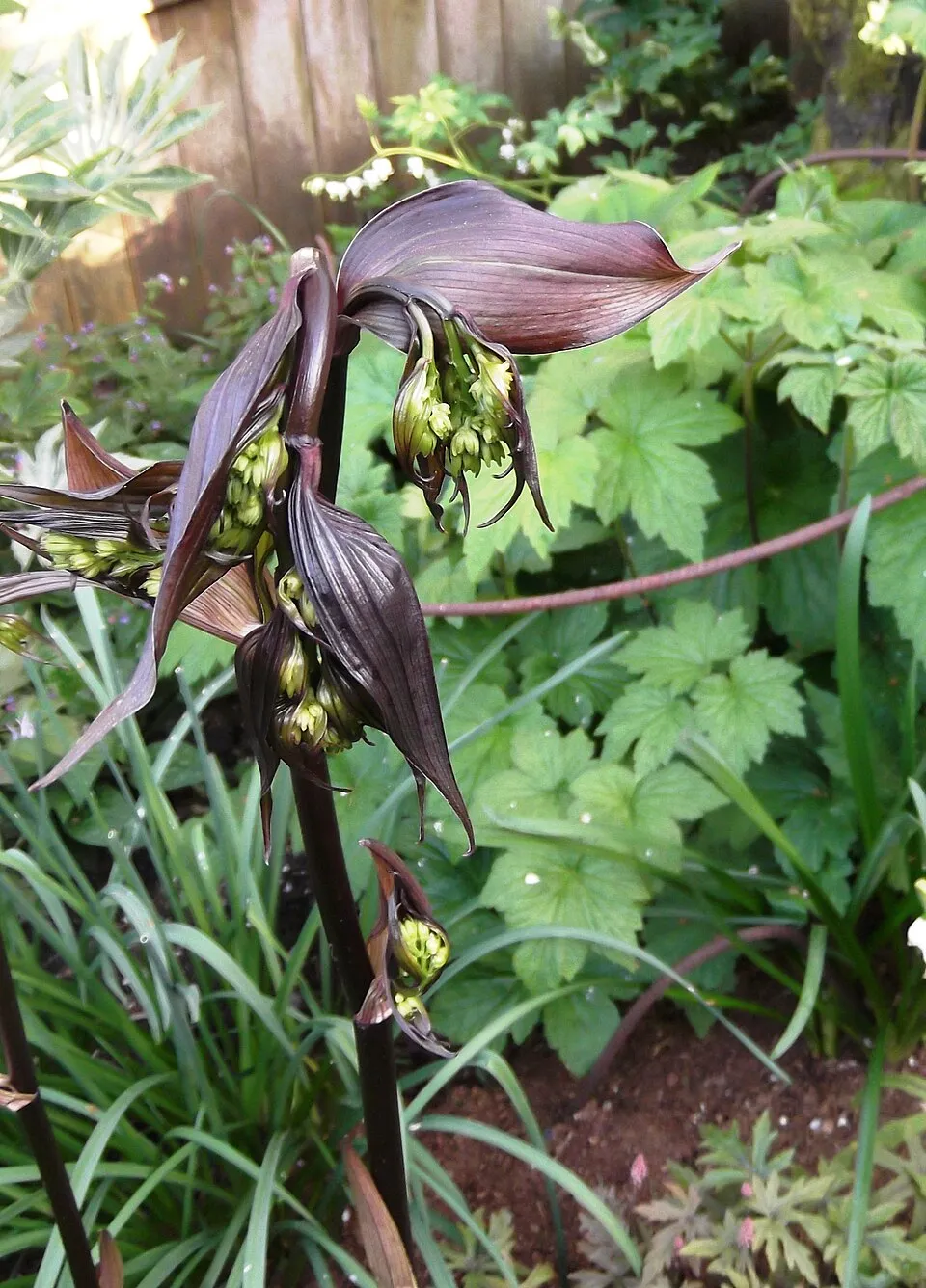
Disporum cantoniense, widely recognized as Chinese Fairy Bells, is an elegant perennial herbaceous plant belonging to the Colchicaceae family. It typically achieves a modest height of 50 to 100 centimeters, though some specimens can reach up to 150 centimeters, growing from a thick, creeping rhizome. Its foliage is characterized by striking, lanceolate leaves, measuring approximately 5 to 15 centimeters in length, presenting a rich green hue and a distinct glossy texture.
The stems are slender, often exhibiting a smooth, almost bark-like finish, and arch gracefully, contributing significantly to its ornamental charm. A notable feature of Chinese Fairy Bells is its unique inflorescence, producing elegant, nodding, tubular flowers that are typically pale green to cream-colored and about 2 to 3 centimeters in diameter. These delicate blossoms typically emerge in spring, hanging gracefully from the leaf axils, creating a captivating visual contrast against the lush foliage.
Native to the moist, cool woodlands of East Asia, including regions across China, Japan, Korea, India, Sri Lanka, Nepal, Myanmar, Thailand, Laos, Vietnam, Cambodia, Malaysia, and Indonesia, Disporum cantoniense thrives in shady environments, often found at elevations ranging from 700 to 3,000 meters. Its subtle beauty and structural elegance make it a favored choice for woodland gardens or shaded borders, while its broad distribution underscores its adaptability within specific ecological niches.
Trusted Scientific References
1. Authoritative external sources for Disporum cantoniense
1.1 Wikipedia — Disporum cantoniense
1.2 Kew POWO (Plants of the World Online)
1.3 PubMed — peer-reviewed research
1.4 NCBI Taxonomy Browser
1.5 GBIF — Global Biodiversity
1.6Disporum should be interpreted through verified botanical identity, practical care, and responsible safety language. This recovery note adds the missing context needed for a complete profile: match light to the plant's habit, use well-drained soil, water according to season, and avoid unsupported medicinal or edible claims. For publishing, the plant can be presented as a source-backed garden plant with clear care guidance, common problem diagnosis, and conservative safety wording.
1.1.Disporum — Key Features
- ✓ <strong>Botanical Name</strong> — Disporum cantoniense (Lour.) Merr.
- ✓ <strong>Common Names</strong> — Chinese Fairy Bells, Canton Fairy Bell.
- ✓ <strong>Family</strong> — Colchicaceae, known for its diverse medicinal plants.
- ✓ <strong>Morphology</strong> — Characterized by arching stems, glossy lanceolate leaves, and pale green to cream tubular flowers.
- ✓ <strong>Native Range</strong> — Extensive distribution across East and Southeast Asia, including China, Japan, Korea, India, and Nepal.
- ✓ <strong>Traditional Uses</strong> — Valued in TCM for respiratory ailments and as a diuretic; root juice used for fevers in Nepal.
- ✓ <strong>Key Constituents</strong> — Rich in alkaloids, saponins, and flavonoids, contributing to its pharmacological activities.
- ✓ <strong>Habitat Preference</strong> — A shade-loving plant, thriving in cool, moist woodland environments at higher elevations.
- ✓ <strong>Ornamental Value</strong> — Highly prized in horticulture for its elegant form and delicate blossoms.
- ✓ <strong>Medicinal Potential</strong> — Subject of ongoing research to validate its traditional applications and explore new therapeutic uses.
1.2.Disporum — Quick Summary
- ✓ East Asian perennial herb with elegant, nodding flowers.
- ✓ Traditionally used in TCM and Nepalese medicine for respiratory, diuretic, and anti-fever purposes.
- ✓ Contains key phytochemicals including alkaloids, saponins, and flavonoids.
- ✓ Thrives in shaded, moist woodland environments.
- ✓ Requires careful preparation and dosage due to active compounds.
- ✓ Offers potential benefits for digestive health and antioxidant support.
2.Disporum — Scientific Identity
3.Disporum — Quick Facts
4.Disporum — Appearance & Identification
5.Disporum — Native Habitat
6.Disporum — Water Requirements
- ✓ Site Selection — Thrives best in partial to full shade, mimicking its natural woodland habitat, making it ideal for shaded garden beds or under deciduous trees.
- ✓ Soil Requirements — Prefers a moist, well-draining, organically rich soil, ideally peaty or woodland soil with a slightly acidic to neutral pH.
- ✓ Watering — Requires consistent moisture, especially during dry periods; avoid waterlogging but do not allow the soil to dry out completely.
- ✓ Propagation by Seed — Seeds are best sown fresh; stored seeds benefit from 6 weeks of cold stratification before sowing in a lime-free compost at 15°C, with germination taking 3-6 months.
- ✓ Propagation by Division — Established clumps can be readily divided in spring or autumn, ensuring each division has a portion of the creeping rhizome and healthy roots.
- ✓ Spacing — Allow adequate space for its creeping rhizomes to spread, typically spacing plants 30-45 cm apart to accommodate their natural growth habit.
- ✓ Fertilization — Benefits from an annual application of organic compost or a balanced slow-release fertilizer in spring to support vigorous growth.
- ✓ Pest and Disease Management — Generally robust, but monitor for common garden pests like slugs and snails, especially on young shoots; ensure good air circulation to prevent fungal issues.
Reviewed by the Flora Medical Global Botanical Review Panel
Multi-disciplinary editorial group · Botany · Ethnobotany · Herbal-medicine literature
Who reviewed this: This page was checked by the Flora Medical Global Botanical Review Panel — an in-house editorial group of botany graduates, ethnobotany researchers, and horticulture practitioners who collectively maintain our 7,000+ plant encyclopedia. Meet the team.
Our 4-step verification process
1. Taxonomic verification
Scientific names and synonyms cross-checked against Kew POWO, World Flora Online, and The Plant List.
2. Phytochemical & medicinal cross-reference
Active compounds, traditional uses, and reported activities are cross-referenced with PubMed, USDA Dr. Duke's database, and peer-reviewed ethnobotanical literature.
3. Conservation & distribution check
Distribution, ecology, and conservation status confirmed against GBIF occurrence records and the IUCN Red List.
4. Editorial & safety review
Every entry passes an editorial pass for clarity, originality, and safety notices (toxicity, contraindications, dosage caveats) before publication.
Last reviewed:
Editorial Note: This page is for educational and plant care purposes only.
Written by: Flora Medical Global Editorial Team
Reviewed by: Flora Medical Global Botanical Review Panel
Last Updated: June 15, 2026







Disporum — Comments & Community Reviews
Rate this plant