


Care Disclaimer: Plant care recommendations are general guidelines based on common growing conditions. Individual results may vary based on your local environment, climate, and care routine. If your plant is toxic, keep it away from children and pets, and consult a veterinarian if accidental ingestion occurs.
1.Dogwood — Overview
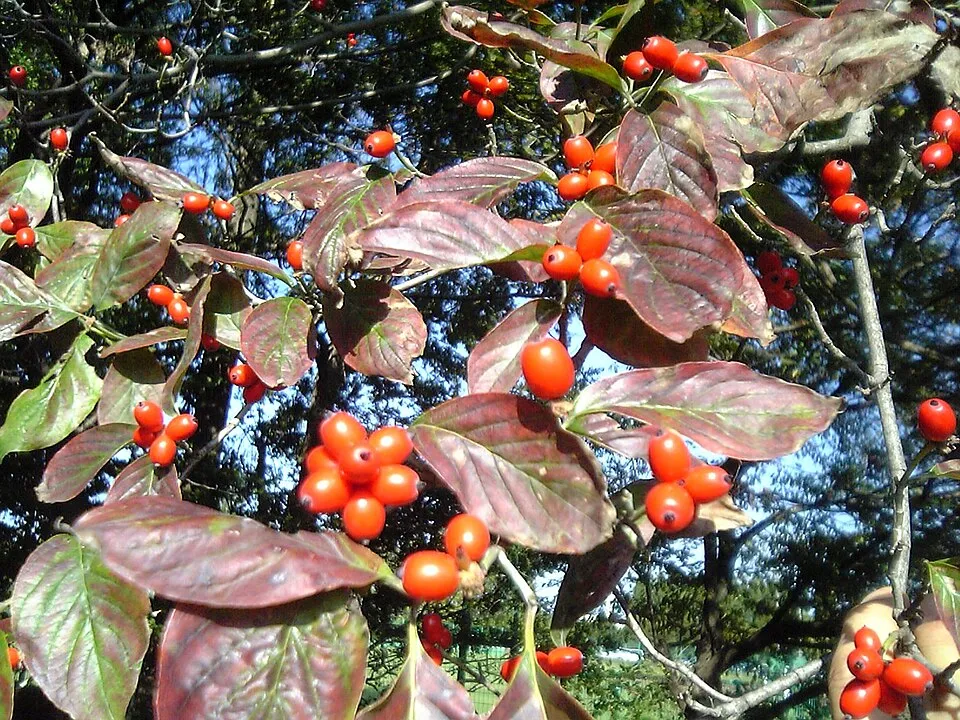
The Flowering Dogwood, scientifically known as Cornus florida, is an iconic deciduous understory tree indigenous to the eastern United States and parts of Canada and Mexico, thriving in the rich understories and margins of woodlands. Typically reaching heights of 15 to 25 feet, this species is celebrated for its distinctive morphology and multi-seasonal appeal. Its leaves are ovate, measuring 3 to 6 inches, with characteristic arcuate venation, a glossy dark green upper surface, and a paler, often hairy underside.
In early spring, before or with the emergence of leaves, Cornus florida produces its renowned 'flowers'—which are actually clusters of small, inconspicuous yellow-green true flowers encircled by four large, showy, white or pink petal-like bracts, each spanning 3 to 4 inches. The bark transitions from smooth grayish-brown in youth to a distinctive deeply furrowed, blocky, or scaly texture with age. As autumn arrives, the foliage transforms into spectacular shades of crimson, purple, and yellow, while bright red, ovoid drupes mature, providing crucial food for local wildlife throughout fall and winter.
This elegant tree prefers well-drained, acidic to neutral soils and can adapt to full sun, though it often benefits from partial afternoon shade in hotter climates, making it a prized ornamental and ecological asset in its native range.
Trusted Scientific References
1. Authoritative external sources for Cornus florida
1.1 Wikipedia — Cornus florida
1.2 Kew POWO (Plants of the World Online)
1.3 PubMed — peer-reviewed research
1.4 NCBI Taxonomy Browser
1.5 GBIF — Global Biodiversity
1.6Dogwood should be interpreted through verified botanical identity, practical care, and responsible safety language. This recovery note adds the missing context needed for a complete profile: match light to the plant's habit, use well-drained soil, water according to season, and avoid unsupported medicinal or edible claims. For publishing, the plant can be presented as a source-backed garden plant with clear care guidance, common problem diagnosis, and conservative safety wording.
1.1.Dogwood — Key Features
- ✓ <strong>Deciduous understory tree, typically 15</strong> — 25 feet tall at maturity.
- ✓ <strong>Iconic white or</strong> — Iconic white or pink showy bracts surrounding small true flowers in spring.
- ✓ <strong>Distinctive deeply furrowed</strong> — Distinctive deeply furrowed or blocky bark on mature specimens.
- ✓ <strong>Brilliant red, purple,</strong> — Brilliant red, purple, or yellow fall foliage, providing striking seasonal interest.
- ✓ <strong>Bright red ovoid</strong> — Bright red ovoid drupes (berries) that serve as winter food for wildlife.
- ✓ <strong>Native to the</strong> — Native to the eastern regions of North America, from Canada to Mexico.
- ✓ <strong>Historically used by</strong> — Historically used by Native American tribes for its medicinal bark.
- ✓ <strong>Bark contains astringent tannins and anti</strong> — inflammatory iridoid glycosides.
- ✓ <strong>Prefers well</strong> — drained, acidic to neutral soil and partial shade conditions.
- ✓ <strong>Recognized as the</strong> — Recognized as the state flower of North Carolina, celebrated for its beauty.
1.2.Dogwood — Quick Summary
- ✓ Flowering Dogwood (Cornus florida) is a prominent deciduous tree native to Eastern North America.
- ✓ Traditionally revered by Native Americans for its astringent, febrifuge, and anti-inflammatory bark.
- ✓ Rich in tannins, iridoids (cornin/loganin), and flavonoids, which underpin its therapeutic actions.
- ✓ Primary medicinal use involves the bark, typically prepared as decoctions or tinctures.
- ✓ Offers significant ornamental value through its showy bracts, vibrant fall foliage, and winter berries.
- ✓ Caution is essential due to potential gastrointestinal upset and lack of safety data for vulnerable populations.
2.Dogwood — Scientific Identity
3.Dogwood — Quick Facts
4.Dogwood — Appearance & Identification
5.Dogwood — Native Habitat
6.Dogwood — Water Requirements
- ✓ Site Selection — Plant in a location receiving full sun to partial shade; afternoon shade is particularly beneficial in hot climates to prevent leaf scorch.
- ✓ Soil Requirements — Prefers well-drained, organically rich, slightly acidic to neutral soil (pH 5.5-7.0).
- ✓ Watering — Requires consistent moisture, especially during dry periods and in its establishment phase; avoid waterlogged conditions.
- ✓ Mulching — Apply a 2-4 inch layer of organic mulch around the base to conserve soil moisture, regulate soil temperature, and suppress weeds.
- ✓ Fertilization — Fertilize sparingly in early spring with a balanced, slow-release granular fertilizer formulated for acid-loving plants.
- ✓ Pruning — Prune after flowering to remove dead, diseased, or crossing branches and to maintain a desirable shape and structure.
- ✓ Pest and Disease Management — Monitor for common issues like dogwood anthracnose, powdery mildew, and dogwood borers; choose disease-resistant cultivars when possible.
- ✓ Propagation — Can be propagated from seeds (requiring cold stratification) or by rooting semi-hardwood stem cuttings.
Reviewed by the Flora Medical Global Botanical Review Panel
Multi-disciplinary editorial group · Botany · Ethnobotany · Herbal-medicine literature
Who reviewed this: This page was checked by the Flora Medical Global Botanical Review Panel — an in-house editorial group of botany graduates, ethnobotany researchers, and horticulture practitioners who collectively maintain our 7,000+ plant encyclopedia. Meet the team.
Our 4-step verification process
1. Taxonomic verification
Scientific names and synonyms cross-checked against Kew POWO, World Flora Online, and The Plant List.
2. Phytochemical & medicinal cross-reference
Active compounds, traditional uses, and reported activities are cross-referenced with PubMed, USDA Dr. Duke's database, and peer-reviewed ethnobotanical literature.
3. Conservation & distribution check
Distribution, ecology, and conservation status confirmed against GBIF occurrence records and the IUCN Red List.
4. Editorial & safety review
Every entry passes an editorial pass for clarity, originality, and safety notices (toxicity, contraindications, dosage caveats) before publication.
Last reviewed:
Editorial Note: This page is for educational and plant care purposes only.
Written by: Flora Medical Global Editorial Team
Reviewed by: Flora Medical Global Botanical Review Panel
Last Updated: June 15, 2026







Dogwood — Comments & Community Reviews
Rate this plant