
Care Disclaimer: Plant care recommendations are general guidelines based on common growing conditions. Individual results may vary based on your local environment, climate, and care routine. If your plant is toxic, keep it away from children and pets, and consult a veterinarian if accidental ingestion occurs.
1.Doronicum Orientale — Overview
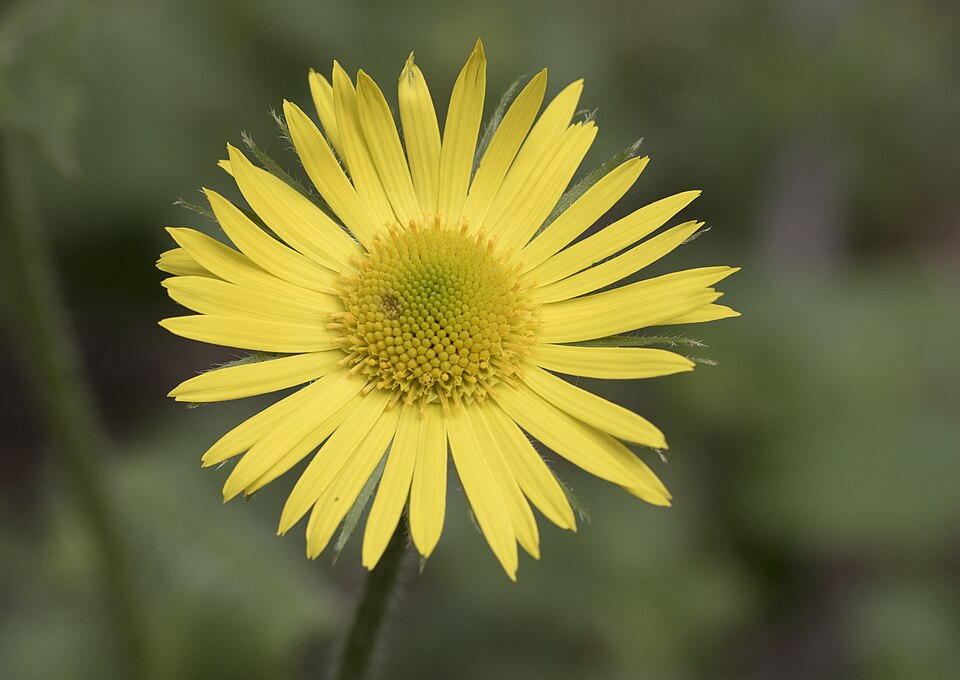
Doronicum orientale, commonly known as Leopard's Bane, is a captivating perennial herbaceous plant belonging to the Asteraceae family. Native to the woodlands and mountainous regions of Europe and Central Asia, it typically flourishes in temperate climates, often found in dappled shade. This robust plant features erect, branching stems that usually attain a height of 30 to 60 cm, making it a striking addition to garden borders or as an appealing ground cover. The basal leaves are characteristically heart-shaped with prominent veining, forming lush green rosettes that persist through the growing season.
Stem leaves are typically smaller and ovate, arranged alternately. The plant's aesthetic appeal is significantly enhanced by its vibrant floral display, which occurs from late spring to early summer. It produces solitary, daisy-like flower heads, approximately 5 cm in diameter, distinguished by their bright yellow ray florets surrounding a central disc of yellow tubular florets. These cheerful blooms are highly attractive to various pollinators, including bees and butterflies.
Doronicum orientale prefers well-drained soils rich in organic matter, ideally with a slightly acidic to neutral pH ranging from 6.0 to 7.0. Its adaptability to both full sun and partial shade underscores its versatility in diverse landscape designs, though it benefits from some afternoon shade in hotter climates to prevent scorching. The plant propagates effectively through its short, woody rhizomes, which are also the primary part harvested for traditional medicinal applications.
Trusted Scientific References
1. Authoritative external sources for Doronicum Orientale
1.1 Wikipedia — Doronicum Orientale
1.2 Kew POWO (Plants of the World Online)
1.3 PubMed — peer-reviewed research
1.4 NCBI Taxonomy Browser
1.5 GBIF — Global Biodiversity
1.6Doronicum Orientale should be interpreted through verified botanical identity, practical care, and responsible safety language. This recovery note adds the missing context needed for a complete profile: match light to the plant's habit, use well-drained soil, water according to season, and avoid unsupported medicinal or edible claims. For publishing, the plant can be presented as a source-backed garden plant with clear care guidance, common problem diagnosis, and conservative safety wording.
1.1.Doronicum Orientale — Key Features
- ✓ <strong>Vibrant Yellow Blooms</strong> — Produces striking, daisy-like yellow flowers that brighten gardens from late spring to early summer.
- ✓ <strong>Heart</strong> — Shaped Basal Leaves — Features attractive, prominently veined, heart-shaped leaves forming lush rosettes.
- ✓ <strong>Asteraceae Family Member</strong> — Belongs to the large daisy family, sharing characteristics with other well-known medicinal plants.
- ✓ <strong>Rhizomatous Perennial</strong> — Grows from woody rhizomes, allowing for easy propagation and perennial growth.
- ✓ <strong>Anti</strong> — inflammatory Potential — Contains sesquiterpene lactones known for their significant anti-inflammatory actions.
- ✓ <strong>Traditional Pain Reliever</strong> — Historically used in folk medicine for alleviating muscle aches, sprains, and joint discomfort.
- ✓ <strong>Skin Healing Herb</strong> — Applied topically in poultices for minor wounds, bruises, and skin irritations to promote healing.
- ✓ <strong>Attracts Pollinators</strong> — Its bright flowers are a magnet for bees and butterflies, contributing to garden biodiversity.
- ✓ <strong>Adaptable Garden Plant</strong> — Tolerates a range of light conditions from full sun to partial shade and various soil types.
- ✓ <strong>Aromatic Foliage</strong> — Some varieties possess a subtle aromatic quality, enhancing the sensory experience of garden spaces.
1.2.Doronicum Orientale — Quick Summary
- ✓ Common Name — Known as Leopard's Bane, a distinctive perennial with bright yellow, daisy-like flowers.
- ✓ Medicinal Uses — Traditionally valued for its anti-inflammatory, analgesic, and skin-healing properties, particularly for musculoskeletal and dermal conditions.
- ✓ Key Compounds — Rich in sesquiterpene lactones (doronolides), flavonoids, and phenolic acids, driving its therapeutic actions.
- ✓ Traditional Systems — Utilized in Ayurvedic and European folk medicine for its diverse health benefits, often for Vāta-related discomforts.
- ✓ Cultivation — A hardy garden plant thriving in temperate climates with well-drained soil and partial shade.
- ✓ Safety — Primarily used topically; internal use requires professional guidance due to potential for irritation and limited safety data.
2.Doronicum Orientale — Scientific Identity
3.Doronicum Orientale — Quick Facts
4.Doronicum Orientale — Appearance & Identification
5.Doronicum Orientale — Native Habitat
6.Doronicum Orientale — Water Requirements
- ✓ Soil Preference — Thrives in well-drained, nutrient-rich soils with ample organic matter, ideally maintaining a pH between 6.0 and 7.0 for optimal growth.
- ✓ Light Requirements — Prefers full sun to partial shade; in hotter climates, partial shade is recommended to prevent leaf scorch and maintain plant vigor.
- ✓ Watering — Requires consistent moisture, especially during dry spells, but avoid waterlogging to prevent root rot. Established plants are moderately drought-tolerant.
- ✓ Propagation — Easily propagated by division of rhizomes in early spring or autumn, or by seed sown directly after the last frost or in controlled environments.
- ✓ Harvesting — Rhizomes are best harvested in early spring before flowering or in late autumn after the foliage dies back, while leaves and flowers can be collected at full bloom.
- ✓ Climate — Best suited for temperate zones, where it exhibits hardiness and perennial growth. Protect from extreme winter cold in marginal zones.
- ✓ Maintenance — Low maintenance; deadhead spent flowers to encourage further blooming and remove yellowing foliage to maintain aesthetic appeal.
Reviewed by the Flora Medical Global Botanical Review Panel
Multi-disciplinary editorial group · Botany · Ethnobotany · Herbal-medicine literature
Who reviewed this: This page was checked by the Flora Medical Global Botanical Review Panel — an in-house editorial group of botany graduates, ethnobotany researchers, and horticulture practitioners who collectively maintain our 7,000+ plant encyclopedia. Meet the team.
Our 4-step verification process
1. Taxonomic verification
Scientific names and synonyms cross-checked against Kew POWO, World Flora Online, and The Plant List.
2. Phytochemical & medicinal cross-reference
Active compounds, traditional uses, and reported activities are cross-referenced with PubMed, USDA Dr. Duke's database, and peer-reviewed ethnobotanical literature.
3. Conservation & distribution check
Distribution, ecology, and conservation status confirmed against GBIF occurrence records and the IUCN Red List.
4. Editorial & safety review
Every entry passes an editorial pass for clarity, originality, and safety notices (toxicity, contraindications, dosage caveats) before publication.
Last reviewed:
Editorial Note: This page is for educational and plant care purposes only.
Written by: Flora Medical Global Editorial Team
Reviewed by: Flora Medical Global Botanical Review Panel
Last Updated: June 15, 2026







Doronicum Orientale — Comments & Community Reviews
Rate this plant