


Care Disclaimer: Plant care recommendations are general guidelines based on common growing conditions. Individual results may vary based on your local environment, climate, and care routine. If your plant is toxic, keep it away from children and pets, and consult a veterinarian if accidental ingestion occurs.
1.Duchesnea Indica — Overview
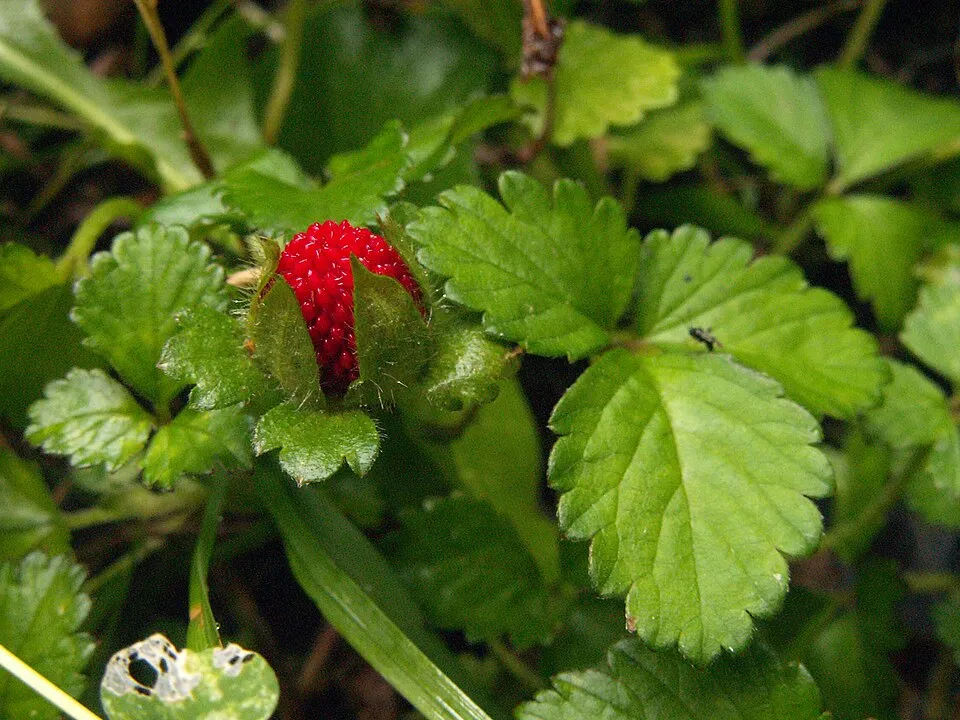
Potentilla indica, widely recognized by its former botanical name Duchesnea indica, is a resilient perennial herbaceous plant belonging to the diverse Rosaceae family. Often referred to as the Indian strawberry or mock strawberry, it forms dense, low-growing mats, typically reaching heights of 20-30 cm. Its distinctive foliage consists of compound leaves, each comprising three finely serrated, ovate to round leaflets, presenting a vibrant dark green hue that contributes to its lush appearance.
Throughout the warmer seasons, the plant produces small, solitary yellow flowers with five petals, which, unlike true strawberries, are a key distinguishing feature. These blossoms are significant for attracting various pollinators, supporting local biodiversity.
Following successful pollination, Potentilla indica develops an aggregate fruit that ripens to a bright red, resembling a small strawberry. However, these fruits are characterized by their red achenes (seeds) visibly embedded on the surface, and a texture that is often described as spongy or insipid, lacking the juiciness and intense flavor of true strawberries. Despite this, the fruits are edible and contribute to the plant's appeal to wildlife.
This species thrives in moist, partially shaded environments, commonly found along roadsides, in grasslands, and disturbed areas. It demonstrates adaptability to a range of soil types but flourishes best in well-drained, organically rich loamy conditions. Its vigorous growth habit, facilitated by rapidly spreading runners, makes it an effective ground cover, aiding in soil erosion prevention and ecosystem support, though it can be considered invasive in certain non-native regions.
Trusted Scientific References
1. Authoritative external sources for Duchesnea indica
1.1 Wikipedia — Duchesnea indica
1.2 Kew POWO (Plants of the World Online)
1.3 PubMed — peer-reviewed research
1.4 NCBI Taxonomy Browser
1.5 GBIF — Global Biodiversity
1.6Duchesnea Indica should be interpreted through verified botanical identity, practical care, and responsible safety language. This recovery note adds the missing context needed for a complete profile: match light to the plant's habit, use well-drained soil, water according to season, and avoid unsupported medicinal or edible claims. For publishing, the plant can be presented as a source-backed garden plant with clear care guidance, common problem diagnosis, and conservative safety wording.
1.1.Duchesnea Indica — Key Features
- ✓ <strong>Taxonomic Reclassification</strong> — Formerly Duchesnea indica, now accepted as Potentilla indica within the Rosaceae family, reflecting phylogenetic insights.
- ✓ <strong>Distinctive Yellow Flowers</strong> — Unlike true strawberries, it bears small, solitary yellow flowers, making it easily identifiable.
- ✓ <strong>Edible Aggregate Fruit</strong> — Produces bright red, edible fruits with achenes on the surface, though their flavor is often described as bland or insipid.
- ✓ <strong>Vigorous Ground Cover</strong> — Spreads rapidly via runners, forming dense mats that are effective for soil erosion control and landscaping.
- ✓ <strong>Rich Phytochemical Profile</strong> — Contains a diverse array of compounds including flavonoids, tannins, phenolic acids, triterpenes, and anthocyanins.
- ✓ <strong>Immunomodulatory Potential</strong> — Scientific studies highlight its capacity to modulate and enhance immune system responses.
- ✓ <strong>Antioxidant Powerhouse</strong> — Demonstrated significant antioxidant activity, protecting against oxidative stress and related damage.
- ✓ <strong>Anti</strong> — inflammatory Action — Exhibits potent anti-inflammatory effects by suppressing pro-inflammatory mediators.
- ✓ <strong>Traditional Medicinal Uses</strong> — Utilized in various traditional medicine systems for a wide range of ailments, from skin issues to internal conditions.
- ✓ <strong>Habitat Adaptability</strong> — Thrives in diverse environments including disturbed areas, grasslands, and roadsides, preferring damp, partially shaded conditions.
1.2.Duchesnea Indica — Quick Summary
- ✓ Potentilla indica is a perennial Rosaceae herb known for its edible but bland red fruits.
- ✓ Historically, it was classified as Duchesnea indica, now recognized as a Potentilla species.
- ✓ Possesses notable immunomodulatory, antioxidant, and anti-inflammatory properties.
- ✓ Traditional uses include treating diabetes, skin conditions, and eye ailments.
- ✓ Contains beneficial flavonoids, tannins, phenolic acids, and anthocyanins.
- ✓ Easily cultivated as a ground cover, but can exhibit invasive tendencies.
2.Duchesnea Indica — Scientific Identity
3.Duchesnea Indica — Quick Facts
4.Duchesnea Indica — Appearance & Identification
5.Duchesnea Indica — Native Habitat
6.Duchesnea Indica — Water Requirements
- ✓ Site Selection — Choose a location that receives partial shade to full sun, as Potentilla indica tolerates a range of light conditions but thrives with some afternoon shade.
- ✓ Soil Preparation — Ensure well-drained soil rich in organic matter. Loamy conditions are ideal, but the plant can adapt to various soil types.
- ✓ Watering Regimen — Provide moderate watering, especially during dry spells, to keep the soil consistently moist but not waterlogged.
- ✓ Propagation Techniques — Easily propagated through seeds, division of existing mats, or by rooting its abundant runners which naturally spread and form new plants.
- ✓ Ground Cover Use — Plant as an effective ground cover to prevent soil erosion, benefiting from its rapid, mat-forming growth habit.
- ✓ Maintenance — Requires minimal maintenance; however, managing its spread is crucial in garden settings to prevent it from becoming overly invasive.
- ✓ Climate Adaptability — Hardy in various climates, native to a wide range of Asian regions and naturalized globally, indicating good environmental resilience.
Reviewed by the Flora Medical Global Botanical Review Panel
Multi-disciplinary editorial group · Botany · Ethnobotany · Herbal-medicine literature
Who reviewed this: This page was checked by the Flora Medical Global Botanical Review Panel — an in-house editorial group of botany graduates, ethnobotany researchers, and horticulture practitioners who collectively maintain our 7,000+ plant encyclopedia. Meet the team.
Our 4-step verification process
1. Taxonomic verification
Scientific names and synonyms cross-checked against Kew POWO, World Flora Online, and The Plant List.
2. Phytochemical & medicinal cross-reference
Active compounds, traditional uses, and reported activities are cross-referenced with PubMed, USDA Dr. Duke's database, and peer-reviewed ethnobotanical literature.
3. Conservation & distribution check
Distribution, ecology, and conservation status confirmed against GBIF occurrence records and the IUCN Red List.
4. Editorial & safety review
Every entry passes an editorial pass for clarity, originality, and safety notices (toxicity, contraindications, dosage caveats) before publication.
Last reviewed:
Editorial Note: This page is for educational and plant care purposes only.
Written by: Flora Medical Global Editorial Team
Reviewed by: Flora Medical Global Botanical Review Panel
Last Updated: June 15, 2026







Duchesnea Indica — Comments & Community Reviews
Rate this plant