
Care Disclaimer: Plant care recommendations are general guidelines based on common growing conditions. Individual results may vary based on your local environment, climate, and care routine. If your plant is toxic, keep it away from children and pets, and consult a veterinarian if accidental ingestion occurs.
1.Echinacea Garden — Overview
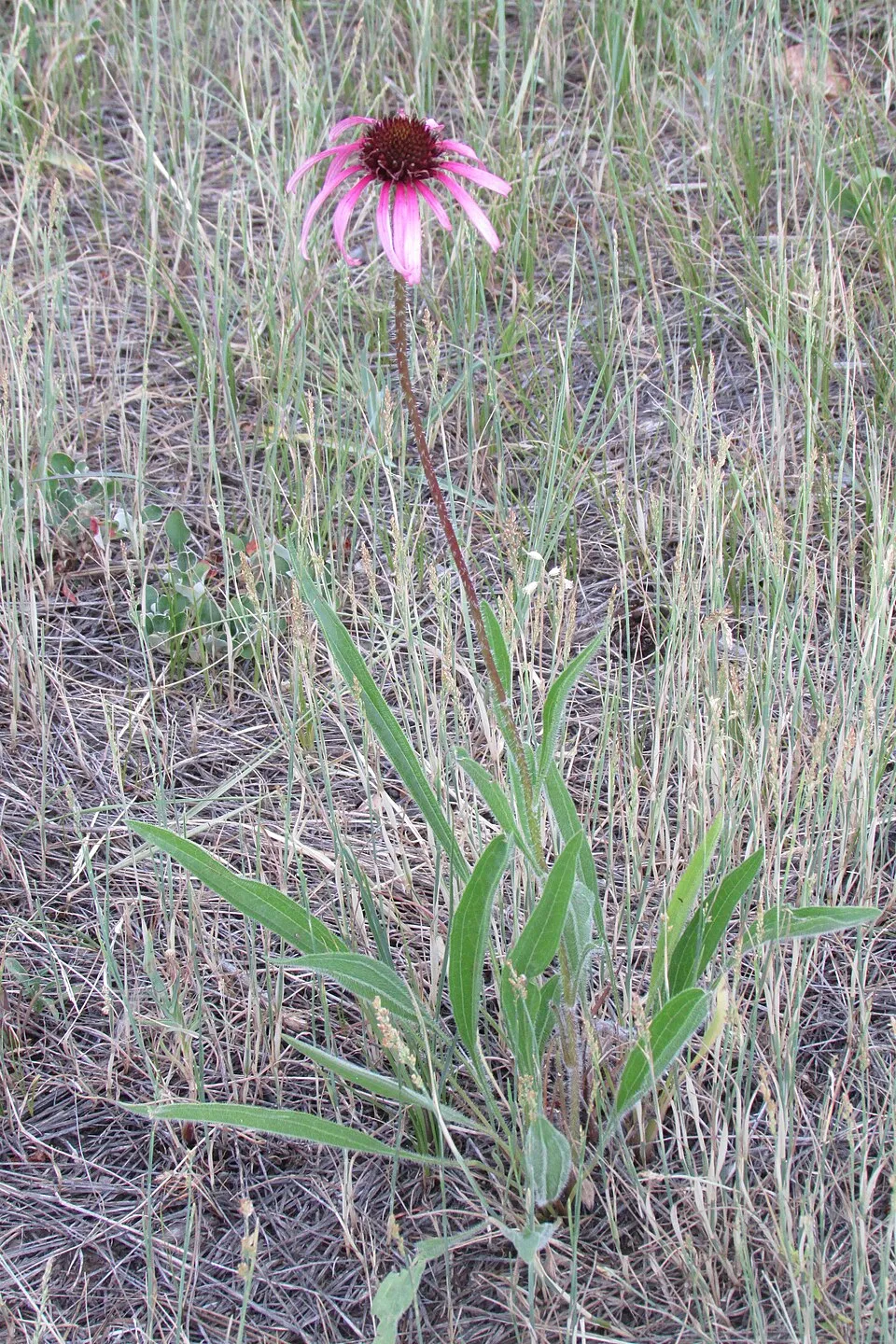
Echinacea angustifolia, commonly known as Narrow-leaved Purple Coneflower or Echinacea Garden, is a resilient perennial herb indigenous to the central and southeastern regions of the United States. It flourishes in diverse habitats including prairies, open woodlands, and dry, rocky soils, demonstrating remarkable adaptability. This distinctive plant is characterized by its slender, often hairy stems that can reach up to 2-3 feet in height, supporting solitary flower heads. Its basal leaves are lance-shaped, gradually tapering towards the apex.
The most striking feature is its daisy-like inflorescence, typically adorned with narrow, drooping ray florets ranging in color from pale pink to deep purplish-pink. These surround a prominent, reddish-brown central cone composed of rigid disk florets, which gives the plant its 'coneflower' moniker. Historically, Echinacea angustifolia held profound significance for various Indigenous peoples of North America, particularly the Plains Indians, who extensively utilized its roots for a wide spectrum of medicinal purposes. It was a foundational remedy for ailments such as snakebites, toothaches, colds, measles, and general infections.
Its traditional efficacy captured the attention of early European settlers, leading to its integration into eclectic medicine during the 19th and early 20th centuries, where it was valued as a 'blood purifier' and a potent immune stimulant. Beyond its medicinal heritage, its prominent aesthetic qualities also make it a favored choice for ornamental gardens, attracting beneficial pollinators like bees and butterflies. Modern scientific inquiry into Echinacea angustifolia has since focused on validating these traditional claims, identifying key bioactive compounds responsible for its immunomodulatory, anti-inflammatory, and antimicrobial properties.
Trusted Scientific References
1. Authoritative external sources for Echinacea angustifolia
1.1 Wikipedia — Echinacea angustifolia
1.2 Kew POWO (Plants of the World Online)
1.3 PubMed — peer-reviewed research
1.4 NCBI Taxonomy Browser
1.5 GBIF — Global Biodiversity
1.1.Echinacea Garden — Key Features
- ✓ <strong>Potent Immunomodulatory Herb</strong> — Potent Immunomodulatory Herb
- ✓ <strong>Native North American</strong> — Native North American Prairie Plant
- ✓ <strong>Distinctive Purple Coneflower</strong> — Distinctive Purple Coneflower Morphology
- ✓ <strong>Rich in Bioactive</strong> — Rich in Bioactive Alkylamides
- ✓ <strong>Significant Caffeic Acid</strong> — Significant Caffeic Acid Derivative Content (Echinacoside)
- ✓ <strong>Traditional Indigenous Medicinal</strong> — Traditional Indigenous Medicinal Plant
- ✓ <strong>Supports Respiratory and</strong> — Supports Respiratory and Immune Health
- ✓ <strong>Exhibits Anti</strong> — inflammatory Properties
- ✓ <strong>Adaptable and Popular</strong> — Adaptable and Popular Ornamental Plant
- ✓ <strong>Primarily Utilizes the</strong> — Primarily Utilizes the Root for Medicinal Preparations
1.2.Echinacea Garden — Quick Summary
- ✓ Echinacea angustifolia is a perennial North American native known for its distinctive purple coneflower.
- ✓ Historically revered by Indigenous peoples for its broad medicinal applications, especially for infections and pain.
- ✓ Modern research confirms its immune-modulating and anti-inflammatory properties, making it popular for respiratory health.
- ✓ Key active compounds include alkylamides, echinacoside, and polysaccharides, responsible for its therapeutic effects.
- ✓ Available in diverse forms like teas, tinctures, capsules, and topical preparations for varied uses.
- ✓ Generally safe for short-term use, but potential for allergic reactions and drug interactions necessitates caution and professional advice.
2.Echinacea Garden — Scientific Identity
3.Echinacea Garden — Quick Facts
4.Echinacea Garden — Appearance & Identification
5.Echinacea Garden — Native Habitat
6.Echinacea Garden — Water Requirements
- ✓ Climate Preference — Thrives best in USDA hardiness zones 3-9, preferring full sun exposure for at least 6 hours daily to ensure robust growth and flower production.
- ✓ Soil Requirements — Prefers well-drained, average to poor soil conditions; tolerates rocky or sandy loams and is surprisingly drought-tolerant once established.
- ✓ Propagation — Can be propagated from seeds, which benefit from cold stratification for 30-60 days, or by root division in early spring or fall.
- ✓ Planting Depth & Spacing — Plant seeds shallowly, about 1/4 inch deep. Transplant seedlings or divided roots 12-18 inches apart to allow for mature spread.
- ✓ Watering — Requires consistent moisture during establishment, but mature plants are drought-tolerant and prefer drier conditions; avoid overwatering to prevent root rot.
- ✓ Pest & Disease Management — Generally resistant, but monitor for common garden pests like aphids and Japanese beetles, and fungal issues like powdery mildew in humid environments.
- ✓ Harvesting — Roots are typically harvested in the fall after the plant has been established for at least two to three years, as this is when medicinal compounds are most concentrated.
- ✓ Maintenance — Deadhead spent flowers to encourage continuous blooming or allow them to go to seed for natural reseeding and to provide food for birds; cut back foliage in late autumn.
Reviewed by the Flora Medical Global Botanical Review Panel
Multi-disciplinary editorial group · Botany · Ethnobotany · Herbal-medicine literature
Who reviewed this: This page was checked by the Flora Medical Global Botanical Review Panel — an in-house editorial group of botany graduates, ethnobotany researchers, and horticulture practitioners who collectively maintain our 7,000+ plant encyclopedia. Meet the team.
Our 4-step verification process
1. Taxonomic verification
Scientific names and synonyms cross-checked against Kew POWO, World Flora Online, and The Plant List.
2. Phytochemical & medicinal cross-reference
Active compounds, traditional uses, and reported activities are cross-referenced with PubMed, USDA Dr. Duke's database, and peer-reviewed ethnobotanical literature.
3. Conservation & distribution check
Distribution, ecology, and conservation status confirmed against GBIF occurrence records and the IUCN Red List.
4. Editorial & safety review
Every entry passes an editorial pass for clarity, originality, and safety notices (toxicity, contraindications, dosage caveats) before publication.
Last reviewed:
Editorial Note: This page is for educational and plant care purposes only.
Written by: Flora Medical Global Editorial Team
Reviewed by: Flora Medical Global Botanical Review Panel
Last Updated: June 15, 2026







Echinacea Garden — Comments & Community Reviews
Rate this plant