


Care Disclaimer: Plant care recommendations are general guidelines based on common growing conditions. Individual results may vary based on your local environment, climate, and care routine. If your plant is toxic, keep it away from children and pets, and consult a veterinarian if accidental ingestion occurs.
1.Eggplant — Overview
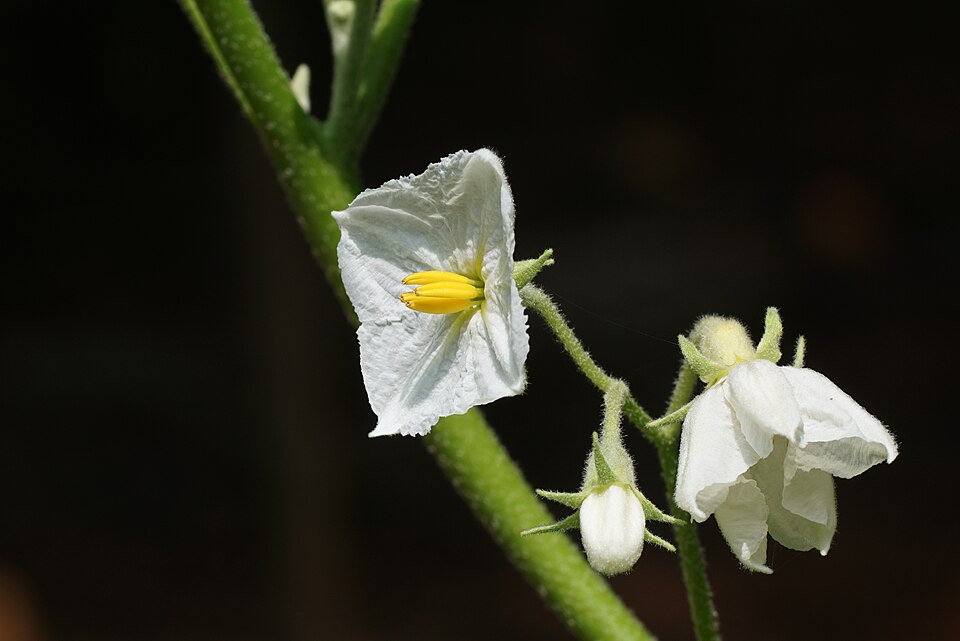
Eggplant, scientifically known as Solanum melongena, is a culturally significant member of the Solanaceae family, widely cultivated for its distinctive and versatile fruit. This herbaceous plant typically grows to a height of 60 to 120 centimeters, presenting an erect, branched habit with stems that are often slightly hairy or prickly. Its broad, ovate leaves range from a deep green to a purplish hue, featuring a somewhat rough texture.
The flowers are striking, star-shaped, and usually purple or white, emerging solitarily or in small clusters from the leaf axils. The fruit, botanically classified as a berry, develops into various shapes—elongated, oval, or round—and sizes, with its hallmark glossy skin typically purple or black, though varieties can also display white, green, or striped patterns. Solanum melongena thrives in warm, subtropical to tropical climates, requiring abundant full sunlight and well-drained, fertile soil with a pH between 5.5 and 7.0.
It is highly sensitive to frost and prefers consistent temperatures between 20°C and 30°C (68°F to 86°F). Originating in Asia, particularly India and China, eggplant has since spread globally, becoming a staple in diverse culinary traditions and recognized for its beneficial phytochemical composition.
Trusted Scientific References
1. Authoritative external sources for Solanum melongena
1.1 Wikipedia — Solanum melongena
1.2 Kew POWO (Plants of the World Online)
1.3 PubMed — peer-reviewed research
1.4 NCBI Taxonomy Browser
1.5 GBIF — Global Biodiversity
1.6Eggplant should be interpreted through verified botanical identity, practical care, and responsible safety language. This recovery note adds the missing context needed for a complete profile: match light to the plant's habit, use well-drained soil, water according to season, and avoid unsupported medicinal or edible claims. For publishing, the plant can be presented as a source-backed garden plant with clear care guidance, common problem diagnosis, and conservative safety wording.
1.1.Eggplant — Key Features
- ✓ <strong>Botanical Classification</strong> — Solanum melongena, a prominent member of the Solanaceae (nightshade) family.
- ✓ <strong>Edible Fruit</strong> — Cultivated primarily for its large, glossy, typically purple or black, berry-like fruit, though varieties exist in various colors.
- ✓ <strong>Rich in Antioxidants</strong> — Abundant in phenolic compounds like chlorogenic acid and anthocyanins such as nasunin.
- ✓ <strong>Metabolic Health Support</strong> — Exhibits potential benefits for blood sugar regulation, blood pressure control, and cholesterol reduction.
- ✓ <strong>High Dietary Fiber</strong> — Contributes significantly to digestive health and promotes a feeling of fullness, aiding weight management.
- ✓ <strong>Source of Essential Nutrients</strong> — Provides vitamins (C, K, B-complex) and minerals (potassium, manganese, magnesium).
- ✓ <strong>Traditional Ayurvedic Use</strong> — Recognized as a cooling food to help balance the Pitta dosha in traditional Indian medicine.
- ✓ <strong>Culinary Versatility</strong> — A staple ingredient in global cuisines, adaptable to numerous cooking methods and dishes.
- ✓ <strong>Nightshade Family Member</strong> — Important for individuals with sensitivities to other plants in this botanical family.
- ✓ <strong>Warm Climate Requirement</strong> — Thrives in sunny, warm environments and is highly sensitive to frost.
1.2.Eggplant — Quick Summary
- ✓ Solanum melongena, or eggplant, is a highly nutritious fruit from the nightshade family, renowned for its culinary versatility.
- ✓ It is a significant source of potent antioxidants, including chlorogenic acid and nasunin, offering cellular protection.
- ✓ Traditionally valued in Ayurvedic medicine as a cooling food, balancing Pitta dosha.
- ✓ Modern research highlights its potential in managing metabolic syndrome components like blood sugar, blood pressure, and cholesterol.
- ✓ Rich in dietary fiber, vitamins, and minerals, contributing to overall digestive and cardiovascular health.
- ✓ Caution is recommended for individuals with nightshade sensitivities or a predisposition to kidney stones.
2.Eggplant — Scientific Identity
3.Eggplant — Quick Facts
4.Eggplant — Appearance & Identification
5.Eggplant — Native Habitat
6.Eggplant — Water Requirements
- ✓ Soil Requirements — Prefers fertile, well-draining loamy soils rich in organic matter, with an optimal pH range of 5.5 to 7.0 for healthy growth.
- ✓ Sunlight Exposure — Requires full sun exposure, ideally receiving at least 6-8 hours of direct sunlight daily, to ensure robust growth and prolific fruit set.
- ✓ Temperature Sensitivity — Thrives in warm climates with daytime temperatures between 20°C to 30°C (68°F to 86°F) and is highly susceptible to frost damage, necessitating protection in cooler regions.
- ✓ Watering Practices — Needs consistent and regular watering, especially during flowering and fruiting stages, to maintain evenly moist soil without becoming waterlogged.
- ✓ Support and Staking — Taller varieties and those with heavy fruit loads benefit from staking, caging, or trellising to prevent stems from breaking and to keep fruits off the ground.
- ✓ Pest and Disease Management — Regular monitoring for common pests like flea beetles, aphids, and spider mites, along with practicing crop rotation, helps mitigate disease risks such as Verticillium wilt and blight.
- ✓ Fertilization — Benefits from a balanced fertilizer application during transplanting and then a phosphorus and potassium-rich feed as fruits begin to develop to support yield.
- ✓ Harvesting — Fruits are typically harvested when they are glossy, firm, and before seeds become hard and bitter, usually 60-90 days after transplanting, by cutting the stem with a small portion of the calyx attached.
Reviewed by the Flora Medical Global Botanical Review Panel
Multi-disciplinary editorial group · Botany · Ethnobotany · Herbal-medicine literature
Who reviewed this: This page was checked by the Flora Medical Global Botanical Review Panel — an in-house editorial group of botany graduates, ethnobotany researchers, and horticulture practitioners who collectively maintain our 7,000+ plant encyclopedia. Meet the team.
Our 4-step verification process
1. Taxonomic verification
Scientific names and synonyms cross-checked against Kew POWO, World Flora Online, and The Plant List.
2. Phytochemical & medicinal cross-reference
Active compounds, traditional uses, and reported activities are cross-referenced with PubMed, USDA Dr. Duke's database, and peer-reviewed ethnobotanical literature.
3. Conservation & distribution check
Distribution, ecology, and conservation status confirmed against GBIF occurrence records and the IUCN Red List.
4. Editorial & safety review
Every entry passes an editorial pass for clarity, originality, and safety notices (toxicity, contraindications, dosage caveats) before publication.
Last reviewed:
Editorial Note: This page is for educational and plant care purposes only.
Written by: Flora Medical Global Editorial Team
Reviewed by: Flora Medical Global Botanical Review Panel
Last Updated: June 15, 2026







Eggplant — Comments & Community Reviews
Rate this plant