
Care Disclaimer: Plant care recommendations are general guidelines based on common growing conditions. Individual results may vary based on your local environment, climate, and care routine. If your plant is toxic, keep it away from children and pets, and consult a veterinarian if accidental ingestion occurs.
1.Erigeron Speciosus — Overview
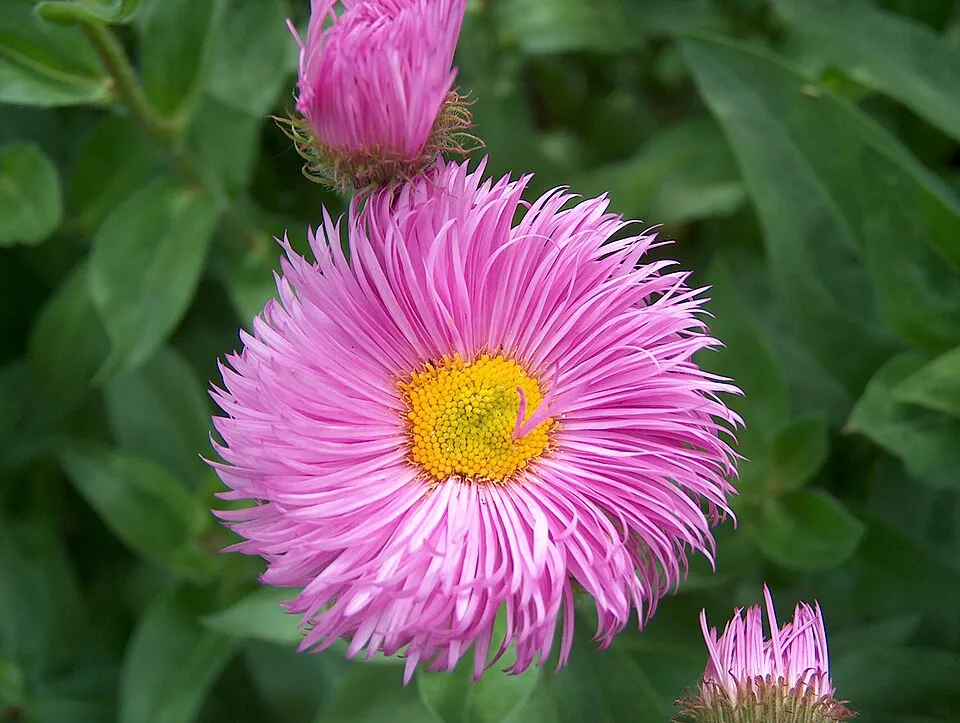
Erigeron speciosus, commonly known as Aspen Fleabane, Showy Fleabane, or Oregon Wild-Daisy, is a resilient perennial herbaceous plant belonging to the Asteraceae family, specifically the Astereae tribe. Native to a vast expanse of western North America, its distribution ranges from British Columbia and Alberta in Canada down through the western United States (excluding California) and into a disjunct population in Baja California, Mexico. This robust plant typically forms a bushy habit, reaching heights of 1 to 2 feet, adorned with broad, ovate leaves that often feature serrated edges and a vibrant green hue.
Its erect stems branch out, culminating in clusters of showy, daisy-like blossoms, characteristic of the fleabane genus. Aspen Fleabane thrives in diverse habitats, from dry to wet meadows, big sagebrush communities, and quaking aspen woodlands to openings within coniferous forests, often found at elevations between 2,000 and 11,220 feet (600-3,420 meters). It exhibits remarkable cold tolerance during the growing season and prefers full sun exposure.
The plant adapts well to a variety of well-drained soils, including sandy, gravelly, and clay-loam types, with a preference for calcareous or non-calcareous soils with a pH between 6.6 and 7.2. Its ability to tolerate varying soil conditions and cold temperatures underscores its hardiness and widespread presence in mountainous and intermountain regions.
Trusted Scientific References
1. Authoritative external sources for Erigeron Speciosus
1.1 Wikipedia — Erigeron Speciosus
1.2 Kew POWO (Plants of the World Online)
1.3 PubMed — peer-reviewed research
1.4 NCBI Taxonomy Browser
1.5 GBIF — Global Biodiversity
1.6Erigeron Speciosus should be interpreted through verified botanical identity, practical care, and responsible safety language. This recovery note adds the missing context needed for a complete profile: match light to the plant's habit, use well-drained soil, water according to season, and avoid unsupported medicinal or edible claims. For publishing, the plant can be presented as a source-backed garden plant with clear care guidance, common problem diagnosis, and conservative safety wording.
1.1.Erigeron Speciosus — Key Features
- ✓ <strong>Botanical Name</strong> — Erigeron speciosus
- ✓ <strong>Common Names</strong> — Aspen Fleabane, Showy Fleabane, Oregon Wild-Daisy
- ✓ <strong>Plant Family</strong> — Asteraceae (Aster family)
- ✓ <strong>Native Region</strong> — Western North America
- ✓ <strong>Growth Habit</strong> — Perennial herbaceous plant, bushy, typically 1-2 feet tall
- ✓ <strong>Preferred Habitat</strong> — High-elevation meadows, woodlands, full sun exposure
- ✓ <strong>Key Constituents</strong> — Flavonoids, Terpenes, Alkaloids, Phenolic Acids
- ✓ <strong>Traditional Uses</strong> — Digestive aid, antioxidant support, anti-inflammatory potential
- ✓ <strong>Ornamental Value</strong> — Features showy, daisy-like blossoms, attractive foliage
- ✓ <strong>Soil Preference</strong> — Well-drained, varied soil types (sandy to clay-loam), pH 6.6-7.2
1.2.Erigeron Speciosus — Quick Summary
- ✓ Aspen Fleabane (Erigeron speciosus) is a vibrant perennial from the Asteraceae family.
- ✓ Native to Western North America, thriving in high-elevation meadows and forests.
- ✓ Traditionally valued for potential digestive and antioxidant properties in folk medicine.
- ✓ Rich in flavonoids, terpenes, and other beneficial phytochemicals.
- ✓ Cultivated for its ornamental beauty and potential medicinal applications.
- ✓ Requires well-drained soil, full sun, and consistent moisture for optimal growth.
2.Erigeron Speciosus — Scientific Identity
3.Erigeron Speciosus — Quick Facts
4.Erigeron Speciosus — Appearance & Identification
5.Erigeron Speciosus — Native Habitat
6.Erigeron Speciosus — Water Requirements
- ✓ Site Selection — Requires a location with full sun exposure, receiving at least 6 hours of direct sunlight daily, to ensure vigorous growth and abundant flowering.
- ✓ Soil Requirements — Thrives in well-drained soils, adapting to a range of textures from sandy to clay-loam, and tolerates both calcareous and non-calcareous conditions with a pH of 6.6-7.2.
- ✓ Watering — Maintain consistent soil moisture through regular watering, especially during dry periods; however, ensure good drainage to prevent root rot.
- ✓ Climate Adaptation — This species is remarkably cold-hardy, tolerating low temperatures and even some frost during the growing season, making it suitable for high-elevation and temperate gardens.
- ✓ Fertilization — Benefits from a balanced, slow-release granular fertilizer or a liquid feed applied every few weeks throughout the active growing season to support lush foliage and flower production.
- ✓ Mulching — Apply a 2-3 inch layer of organic mulch, such as wood chips or compost, around the base of the plant to conserve soil moisture, regulate temperature, and suppress weed growth.
- ✓ Pruning — Deadhead spent flowers regularly to encourage continuous blooming and prevent self-seeding, while light pruning can help maintain a compact, bushy form.
Reviewed by the Flora Medical Global Botanical Review Panel
Multi-disciplinary editorial group · Botany · Ethnobotany · Herbal-medicine literature
Who reviewed this: This page was checked by the Flora Medical Global Botanical Review Panel — an in-house editorial group of botany graduates, ethnobotany researchers, and horticulture practitioners who collectively maintain our 7,000+ plant encyclopedia. Meet the team.
Our 4-step verification process
1. Taxonomic verification
Scientific names and synonyms cross-checked against Kew POWO, World Flora Online, and The Plant List.
2. Phytochemical & medicinal cross-reference
Active compounds, traditional uses, and reported activities are cross-referenced with PubMed, USDA Dr. Duke's database, and peer-reviewed ethnobotanical literature.
3. Conservation & distribution check
Distribution, ecology, and conservation status confirmed against GBIF occurrence records and the IUCN Red List.
4. Editorial & safety review
Every entry passes an editorial pass for clarity, originality, and safety notices (toxicity, contraindications, dosage caveats) before publication.
Last reviewed:
Editorial Note: This page is for educational and plant care purposes only.
Written by: Flora Medical Global Editorial Team
Reviewed by: Flora Medical Global Botanical Review Panel
Last Updated: June 15, 2026







Erigeron Speciosus — Comments & Community Reviews
Rate this plant