
Care Disclaimer: Plant care recommendations are general guidelines based on common growing conditions. Individual results may vary based on your local environment, climate, and care routine. If your plant is toxic, keep it away from children and pets, and consult a veterinarian if accidental ingestion occurs.
1.Eryngium Giganteum — Overview
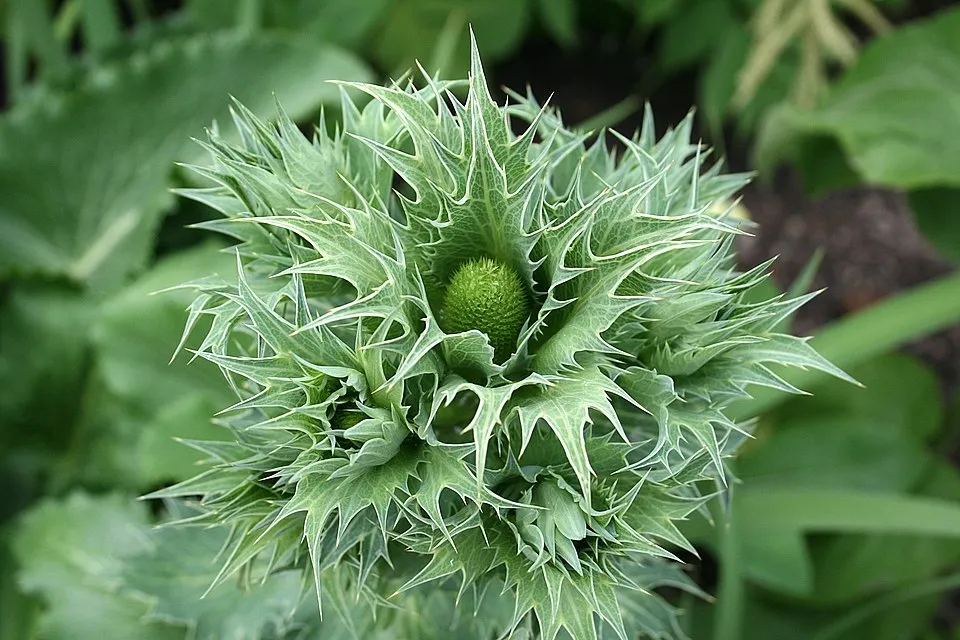
Eryngium giganteum, commonly known as Miss Willmott's Ghost or Giant Sea Holly, is a captivating herbaceous perennial belonging to the Apiaceae family, which also includes carrots and parsley. This striking plant is native to the Caucasus region and northeastern Turkey, where it typically thrives in rocky, open grasslands and mountainous areas. Its morphology is quite distinctive, featuring robust, branching stems that can reach heights of 60 to 120 cm (2 to 4 feet).
The basal leaves form an attractive rosette, characterized by their spiny, heart-shaped, and often deeply lobed structure, sometimes with a silvery-green hue. The most remarkable feature of Eryngium giganteum is its metallic-blue, thistle-like flower heads, which are encircled by prominent, rigid, and silvery-green to blue-tinted spiny bracts. These bracts persist long after the true flowers have faded, giving the plant its ghostly, architectural appearance, particularly in late summer and autumn.
The plant exhibits a biennial or short-lived perennial life cycle, often self-seeding generously to maintain its presence in a garden. Its unique aesthetic and resilience make it a popular choice for ornamental horticulture, providing structural interest and a distinctive color palette.
Trusted Scientific References
1. Authoritative external sources for Eryngium Giganteum
1.1 Wikipedia — Eryngium Giganteum
1.2 Kew POWO (Plants of the World Online)
1.3 PubMed — peer-reviewed research
1.4 NCBI Taxonomy Browser
1.5 GBIF — Global Biodiversity
1.6Eryngium Giganteum should be interpreted through verified botanical identity, practical care, and responsible safety language. This recovery note adds the missing context needed for a complete profile: match light to the plant's habit, use well-drained soil, water according to season, and avoid unsupported medicinal or edible claims. For publishing, the plant can be presented as a source-backed garden plant with clear care guidance, common problem diagnosis, and conservative safety wording.
1.1.Eryngium Giganteum — Key Features
- ✓ <strong>Botanical Name</strong> — Eryngium giganteum
- ✓ <strong>Common Name</strong> — Miss Willmott's Ghost, Giant Sea Holly
- ✓ <strong>Plant Type</strong> — Herbaceous perennial or biennial
- ✓ <strong>Family</strong> — Apiaceae (Carrot Family)
- ✓ <strong>Flower Color</strong> — Metallic blue, thistle-like with silvery bracts
- ✓ <strong>Leaf Characteristics</strong> — Basal rosette, spiny, heart-shaped, lobed leaves
- ✓ <strong>Height</strong> — Typically 60-120 cm (2-4 feet) tall
- ✓ <strong>Habitat</strong> — Native to Caucasus, prefers rocky, open areas
- ✓ <strong>Medicinal Use</strong> — Traditional diuretic, anti-inflammatory, digestive aid (genus-specific)
- ✓ <strong>Ornamental Value</strong> — Highly prized for its unique architectural form and striking appearance in gardens
1.2.Eryngium Giganteum — Quick Summary
- ✓ Eryngium giganteum, known as Miss Willmott's Ghost, is a striking ornamental biennial/perennial from the Apiaceae family.
- ✓ Features metallic-blue, thistle-like flower heads surrounded by prominent spiny bracts.
- ✓ Contains saponins, flavonoids, and phenolic acids, contributing to its traditional medicinal uses.
- ✓ Historically employed for diuretic, anti-inflammatory, and digestive support properties within the Eryngium genus.
- ✓ Requires full sun and well-drained soil for cultivation, known for its drought tolerance.
- ✓ Caution is advised due to potential photosensitivity and interactions with certain medications.
2.Eryngium Giganteum — Scientific Identity
3.Eryngium Giganteum — Quick Facts
4.Eryngium Giganteum — Appearance & Identification
5.Eryngium Giganteum — Native Habitat
6.Eryngium Giganteum — Water Requirements
- ✓ Site Selection — Choose a location that receives full sun, ideally 6-8 hours of direct sunlight daily, to ensure robust growth and prolific flowering for Eryngium giganteum.
- ✓ Soil Requirements — This plant thrives in well-drained, moderately fertile soil; sandy or gravelly loam is preferred, as it is highly intolerant of waterlogged conditions.
- ✓ Planting — Sow seeds directly in autumn or early spring after a period of cold stratification; transplant young plants carefully to minimize disturbance to their deep taproots.
- ✓ Watering — Water moderately during the plant's establishment phase, but once mature, Eryngium giganteum becomes remarkably drought-tolerant, requiring minimal supplemental irrigation.
- ✓ Fertilization — Generally low-maintenance, a light application of a balanced granular fertilizer in early spring or incorporating compost can enhance vigor without over-stimulating leafy growth.
- ✓ Pests and Diseases — Eryngium giganteum is relatively pest and disease-free; occasional aphid infestations can be managed with insecticidal soap, and root rot is the primary concern in poorly drained soils.
- ✓ Propagation — Primarily propagated by seed, as division is difficult due to its deep taproot system; it readily self-seeds, often establishing new plants around the parent.
- ✓ Maintenance — Deadhead spent flowers for a tidier appearance, though many gardeners leave them for their architectural winter interest; minimal pruning is typically required.
Reviewed by the Flora Medical Global Botanical Review Panel
Multi-disciplinary editorial group · Botany · Ethnobotany · Herbal-medicine literature
Who reviewed this: This page was checked by the Flora Medical Global Botanical Review Panel — an in-house editorial group of botany graduates, ethnobotany researchers, and horticulture practitioners who collectively maintain our 7,000+ plant encyclopedia. Meet the team.
Our 4-step verification process
1. Taxonomic verification
Scientific names and synonyms cross-checked against Kew POWO, World Flora Online, and The Plant List.
2. Phytochemical & medicinal cross-reference
Active compounds, traditional uses, and reported activities are cross-referenced with PubMed, USDA Dr. Duke's database, and peer-reviewed ethnobotanical literature.
3. Conservation & distribution check
Distribution, ecology, and conservation status confirmed against GBIF occurrence records and the IUCN Red List.
4. Editorial & safety review
Every entry passes an editorial pass for clarity, originality, and safety notices (toxicity, contraindications, dosage caveats) before publication.
Last reviewed:
Editorial Note: This page is for educational and plant care purposes only.
Written by: Flora Medical Global Editorial Team
Reviewed by: Flora Medical Global Botanical Review Panel
Last Updated: June 15, 2026







Eryngium Giganteum — Comments & Community Reviews
Rate this plant