

Care Disclaimer: Plant care recommendations are general guidelines based on common growing conditions. Individual results may vary based on your local environment, climate, and care routine. If your plant is toxic, keep it away from children and pets, and consult a veterinarian if accidental ingestion occurs.
1.Eschscholzia — Overview
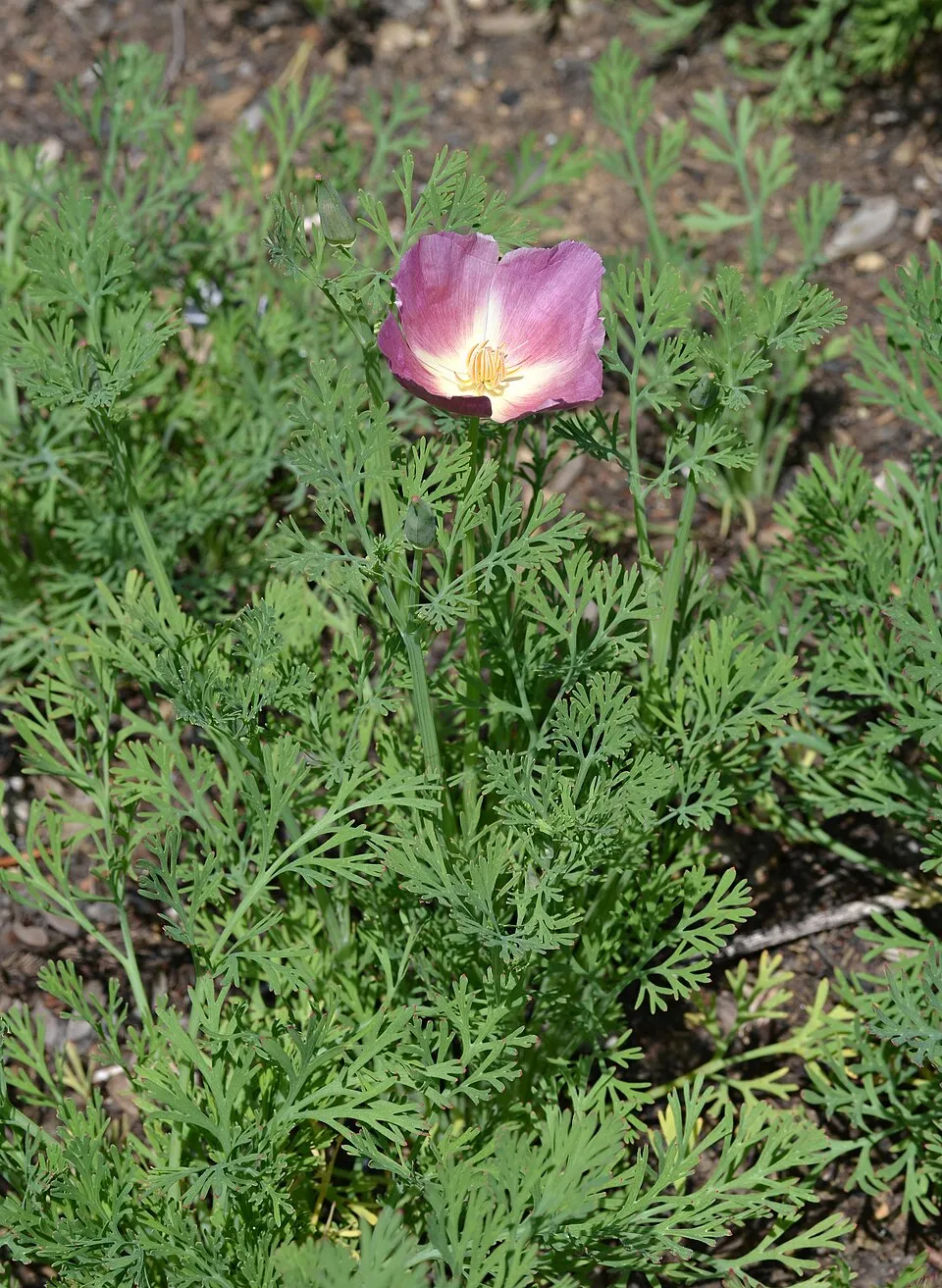
Eschscholzia californica, commonly known as California poppy, is a striking perennial herbaceous plant, often cultivated as an annual, belonging to the Papaveraceae family. It typically reaches a height of 12 to 18 inches (30 to 45 cm), though it can spread wider.
Its distinctive foliage consists of finely divided, fern-like leaves, a characteristic that differentiates it from many other poppy species. These glaucous, blue-green leaves can grow 2 to 6 inches (5 to 15 cm) long.
The plant is renowned for its vibrant, cup-shaped flowers, which typically span 2 to 4 inches (5 to 10 cm) across. While bright orange and yellow are the most common hues, cultivars may display shades of cream, pink, or red.
Each flower features four delicate, often overlapping, petal-like sepals. Following successful pollination, the California poppy produces elongated, slender seed capsules, which can grow up to 3 inches (7.5 cm) in length, eventually splitting open to release numerous small, dark seeds.
Native to the southwestern United States and Mexico, Eschscholzia californica thrives in arid to semi-arid conditions. It is frequently encountered in open meadows, grasslands, and along roadsides, particularly in regions with dry, well-drained, and often sandy or rocky soils.
Its resilience and striking appearance make it a popular choice for xeriscaping and ornamental gardening. The herbaceous stem, initially green, can develop a subtle reddish tint as it matures, contributing to its robust appearance.
Trusted Scientific References
1. Authoritative external sources for Eschscholzia californica garden
1.1 Wikipedia — Eschscholzia californica garden
1.2 Kew POWO (Plants of the World Online)
1.3 PubMed — peer-reviewed research
1.4 NCBI Taxonomy Browser
1.5 GBIF — Global Biodiversity
1.6Eschscholzia should be interpreted through verified botanical identity, practical care, and responsible safety language. This recovery note adds the missing context needed for a complete profile: match light to the plant's habit, use well-drained soil, water according to season, and avoid unsupported medicinal or edible claims. For publishing, the plant can be presented as a source-backed garden plant with clear care guidance, common problem diagnosis, and conservative safety wording.
1.1.Eschscholzia — Key Features
- ✓ <strong>Botanical Name</strong> — Eschscholzia californica garden, commonly California Poppy.
- ✓ <strong>Family</strong> — Papaveraceae, sharing traits with other poppies but distinct in morphology.
- ✓ <strong>Primary Uses</strong> — Sleep aid, anxiety reduction, mild pain relief, nervous tension.
- ✓ <strong>Active Compounds</strong> — Rich in isoquinoline alkaloids like protopine and californidine.
- ✓ <strong>Growth Habit</strong> — Perennial herbaceous plant, often grown as an annual, reaching 12-18 inches.
- ✓ <strong>Distinctive Flowers</strong> — Bright orange to yellow, cup-shaped flowers with four petals.
- ✓ <strong>Native Range</strong> — Southwestern United States and Mexico, thrives in dry, well-drained soils.
- ✓ <strong>Traditional Medicine</strong> — Valued in Native American practices for various ailments.
- ✓ <strong>Non</strong> — Addictive — Considered a safe, non-habit-forming herbal remedy.
- ✓ <strong>Garden Appeal</strong> — Popular ornamental plant for its vibrant color and drought tolerance.
1.2.Eschscholzia — Quick Summary
- ✓ Natural Sedative and Anxiolytic — Widely used for calming the nervous system.
- ✓ Sleep Aid — Effective for improving sleep quality and addressing insomnia.
- ✓ Mild Pain Relief — Offers gentle analgesic properties for minor discomforts.
- ✓ Non-Habit Forming — A safer alternative for long-term stress and sleep management.
- ✓ Native American Traditional Use — Historically valued for pain, digestion, and emotional support.
- ✓ Rich in Alkaloids — Contains isoquinoline alkaloids responsible for its therapeutic effects.
2.Eschscholzia — Scientific Identity
3.Eschscholzia — Quick Facts
4.Eschscholzia — Appearance & Identification
5.Eschscholzia — Native Habitat
6.Eschscholzia — Water Requirements
- ✓ Climate Preference — Thrives in full sun and prefers dry, warm climates; tolerant of light frost but not prolonged freezing.
- ✓ Soil Requirements — Best grown in well-drained, sandy, or rocky soils with low to moderate fertility; pH between 6.0 and 8.0.
- ✓ Sowing Seeds — Sow seeds directly outdoors in early spring or fall; requires light for germination, so cover very lightly or rake into soil surface.
- ✓ Watering — Drought-tolerant once established; requires minimal watering, especially in dry climates, overwatering can lead to root rot.
- ✓ Spacing — Space plants 6-12 inches (15-30 cm) apart to allow for proper air circulation and growth.
- ✓ Pests and Diseases — Generally robust and resistant; occasional issues with aphids or powdery mildew in overly humid or crowded conditions.
- ✓ Harvesting — Harvest aerial parts (flowers, leaves, stems) when the plant is in full bloom, typically in late spring to early summer.
- ✓ Propagation — Primarily propagated by seed, which self-sows readily; can also be propagated by division in mature clumps.
Reviewed by the Flora Medical Global Botanical Review Panel
Multi-disciplinary editorial group · Botany · Ethnobotany · Herbal-medicine literature
Who reviewed this: This page was checked by the Flora Medical Global Botanical Review Panel — an in-house editorial group of botany graduates, ethnobotany researchers, and horticulture practitioners who collectively maintain our 7,000+ plant encyclopedia. Meet the team.
Our 4-step verification process
1. Taxonomic verification
Scientific names and synonyms cross-checked against Kew POWO, World Flora Online, and The Plant List.
2. Phytochemical & medicinal cross-reference
Active compounds, traditional uses, and reported activities are cross-referenced with PubMed, USDA Dr. Duke's database, and peer-reviewed ethnobotanical literature.
3. Conservation & distribution check
Distribution, ecology, and conservation status confirmed against GBIF occurrence records and the IUCN Red List.
4. Editorial & safety review
Every entry passes an editorial pass for clarity, originality, and safety notices (toxicity, contraindications, dosage caveats) before publication.
Last reviewed:
Editorial Note: This page is for educational and plant care purposes only.
Written by: Flora Medical Global Editorial Team
Reviewed by: Flora Medical Global Botanical Review Panel
Last Updated: June 15, 2026







Eschscholzia — Comments & Community Reviews
Rate this plant