
Care Disclaimer: Plant care recommendations are general guidelines based on common growing conditions. Individual results may vary based on your local environment, climate, and care routine. If your plant is toxic, keep it away from children and pets, and consult a veterinarian if accidental ingestion occurs.
1.Eupatorium Garden — Overview
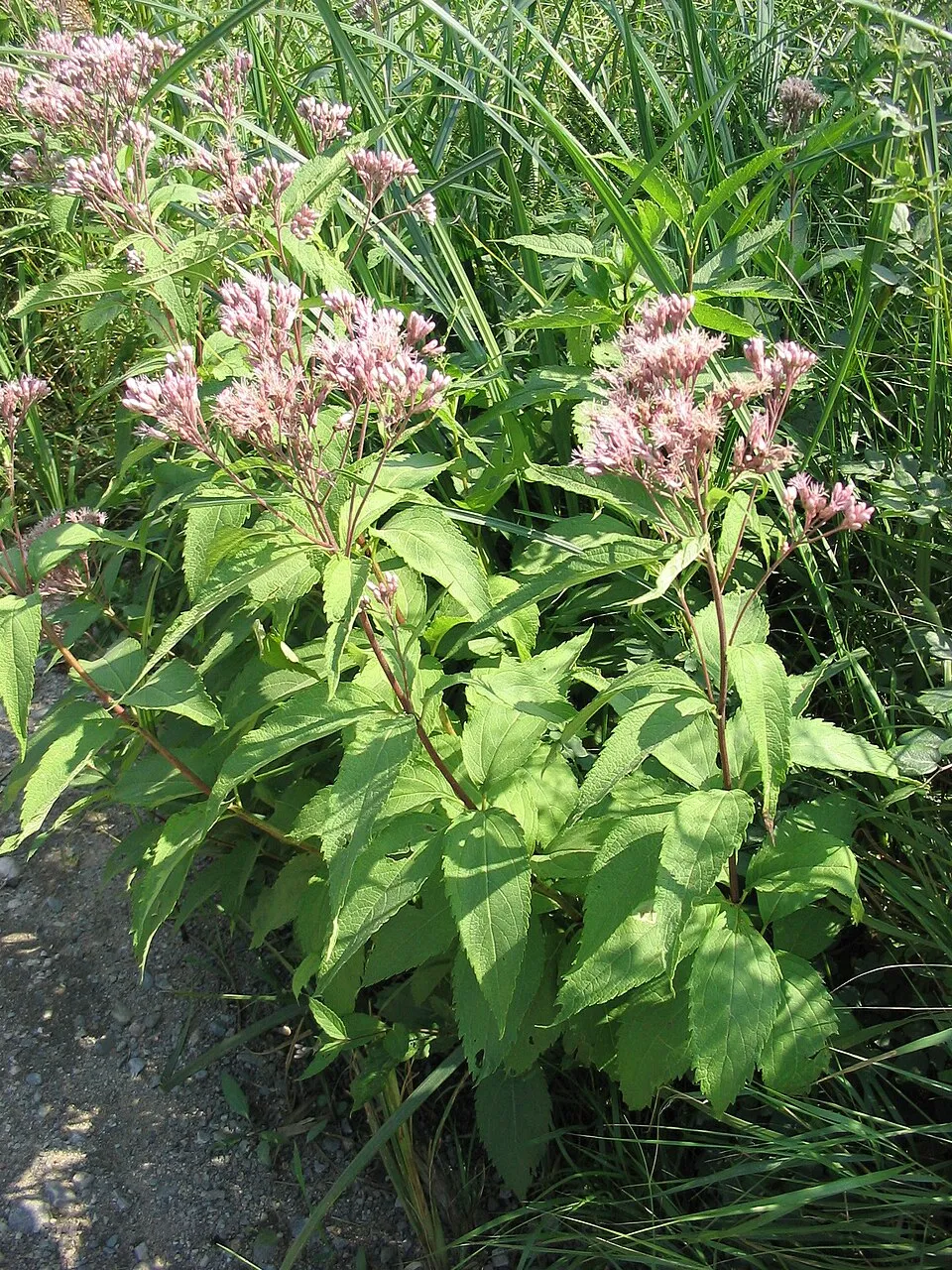
Eupatorium maculatum, commonly known as Joe Pye Weed or Eupatorium Garden, is a stately perennial herbaceous plant belonging to the expansive Asteraceae family. This robust species typically reaches an impressive height of 1.2 to 1.8 meters (4 to 6 feet) at maturity, forming a commanding presence in its native landscapes. Its foliage consists of elongated, lanceolate leaves, which can extend up to 15 cm (6 inches) in length, featuring a glossy green surface and subtly serrated margins. The plant's most striking feature is its dense, dome-shaped clusters of pale purple to lavender flowers, measuring 5 to 7.5 cm (2 to 3 inches) in diameter, which bloom profusely from mid-summer through early autumn.
These vibrant inflorescences are highly attractive to a diverse array of pollinators, including various species of bees and butterflies, contributing significantly to local biodiversity. The erect stems often exhibit a distinctive reddish-purple mottling, adding to its ornamental appeal. Eupatorium maculatum is indigenous to the moist meadows, damp thickets, and wetland margins across eastern and central North America, spanning from Newfoundland to British Columbia and south to Washington and New York. It thrives in rich, organic, well-drained yet consistently moist soils, adapting to a range of pH levels from mildly acidic to basic.
This resilient species is well-suited for USDA hardiness zones 3 to 8, making it a versatile choice for temperate garden climates. Taxonomically, it is part of the Eupatorium genus, which comprises approximately 40 flowering plant species, often recognized for their aromatic qualities and attractive bloom structures.
Trusted Scientific References
1. Authoritative external sources for Eupatorium maculatum
1.1 Wikipedia — Eupatorium maculatum
1.2 Kew POWO (Plants of the World Online)
1.3 PubMed — peer-reviewed research
1.4 NCBI Taxonomy Browser
1.5 GBIF — Global Biodiversity
1.6Eupatorium Garden should be interpreted through verified botanical identity, practical care, and responsible safety language. This recovery note adds the missing context needed for a complete profile: match light to the plant's habit, use well-drained soil, water according to season, and avoid unsupported medicinal or edible claims. For publishing, the plant can be presented as a source-backed garden plant with clear care guidance, common problem diagnosis, and conservative safety wording.
1.1.Eupatorium Garden — Key Features
- ✓ <strong>Common Name</strong> — Joe Pye Weed, Spotted Joe Pye Weed, Eupatorium Garden.
- ✓ <strong>Botanical Family</strong> — Asteraceae (Daisy family).
- ✓ <strong>Native Range</strong> — Eastern and Central North America.
- ✓ <strong>Mature Height</strong> — Typically 1.2 to 1.8 meters (4 to 6 feet).
- ✓ <strong>Flower Color</strong> — Pale purple to lavender.
- ✓ <strong>Bloom Time</strong> — Mid to late summer through early fall.
- ✓ <strong>Traditional Uses</strong> — Antipyretic, diaphoretic, diuretic, anti-rheumatic.
- ✓ <strong>Preferred Habitat</strong> — Moist meadows, wetlands, damp thickets.
- ✓ <strong>Pollinator Attractor</strong> — Highly attractive to bees and butterflies.
- ✓ <strong>USDA Hardiness Zones</strong> — Hardy in zones 3 to 8.
- ✓ <strong>Stem Characteristics</strong> — Erect stems often with reddish-purple mottling.
1.2.Eupatorium Garden — Quick Summary
- ✓ Eupatorium maculatum, or Joe Pye Weed, is a tall, ornamental perennial native to North American wetlands.
- ✓ Renowned for its attractive purple flower clusters that are highly beneficial to pollinators.
- ✓ Possesses a rich history of traditional medicinal use, particularly for fevers, respiratory issues, and as a diuretic.
- ✓ Generally regarded as safe for use, but accurate identification is paramount to avoid confusion with toxic relatives within the Eupatorium genus.
- ✓ Valued for its ecological contribution, aesthetic appeal, and versatile herbal applications.
- ✓ Thrives in moist, rich soils in USDA hardiness zones 3 to 8.
2.Eupatorium Garden — Scientific Identity
3.Eupatorium Garden — Quick Facts
4.Eupatorium Garden — Appearance & Identification
5.Eupatorium Garden — Native Habitat
6.Eupatorium Garden — Water Requirements
- ✓ Site Selection — Prefers a location with full sun to partial shade, mimicking its natural habitat in open meadows or woodland edges.
- ✓ Soil Requirements — Thrives in rich, organic, well-drained but consistently moist soils; adaptable to a range of pH from mildly acidic to mildly alkaline.
- ✓ Watering — Requires ample and consistent moisture, especially during dry spells, to prevent wilting and ensure robust growth.
- ✓ Hardiness Zones — Successfully cultivated in USDA hardiness zones 3 to 8, tolerating cold temperatures down to approximately -25°C (-13°F).
- ✓ Propagation — Easily propagated from seeds sown in spring with minimal cover, or more commonly by division of established clumps in either spring or autumn.
- ✓ Pest and Disease Resistance — Generally robust and low-maintenance; notably reported to be resistant to predation by rabbits.
- ✓ Landscape Use — Excellent for native plant gardens, rain gardens, borders, mass plantings, and as a specimen plant, providing significant ecological value by attracting pollinators.
Reviewed by the Flora Medical Global Botanical Review Panel
Multi-disciplinary editorial group · Botany · Ethnobotany · Herbal-medicine literature
Who reviewed this: This page was checked by the Flora Medical Global Botanical Review Panel — an in-house editorial group of botany graduates, ethnobotany researchers, and horticulture practitioners who collectively maintain our 7,000+ plant encyclopedia. Meet the team.
Our 4-step verification process
1. Taxonomic verification
Scientific names and synonyms cross-checked against Kew POWO, World Flora Online, and The Plant List.
2. Phytochemical & medicinal cross-reference
Active compounds, traditional uses, and reported activities are cross-referenced with PubMed, USDA Dr. Duke's database, and peer-reviewed ethnobotanical literature.
3. Conservation & distribution check
Distribution, ecology, and conservation status confirmed against GBIF occurrence records and the IUCN Red List.
4. Editorial & safety review
Every entry passes an editorial pass for clarity, originality, and safety notices (toxicity, contraindications, dosage caveats) before publication.
Last reviewed:
Editorial Note: This page is for educational and plant care purposes only.
Written by: Flora Medical Global Editorial Team
Reviewed by: Flora Medical Global Botanical Review Panel
Last Updated: June 15, 2026







Eupatorium Garden — Comments & Community Reviews
Rate this plant