
Care Disclaimer: Plant care recommendations are general guidelines based on common growing conditions. Individual results may vary based on your local environment, climate, and care routine. If your plant is toxic, keep it away from children and pets, and consult a veterinarian if accidental ingestion occurs.
1.Eupatorium Maculatum — Overview
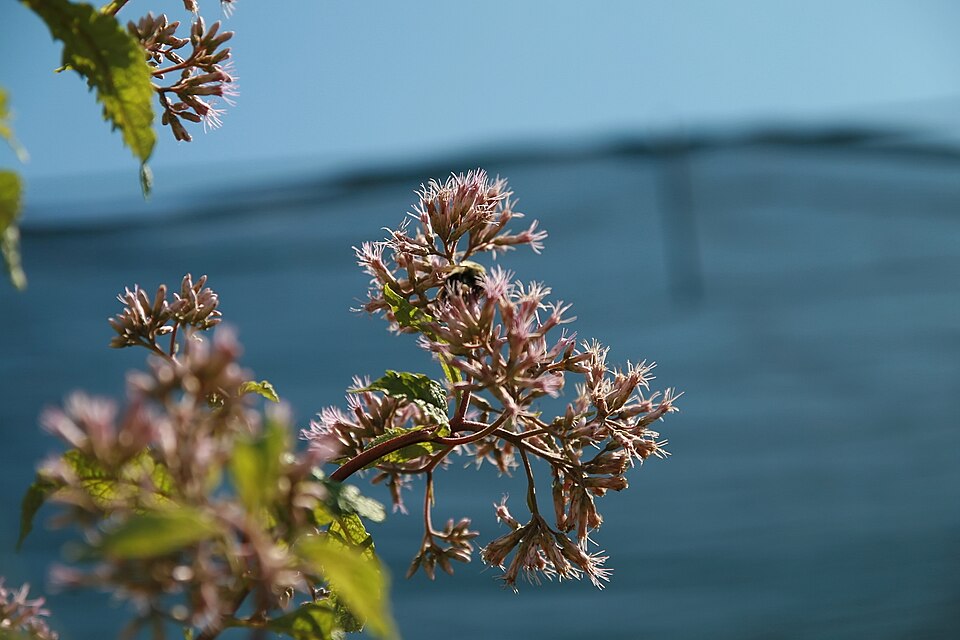
Eupatorium maculatum, commonly known as Joe Pye Weed or Spotted Joe Pye Weed, is a magnificent herbaceous perennial native to a vast range across Eastern and Central North America, from Newfoundland to British Columbia and southwards. This robust member of the Asteraceae family typically grows erect, reaching impressive heights of 1 to 2.5 meters (3 to 8 feet). Its sturdy, often purplish-spotted stems are adorned with whorls of serrated, lance-shaped leaves that can measure 10-25 cm in length.
The plant's most striking feature is its large, domed clusters of delicate, fuzzy flowers, which bloom profusely from mid-summer through early fall. These inflorescences are typically a vibrant mauve to purple, attracting a diverse array of pollinators, including butterflies, bees, and other beneficial insects, making it a crucial component of many native ecosystems. Joe Pye Weed thrives in damp thickets, moist meadows, and along stream banks, preferring rich, calcareous, and consistently moist soils.
While it flourishes in full sun, it can also tolerate partial shade, demonstrating adaptability to various environmental conditions, from naturalized landscapes to cultivated gardens.
Trusted Scientific References
1. Authoritative external sources for Eupatorium Maculatum
1.1 Wikipedia — Eupatorium Maculatum
1.2 Kew POWO (Plants of the World Online)
1.3 PubMed — peer-reviewed research
1.4 NCBI Taxonomy Browser
1.5 GBIF — Global Biodiversity
1.6Eupatorium Maculatum should be interpreted through verified botanical identity, practical care, and responsible safety language. This recovery note adds the missing context needed for a complete profile: match light to the plant's habit, use well-drained soil, water according to season, and avoid unsupported medicinal or edible claims. For publishing, the plant can be presented as a source-backed garden plant with clear care guidance, common problem diagnosis, and conservative safety wording.
1.7Eupatorium Maculatum (Eupatorium maculatum) is maintained in this recovery file as a complete garden profile with practical care, safety, and identification context. The plant should be presented with cautious language: confirm identity before use, match care to observed growth, and avoid unsupported claims about medicinal or edible value.
1.1.Eupatorium Maculatum — Key Features
- ✓ <strong>Botanical Name</strong> — Eupatorium maculatum
- ✓ <strong>Common Names</strong> — Joe Pye Weed, Spotted Joe Pye Weed
- ✓ <strong>Family</strong> — Asteraceae (Compositae)
- ✓ <strong>Growth Habit</strong> — Upright perennial herb, reaching 1-2.5 meters (3-8 feet) tall
- ✓ <strong>Flower Color</strong> — Mauve to purple, blooming mid-summer to early fall
- ✓ <strong>Native Range</strong> — Eastern and Central North America
- ✓ <strong>Medicinal Uses</strong> — Diuretic, diaphoretic, antirheumatic, kidney and immune support
- ✓ <strong>Key Constituents</strong> — Flavonoids, phenolic compounds, sesquiterpene lactones
- ✓ <strong>Habitat</strong> — Damp thickets, moist meadows, rich and calcareous soils
- ✓ <strong>Ecological Role</strong> — Attracts a wide range of pollinators, including butterflies and bees
1.2.Eupatorium Maculatum — Quick Summary
- ✓ Joe Pye Weed (Eupatorium maculatum) is a tall, native North American perennial with distinctive purple flowers.
- ✓ Traditionally valued for its diuretic, diaphoretic, and anti-rheumatic properties, supporting kidney and immune health.
- ✓ Rich in bioactive compounds including flavonoids, phenolic acids, and sesquiterpene lactones.
- ✓ Used for conditions such as fevers, colds, painful urination, and joint pain.
- ✓ An important pollinator plant, easily cultivated in moist, well-drained soils in sun to partial shade.
- ✓ Always consult a healthcare professional before using medicinally due to potential interactions and specific cautions.
2.Eupatorium Maculatum — Scientific Identity
3.Eupatorium Maculatum — Quick Facts
4.Eupatorium Maculatum — Appearance & Identification
5.Eupatorium Maculatum — Native Habitat
6.Eupatorium Maculatum — Water Requirements
- ✓ Climate and Hardiness — Thrives in USDA Hardiness Zones 3-7, making it highly resilient to cold temperatures.
- ✓ Soil Preferences — Adapts to a variety of well-drained soils, including sandy, loamy, and clay, but significantly prefers consistently moist, rich, and calcareous conditions.
- ✓ Light Exposure — Flourishes best in full sun, which promotes robust growth and abundant flowering, but can tolerate partial shade, albeit with potentially less vigorous bloom.
- ✓ Watering Requirements — Requires consistently moist soil; it is not drought-tolerant and will need supplemental watering during dry periods, especially in full sun.
- ✓ Propagation — Easily propagated by sowing seeds in spring in a cold frame or through division of mature root clumps in early spring or autumn.
- ✓ Maintenance — Generally low maintenance; benefits from cutting back old stems in late winter or early spring and may require staking in windy locations due to its height.
- ✓ Pest and Disease Resistance — Noted for its immunity to rabbits and generally resistant to most common garden pests and diseases, making it a robust landscape choice.
Reviewed by the Flora Medical Global Botanical Review Panel
Multi-disciplinary editorial group · Botany · Ethnobotany · Herbal-medicine literature
Who reviewed this: This page was checked by the Flora Medical Global Botanical Review Panel — an in-house editorial group of botany graduates, ethnobotany researchers, and horticulture practitioners who collectively maintain our 7,000+ plant encyclopedia. Meet the team.
Our 4-step verification process
1. Taxonomic verification
Scientific names and synonyms cross-checked against Kew POWO, World Flora Online, and The Plant List.
2. Phytochemical & medicinal cross-reference
Active compounds, traditional uses, and reported activities are cross-referenced with PubMed, USDA Dr. Duke's database, and peer-reviewed ethnobotanical literature.
3. Conservation & distribution check
Distribution, ecology, and conservation status confirmed against GBIF occurrence records and the IUCN Red List.
4. Editorial & safety review
Every entry passes an editorial pass for clarity, originality, and safety notices (toxicity, contraindications, dosage caveats) before publication.
Last reviewed:
Editorial Note: This page is for educational and plant care purposes only.
Written by: Flora Medical Global Editorial Team
Reviewed by: Flora Medical Global Botanical Review Panel
Last Updated: June 15, 2026







Eupatorium Maculatum — Comments & Community Reviews
Rate this plant