
Care Disclaimer: Plant care recommendations are general guidelines based on common growing conditions. Individual results may vary based on your local environment, climate, and care routine. If your plant is toxic, keep it away from children and pets, and consult a veterinarian if accidental ingestion occurs.
1.Eupatorium Purpureum — Overview
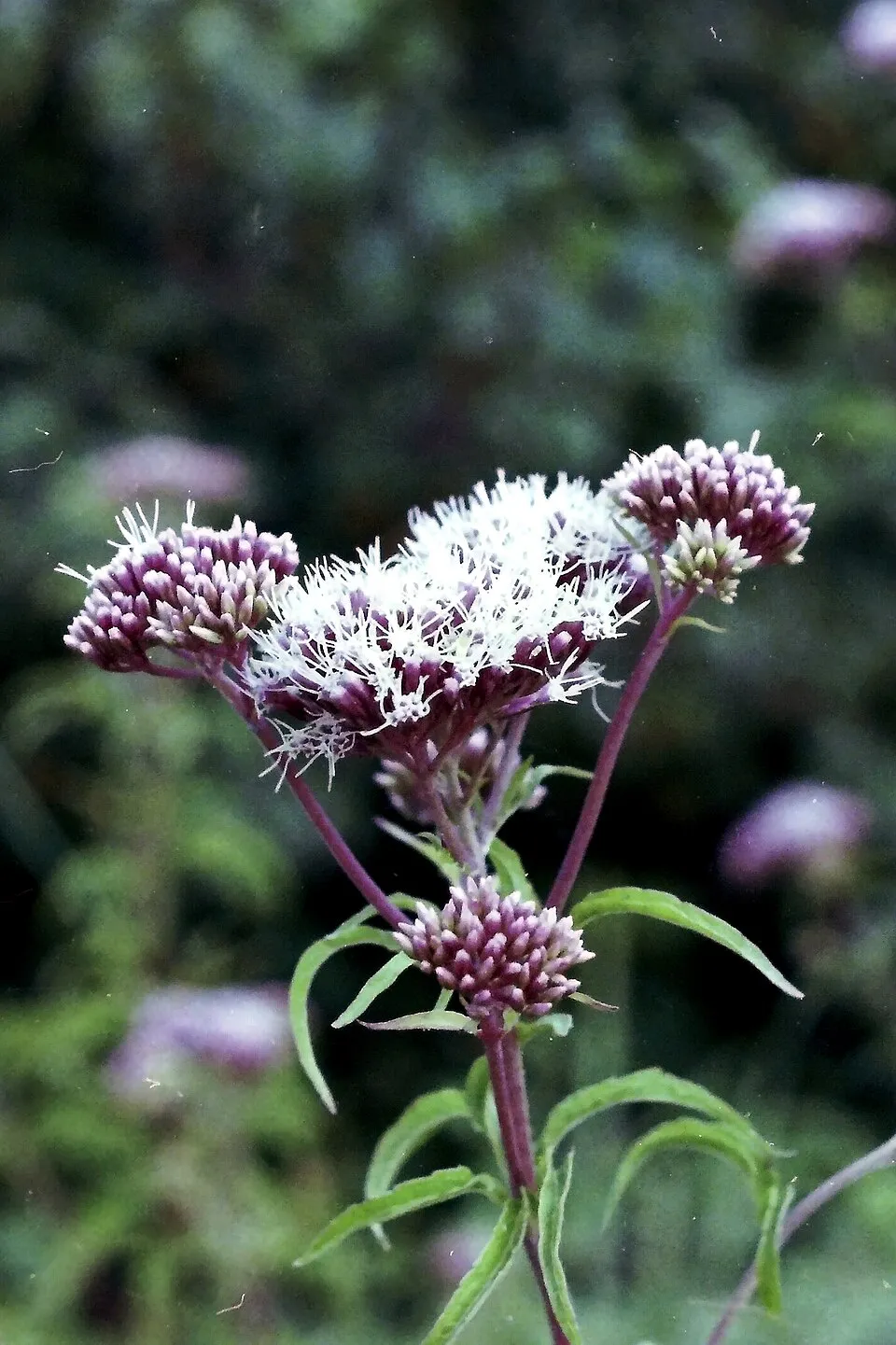
Eupatorium purpureum, commonly known as Gravel Root or Joe Pye Weed, is a statuesque herbaceous perennial belonging to the Asteraceae family. Native to the eastern and central regions of North America, it thrives in moist woodlands, stream banks, and damp meadows, often forming impressive colonies. The plant typically exhibits an upright growth habit, reaching heights of 1 to 2.5 meters (3 to 8 feet), characterized by sturdy, purplish-tinged stems.
Its large, lanceolate to ovate leaves are arranged in whorls of 3 to 7 around the stem, featuring serrated margins and a prominent venation pattern. The foliage emits a faint vanilla-like scent when crushed. During late summer and early autumn, Eupatorium purpureum produces dense, dome-shaped clusters of small, fragrant, rose-purple to pinkish-mauve flowers.
These inflorescences are highly attractive to a wide array of pollinators, including bees, butterflies (especially monarch butterflies), and other beneficial insects, making it a valuable species for supporting local biodiversity. The root system consists of a fibrous rhizome from which the medicinal properties are traditionally derived, giving rise to its common name 'Gravel Root' due to its historical use in addressing urinary calculi.
Trusted Scientific References
1. Authoritative external sources for Eupatorium Purpureum
1.1 Wikipedia — Eupatorium Purpureum
1.2 Kew POWO (Plants of the World Online)
1.3 PubMed — peer-reviewed research
1.4 NCBI Taxonomy Browser
1.5 GBIF — Global Biodiversity
1.6Eupatorium Purpureum should be interpreted through verified botanical identity, practical care, and responsible safety language. This recovery note adds the missing context needed for a complete profile: match light to the plant's habit, use well-drained soil, water according to season, and avoid unsupported medicinal or edible claims. For publishing, the plant can be presented as a source-backed garden plant with clear care guidance, common problem diagnosis, and conservative safety wording.
1.1.Eupatorium Purpureum — Key Features
- ✓ <strong>Common Name</strong> — Gravel Root, Joe Pye Weed, Kidney Root.
- ✓ <strong>Botanical Family</strong> — Asteraceae, known for its composite flower heads.
- ✓ <strong>Native Range</strong> — Eastern and Central North America, thriving in moist environments.
- ✓ <strong>Primary Traditional Use</strong> — Diuretic, renal stone solvent, urinary tract support.
- ✓ <strong>Key Constituents</strong> — Flavonoids, resins, volatile oils, and notably, hepatotoxic pyrrolizidine alkaloids (PAs).
- ✓ <strong>Safety Concern</strong> — High risk of liver damage and other severe adverse effects due to PAs.
- ✓ <strong>Pollinator Plant</strong> — Highly attractive to bees and butterflies, supporting biodiversity.
- ✓ <strong>Growth Habit</strong> — Tall, robust perennial, reaching up to 2.5 meters with purple stems.
- ✓ <strong>Leaf Arrangement</strong> — Distinctive whorled leaves, typically 3-7 per node.
- ✓ <strong>Flower Description</strong> — Dense, dome-shaped clusters of rose-purple to pinkish-mauve flowers blooming late summer to early autumn.
1.2.Eupatorium Purpureum — Quick Summary
- ✓ Eupatorium purpureum, or Gravel Root, is a North American perennial from the Asteraceae family.
- ✓ Traditionally used as a diuretic and for kidney/urinary stones, earning its name.
- ✓ Contains beneficial flavonoids and problematic hepatotoxic pyrrolizidine alkaloids (PAs).
- ✓ Internal use is LIKELY UNSAFE due to PA-induced liver damage, cancer, and birth defects.
- ✓ Contraindicated in pregnancy, breastfeeding, liver disease, and interacts with certain medications.
- ✓ Only certified 'PA-free' preparations, under expert guidance, should be considered, if at all.
2.Eupatorium Purpureum — Scientific Identity
3.Eupatorium Purpureum — Quick Facts
4.Eupatorium Purpureum — Appearance & Identification
5.Eupatorium Purpureum — Native Habitat
6.Eupatorium Purpureum — Water Requirements
- ✓ Soil Preference — Thrives in rich, fertile, well-drained soils, ideally loamy or sandy, mimicking its natural woodland habitat.
- ✓ Light Requirements — Prefers full sun to partial shade, requiring at least 6 hours of direct sunlight daily for optimal growth and flowering.
- ✓ Watering Regimen — Requires consistent moisture; regular watering is crucial, especially during dry periods, but avoid waterlogging to prevent root rot.
- ✓ Fertilization — A balanced, slow-release fertilizer can be applied in early spring to promote vigorous growth, or liquid feed every 4-6 weeks during the growing season.
- ✓ Propagation — Can be propagated by seed, basal cuttings in spring, or division of rhizomes in spring or fall, which also helps rejuvenate older clumps.
- ✓ Pruning — Deadheading spent flowers encourages a tidier appearance, while cutting back dead or damaged foliage in late autumn or early spring promotes healthy new growth.
- ✓ Pest and Disease Control — Generally robust, but watch for powdery mildew in humid conditions or slug damage on young shoots; proper air circulation helps prevent fungal issues.
Reviewed by the Flora Medical Global Botanical Review Panel
Multi-disciplinary editorial group · Botany · Ethnobotany · Herbal-medicine literature
Who reviewed this: This page was checked by the Flora Medical Global Botanical Review Panel — an in-house editorial group of botany graduates, ethnobotany researchers, and horticulture practitioners who collectively maintain our 7,000+ plant encyclopedia. Meet the team.
Our 4-step verification process
1. Taxonomic verification
Scientific names and synonyms cross-checked against Kew POWO, World Flora Online, and The Plant List.
2. Phytochemical & medicinal cross-reference
Active compounds, traditional uses, and reported activities are cross-referenced with PubMed, USDA Dr. Duke's database, and peer-reviewed ethnobotanical literature.
3. Conservation & distribution check
Distribution, ecology, and conservation status confirmed against GBIF occurrence records and the IUCN Red List.
4. Editorial & safety review
Every entry passes an editorial pass for clarity, originality, and safety notices (toxicity, contraindications, dosage caveats) before publication.
Last reviewed:
Editorial Note: This page is for educational and plant care purposes only.
Written by: Flora Medical Global Editorial Team
Reviewed by: Flora Medical Global Botanical Review Panel
Last Updated: June 15, 2026







Eupatorium Purpureum — Comments & Community Reviews
Rate this plant