

Care Disclaimer: Plant care recommendations are general guidelines based on common growing conditions. Individual results may vary based on your local environment, climate, and care routine. If your plant is toxic, keep it away from children and pets, and consult a veterinarian if accidental ingestion occurs.
1.Eurya Japonica — Overview
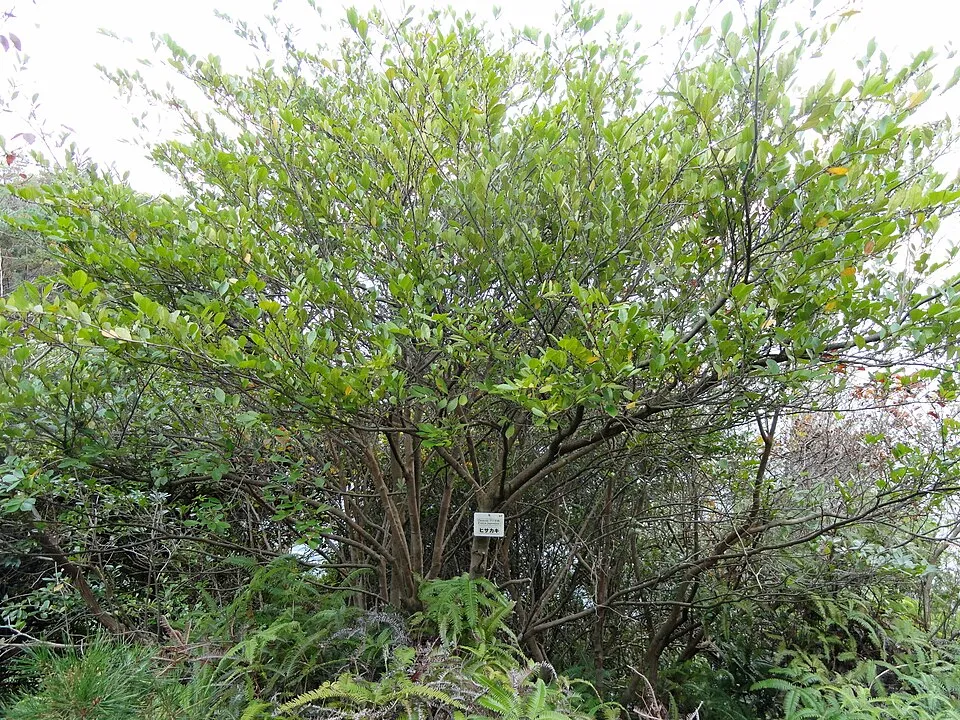
Eurya japonica, commonly known as Japanese Eurya or Sakaki, is an elegant evergreen shrub or small tree belonging to the family Pentaphylacaceae, native to the hillsides and forests of East Asia, including China, Japan, Korea, Vietnam, and the Eastern Himalayas. This resilient species typically attains a height of 1 to 2 meters in cultivation, though it can reach up to 10 meters in its native forest habitats, often forming dense, multi-stemmed clumps with a unique horizontal to slightly upright branch structure. The plant's overall architecture is characterized by its upright, somewhat spreading habit with numerous slender branches. The leaves are a defining feature of Eurya japonica; they are alternate, simple, obovate to elliptic or lance-shaped, and measure approximately 3 to 7 cm in length and 1.5 to 3 cm in width. Their upper surface is a lustrous dark green, often feeling thick and leathery, while the underside is notably paler. The margins are finely serrated, and the venation is pinnate, subtly impressed on the adaxial surface.
The bark of older stems is typically smooth, grayish-brown, becoming somewhat furrowed with age. The root system is fibrous and moderately spreading, enabling the plant to establish firmly in various soil types and contributing to its role in soil stabilization. Flowering occurs primarily from late spring to early summer, typically between April and June, though some regional variations may see blooms in early to mid-spring. Eurya japonica produces small, inconspicuous yet charming flowers that are white to pale yellow, often tinged with green. These flowers are dioecious, meaning male and female flowers are borne on separate plants, making cross-pollination essential for fruit production. They are solitary or arranged in small axillary clusters, emerging from the leaf axils and often hanging downward below the branches on short stems.
The individual flowers are campanulate, possessing five petals and numerous stamens in male flowers, or a superior ovary with a short style in female flowers. Following successful pollination, the plant develops small, spherical to ovoid capsules, typically 5-8 mm in diameter. These fruits mature in late summer to fall, transitioning from green to a purplish-black hue, containing several small, dark seeds. Trusted Scientific References Authoritative external sources for Eurya japonica : Wikipedia — Eurya japonica Kew POWO (Plants of the World Online) PubMed — peer-reviewed research NCBI Taxono ...[CURRENT TEXT EXISTS: 2537 chars]
1.1.Eurya Japonica — Key Features
- ✓ <strong>Botanical Name</strong> — Eurya japonica.
- ✓ <strong>Common Names</strong> — Japanese Eurya, Sakaki, East Asian Eurya.
- ✓ <strong>Family</strong> — Pentaphylacaceae.
- ✓ <strong>Growth Habit</strong> — Evergreen shrub or small tree, reaching 1-10 meters in height.
- ✓ <strong>Foliage</strong> — Lustrous dark green, leathery, serrated, obovate to elliptic leaves.
- ✓ <strong>Flowers</strong> — Small, white to pale yellow, inconspicuous, dioecious, bell-shaped.
- ✓ <strong>Fruits</strong> — Small, spherical to ovoid capsules, maturing to purplish-black berries.
- ✓ <strong>Native Range</strong> — Indigenous to China, Japan, Korea, Southeast Asia, and the Eastern Himalayas.
- ✓ <strong>Traditional Use</strong> — Employed as a tea substitute and in sacred Shinto offerings.
- ✓ <strong>Cultivation</strong> — Prefers full sun to partial shade, well-drained soil, and is frost-tender.
1.2.Eurya Japonica — Quick Summary
- ✓ Evergreen shrub or small tree native to East Asia.
- ✓ Valued ornamentally for its glossy, leathery foliage and winter interest.
- ✓ Leaves traditionally used as a mild tea substitute and in Shinto sacred rituals.
- ✓ Flowers are small, white to pale yellow, dioecious, and can be malodorous.
- ✓ Contains potential antioxidant and anti-inflammatory phytochemicals like polyphenols and flavonoids.
- ✓ Requires protection from frost and cold, drying winds for optimal growth.
2.Eurya Japonica — Scientific Identity
3.Eurya Japonica — Quick Facts
4.Eurya Japonica — Appearance & Identification
5.Eurya Japonica — Native Habitat
6.Eurya Japonica — Water Requirements
- ✓ Soil Requirements — Thrives in well-draining, humus-rich soil, preferring neutral to slightly acidic pH; an ideal blend includes loam and peat compost.
- ✓ Light Exposure — For optimal flowering and dense growth, full sun (at least 6 hours direct sunlight daily) is recommended, though it tolerates partial shade.
- ✓ Water Needs — Requires consistent moisture, particularly during dry spells; however, ensure good drainage to prevent waterlogging and subsequent root issues.
- ✓ Temperature & Protection — This plant is frost-tender and necessitates protection from cold, drying winter winds and temperatures below freezing, thriving in USDA Zones 8a-11b.
- ✓ Propagation — Best propagated by semi-hardwood stem cuttings taken in late summer or early fall, rooted in a sandy, well-draining medium under controlled conditions.
- ✓ Pruning — Can be pruned to maintain desired shape and size, often used as a hedge or screen; best performed after the main flowering period to avoid sacrificing blooms.
- ✓ Fertilization — Benefits from a balanced, slow-release granular fertilizer applied in early spring to support vigorous growth, especially in nutrient-deficient soils.
Reviewed by the Flora Medical Global Botanical Review Panel
Multi-disciplinary editorial group · Botany · Ethnobotany · Herbal-medicine literature
Who reviewed this: This page was checked by the Flora Medical Global Botanical Review Panel — an in-house editorial group of botany graduates, ethnobotany researchers, and horticulture practitioners who collectively maintain our 7,000+ plant encyclopedia. Meet the team.
Our 4-step verification process
1. Taxonomic verification
Scientific names and synonyms cross-checked against Kew POWO, World Flora Online, and The Plant List.
2. Phytochemical & medicinal cross-reference
Active compounds, traditional uses, and reported activities are cross-referenced with PubMed, USDA Dr. Duke's database, and peer-reviewed ethnobotanical literature.
3. Conservation & distribution check
Distribution, ecology, and conservation status confirmed against GBIF occurrence records and the IUCN Red List.
4. Editorial & safety review
Every entry passes an editorial pass for clarity, originality, and safety notices (toxicity, contraindications, dosage caveats) before publication.
Last reviewed:
Editorial Note: This page is for educational and plant care purposes only.
Written by: Flora Medical Global Editorial Team
Reviewed by: Flora Medical Global Botanical Review Panel
Last Updated: June 15, 2026







Eurya Japonica — Comments & Community Reviews
Rate this plant