

Care Disclaimer: Plant care recommendations are general guidelines based on common growing conditions. Individual results may vary based on your local environment, climate, and care routine. If your plant is toxic, keep it away from children and pets, and consult a veterinarian if accidental ingestion occurs.
1.Filipendula Rubra — Overview
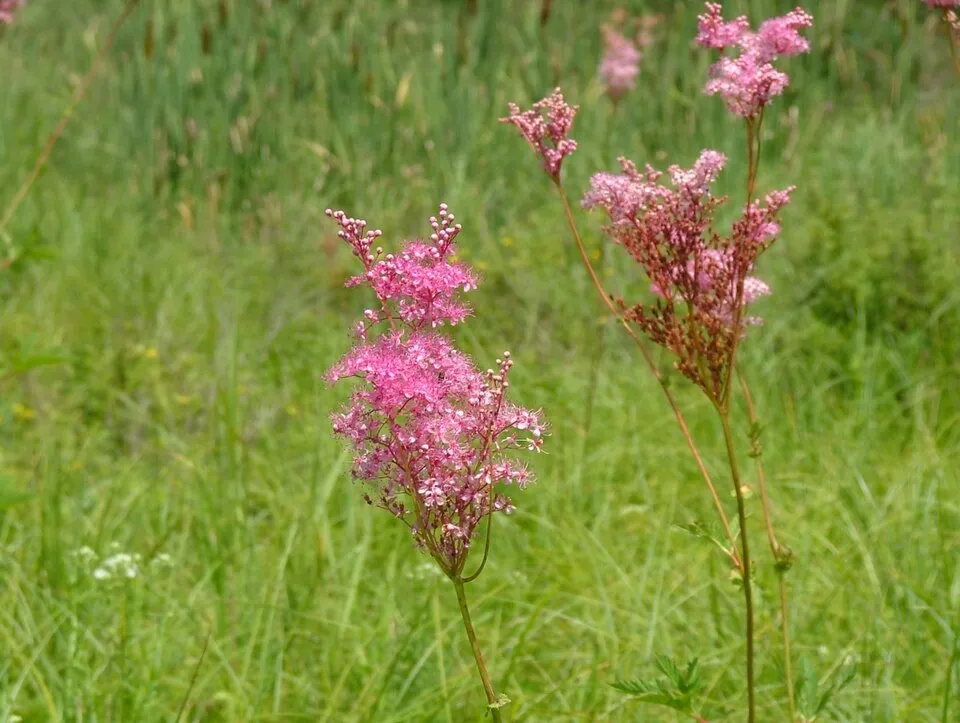
Filipendula rubra, commonly known as Queen-of-the-Prairie, stands as a magnificent, herbaceous perennial within the diverse Rosaceae family, celebrated for its striking ornamental appeal and ecological contributions. This impressive plant typically commands attention with its robust, upright growth habit, frequently attaining heights of 1.5 to 2.5 meters (5 to 8 feet). Its morphology is characterized by strong, often reddish-tinged stems that provide a sturdy framework for its abundant foliage and spectacular floral displays. The leaves are deeply lobed, pinnately compound, and a vibrant dark green, often measuring up to 30 cm in length. These large, lanceolate leaflets form a dense, visually appealing backdrop, with their undersides sometimes exhibiting a lighter, almost silvery hue due to fine pubescence.
The plant develops a fibrous and rhizomatous root system, enabling it to spread gradually and establish dense colonies. This contributes significantly to its stability in moist soils and enhances its effectiveness in erosion control in its natural habitats. The most captivating feature of Filipendula rubra is its stunning plumes of delicate, soft pink to rose-red flowers. These tiny, five-petaled blooms are densely packed into broad, fluffy panicles or racemes, which can span 10-20 cm across and typically emerge in early to mid-summer, from June to August. The ethereal, cloud-like appearance of these flower clusters is a major draw for various pollinators, including bees, butterflies, and other beneficial insects, making it an excellent choice for pollinator gardens.
The flowers emit a faint, sweet fragrance, adding another layer to its sensory appeal. Following the flowering period, small, dry achenes develop, each containing the plant's seeds. Native to the moist, lowland regions of the eastern and central United States, Filipendula rubra thrives in specific ecological niches, including wet prairies, open meadows, fens, swamps, and along the banks of rivers, streams, and lakeshores. It demonstrates a strong preference for full sun to partial shade, adapting well to consistently moist, rich, and acidic soils, although it can tolerate average or even drier conditions once well-established.
Trusted Scientific References
1. Authoritative external sources for Filipendula rubra
1.1 Wikipedia — Filipendula rubra
1.2 Kew POWO (Plants of the World Online)
1.3 PubMed — peer-reviewed research
1.4 NCBI Taxonomy Browser
1.5 GBIF — Global Biodiversity
1.1.Filipendula Rubra — Key Features
- ✓ <strong>Common Name</strong> — Queen-of-the-Prairie
- ✓ <strong>Scientific Name</strong> — Filipendula rubra
- ✓ <strong>Family</strong> — Rosaceae (Rose Family)
- ✓ <strong>Height</strong> — Reaches 1.5 to 2.5 meters (5 to 8 feet) tall
- ✓ <strong>Flowers</strong> — Delicate, soft pink to rose-red, densely packed in fluffy panicles
- ✓ <strong>Leaves</strong> — Deeply lobed, pinnately compound, dark green foliage
- ✓ <strong>Habitat</strong> — Native to wet prairies, fens, and moist meadows of eastern/central USA
- ✓ <strong>Medicinal Potential</strong> — Contains salicylates, suggesting anti-inflammatory and analgesic properties
- ✓ <strong>Ecological Role</strong> — Attracts a wide range of pollinators, including bees and butterflies
- ✓ <strong>Growth Habit</strong> — Robust, upright perennial with rhizomatous spread
1.2.Filipendula Rubra — Quick Summary
- ✓ Filipendula rubra, or Queen-of-the-Prairie, is a stately Rosaceae perennial.
- ✓ Known for its vibrant pink, fluffy flower plumes and impressive height.
- ✓ Contains salicylates, offering potential anti-inflammatory and analgesic benefits.
- ✓ Thrives in moist, rich, acidic soils in full sun to partial shade.
- ✓ Important for pollinators and a striking ornamental landscape plant.
- ✓ Exercise caution due to salicylate content, especially for children and those with aspirin sensitivity.
2.Filipendula Rubra — Scientific Identity
3.Filipendula Rubra — Quick Facts
4.Filipendula Rubra — Appearance & Identification
5.Filipendula Rubra — Native Habitat
6.Filipendula Rubra — Water Requirements
- ✓ Site Selection — Choose a location with full sun to partial shade; F. rubra thrives with at least 6 hours of direct sunlight daily.
- ✓ Soil Preparation — Prefers consistently moist, rich, organic soils with an acidic pH (below 6.8); amend heavy clay or sandy soils with compost to improve drainage and fertility.
- ✓ Watering Requirements — Requires ample moisture, especially during dry periods; ensure the soil remains consistently damp but not waterlogged to mimic its native wetland habitats.
- ✓ Propagation — Best propagated by dividing rootstocks in early spring or fall; seeds require cold stratification for successful germination.
- ✓ Planting — Space plants 60-90 cm (2-3 feet) apart to accommodate their mature size and spread, allowing for good air circulation.
- ✓ Fertilization — Benefits from a balanced, slow-release fertilizer in spring, or a top-dressing of compost to maintain soil fertility.
- ✓ Maintenance — Generally low maintenance; deadhead spent flowers for tidiness, though it is not strictly necessary for continued blooming or plant health.
- ✓ Pest and Disease Control — Typically resistant to most common pests and diseases, but monitor for occasional issues like powdery mildew in humid conditions or slug damage.
Reviewed by the Flora Medical Global Botanical Review Panel
Multi-disciplinary editorial group · Botany · Ethnobotany · Herbal-medicine literature
Who reviewed this: This page was checked by the Flora Medical Global Botanical Review Panel — an in-house editorial group of botany graduates, ethnobotany researchers, and horticulture practitioners who collectively maintain our 7,000+ plant encyclopedia. Meet the team.
Our 4-step verification process
1. Taxonomic verification
Scientific names and synonyms cross-checked against Kew POWO, World Flora Online, and The Plant List.
2. Phytochemical & medicinal cross-reference
Active compounds, traditional uses, and reported activities are cross-referenced with PubMed, USDA Dr. Duke's database, and peer-reviewed ethnobotanical literature.
3. Conservation & distribution check
Distribution, ecology, and conservation status confirmed against GBIF occurrence records and the IUCN Red List.
4. Editorial & safety review
Every entry passes an editorial pass for clarity, originality, and safety notices (toxicity, contraindications, dosage caveats) before publication.
Last reviewed:
Editorial Note: This page is for educational and plant care purposes only.
Written by: Flora Medical Global Editorial Team
Reviewed by: Flora Medical Global Botanical Review Panel
Last Updated: June 15, 2026








Filipendula Rubra — Comments & Community Reviews
Rate this plant