
Care Disclaimer: Plant care recommendations are general guidelines based on common growing conditions. Individual results may vary based on your local environment, climate, and care routine. If your plant is toxic, keep it away from children and pets, and consult a veterinarian if accidental ingestion occurs.
1.Fountain Grass — Overview
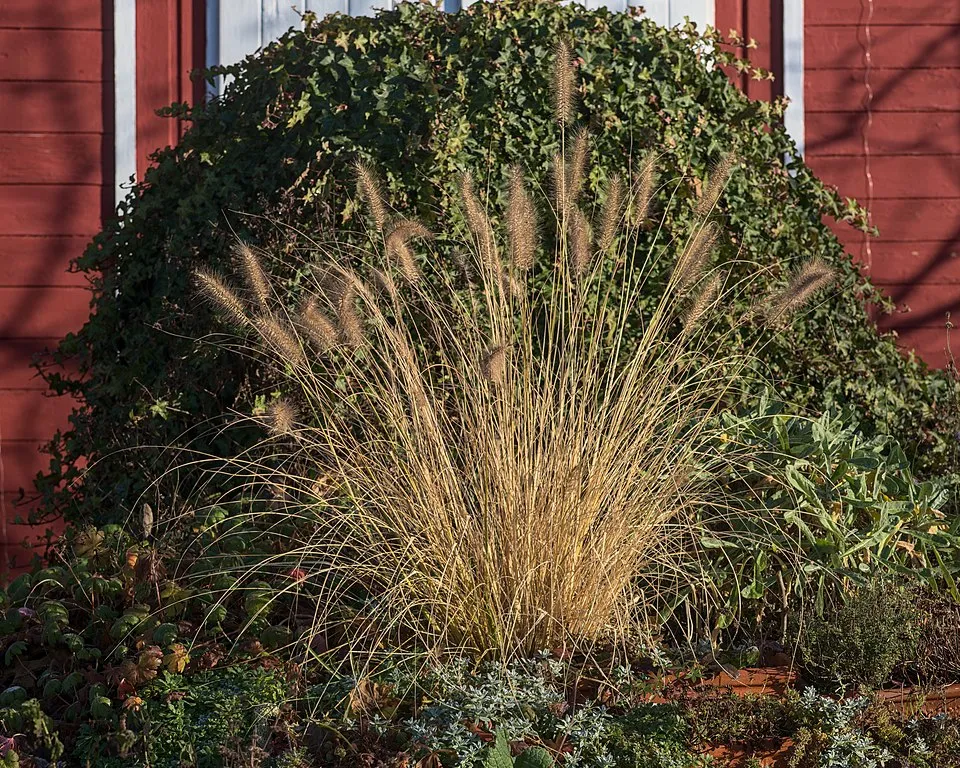
Fountain Grass, scientifically known as Pennisetum alopecuroides, and recently reclassified under the genus Cenchrus, is a resilient warm-season perennial grass celebrated for its distinctive ornamental appeal. Native to meadows and open woods, particularly alongside streams in Eastern Asia (primarily China and Japan) and Australia, this species forms dense, graceful clumps. Its finely textured, deep green foliage typically reaches heights of 1 to 4 feet, initially growing upright before arching elegantly to create a cascading, fountain-like silhouette.
The narrow, subtly serrated blades turn a rich orange-bronze in autumn, eventually fading to a dull beige, providing considerable winter interest. In late summer to early fall, showy, bottle-brush-like inflorescences emerge above the foliage, ranging in color from silvery-white to pink, copper, or deep purple, depending on the cultivar. These fuzzy plumes, which contain the hidden seeds, are particularly dramatic when backlit by the sun.
Pennisetum alopecuroides is adaptable, thriving in most well-drained soils and preferring full sun, though it tolerates part shade. It demonstrates remarkable drought tolerance once established and is hardy to USDA Zones 4 or 5, with some cultivars extending its range. Its robust nature and extensive root system also make it an effective choice for erosion control in various landscapes.
Trusted Scientific References
1. Authoritative external sources for Pennisetum alopecuroides
1.1 Wikipedia — Pennisetum alopecuroides
1.2 Kew POWO (Plants of the World Online)
1.3 PubMed — peer-reviewed research
1.4 NCBI Taxonomy Browser
1.5 GBIF — Global Biodiversity
1.6Fountain Grass should be interpreted through verified botanical identity, practical care, and responsible safety language. This recovery note adds the missing context needed for a complete profile: match light to the plant's habit, use well-drained soil, water according to season, and avoid unsupported medicinal or edible claims. For publishing, the plant can be presented as a source-backed garden plant with clear care guidance, common problem diagnosis, and conservative safety wording.
1.1.Fountain Grass — Key Features
- ✓ <strong>Distinctive Fountain</strong> — like Form — Arching foliage and plumes create a graceful, cascading appearance.
- ✓ <strong>Showy Plumes</strong> — Fuzzy, bottle-brush inflorescences in white, pink, copper, or purple emerge late summer.
- ✓ <strong>Warm</strong> — Season Perennial — Begins growth later in spring, thriving in summer heat.
- ✓ <strong>Drought Tolerant</strong> — Highly adaptable to dry conditions once established, ideal for xeriscaping.
- ✓ <strong>Erosion Control</strong> — Extensive fibrous root system effectively stabilizes soil on slopes.
- ✓ <strong>Deer Resistant</strong> — Generally unpalatable to deer, making it a reliable garden plant.
- ✓ <strong>Low Maintenance</strong> — Requires minimal care, primarily annual trimming of old foliage.
- ✓ <strong>Autumn Color</strong> — Foliage transitions to attractive orange-bronze hues in fall.
- ✓ <strong>Winter Interest</strong> — Dried plumes and foliage persist, offering visual appeal through winter.
- ✓ <strong>Diverse Cultivars</strong> — Available in various sizes and plume colors, offering versatility for landscape design.
1.2.Fountain Grass — Quick Summary
- ✓ Ornamental Value — Highly prized for its distinctive fountain-like form and graceful plumes.
- ✓ Ecological Benefits — Excellent for soil stabilization, erosion control, and supporting biodiversity.
- ✓ Low Maintenance — Drought-tolerant and deer-resistant, requiring minimal care once established.
- ✓ Warm-Season Perennial — Thrives in full sun and well-drained soils, hardy to USDA Zones 4/5.
- ✓ Non-Medicinal — Primarily valued for aesthetic and environmental contributions, not for medicinal uses.
- ✓ Taxonomic Reclassification — Now often classified under the genus Cenchrus.
2.Fountain Grass — Scientific Identity
3.Fountain Grass — Quick Facts
4.Fountain Grass — Appearance & Identification
5.Fountain Grass — Native Habitat
6.Fountain Grass — Water Requirements
- ✓ Site Selection — Plant Fountain Grass in full sun for optimal flowering; it tolerates part shade but may flower less profusely.
- ✓ Soil Requirements — Adaptable to most soil types, but prefers well-drained conditions to prevent crown rot, especially in moist environments.
- ✓ Planting Depth — Ensure the crown of the plant is positioned above ground level, particularly in areas with heavy or moist soils.
- ✓ Watering — Water regularly during establishment; once mature, it is drought-tolerant and requires minimal supplemental irrigation.
- ✓ Pruning — In late winter or early spring before new growth appears, cut back old foliage to 3-6 inches above the ground.
- ✓ Division — Divide mature clumps every three years in spring to rejuvenate the plant and prevent the center from dying out.
- ✓ Hardiness — Hardy in USDA Zones 4-5, though it can be marginally hardy in zone 4, requiring careful siting and potentially winter protection.
- ✓ Pest & Disease Management — Generally deer-resistant and experiences few pest or disease problems, making it a low-maintenance choice.
Reviewed by the Flora Medical Global Botanical Review Panel
Multi-disciplinary editorial group · Botany · Ethnobotany · Herbal-medicine literature
Who reviewed this: This page was checked by the Flora Medical Global Botanical Review Panel — an in-house editorial group of botany graduates, ethnobotany researchers, and horticulture practitioners who collectively maintain our 7,000+ plant encyclopedia. Meet the team.
Our 4-step verification process
1. Taxonomic verification
Scientific names and synonyms cross-checked against Kew POWO, World Flora Online, and The Plant List.
2. Phytochemical & medicinal cross-reference
Active compounds, traditional uses, and reported activities are cross-referenced with PubMed, USDA Dr. Duke's database, and peer-reviewed ethnobotanical literature.
3. Conservation & distribution check
Distribution, ecology, and conservation status confirmed against GBIF occurrence records and the IUCN Red List.
4. Editorial & safety review
Every entry passes an editorial pass for clarity, originality, and safety notices (toxicity, contraindications, dosage caveats) before publication.
Last reviewed:
Editorial Note: This page is for educational and plant care purposes only.
Written by: Flora Medical Global Editorial Team
Reviewed by: Flora Medical Global Botanical Review Panel
Last Updated: June 15, 2026







Fountain Grass — Comments & Community Reviews
Rate this plant