
Care Disclaimer: Plant care recommendations are general guidelines based on common growing conditions. Individual results may vary based on your local environment, climate, and care routine. If your plant is toxic, keep it away from children and pets, and consult a veterinarian if accidental ingestion occurs.
1.Freesia — Overview
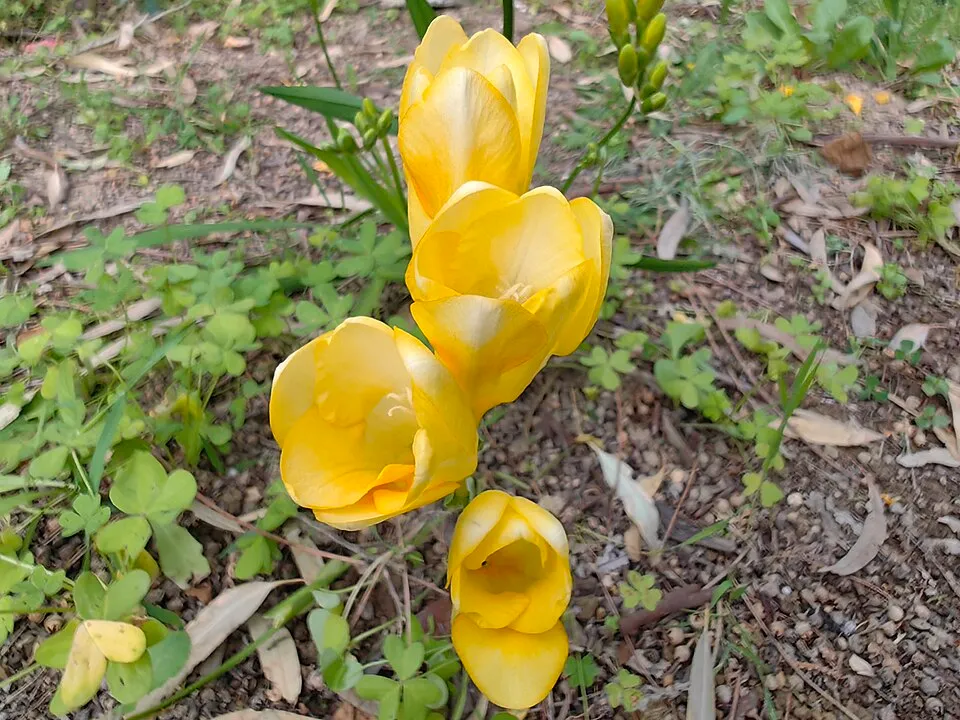
Freesia refracta, commonly known as Freesia, is an exquisite perennial herbaceous plant belonging to the Iridaceae family, renowned for its captivating fragrance and vibrant blooms. Native to the Western Cape Province of South Africa, this species thrives in its indigenous habitat, characterized by well-drained, loamy soils and moderate precipitation. Freesia possesses a distinctive cormous root system, which serves as a vital storage organ for nutrients and water, enabling the plant to endure dry periods and re-emerge robustly.
Its foliage consists of narrow, lanceolate leaves that grow in an elegant basal rosette directly from the corm, typically reaching lengths of up to 30 cm. The plant's most striking feature is its inflorescence, typically gracing gardens in spring. Flowers are tubular with six petals, arranged in a graceful, funnel-shaped spike, and display an impressive spectrum of colors including pristine white, sunny yellow, delicate pink, rich purple, and fiery orange.
Each flower cluster can bear up to ten individual blooms, contributing to Freesia's immense popularity as an ornamental plant and a highly sought-after cut flower. Freesia refracta flourishes best in full sun exposure but can tolerate partial shade, particularly in regions with intense summer heat. Beyond its aesthetic appeal, Freesia is valued for its ability to naturalize in favorable climates, enhancing local biodiversity and providing essential nectar resources for pollinators like bees.
Trusted Scientific References
1. Authoritative external sources for Freesia refracta
1.1 Wikipedia — Freesia refracta
1.2 Kew POWO (Plants of the World Online)
1.3 PubMed — peer-reviewed research
1.4 NCBI Taxonomy Browser
1.5 GBIF — Global Biodiversity
1.6Freesia should be interpreted through verified botanical identity, practical care, and responsible safety language. This recovery note adds the missing context needed for a complete profile: match light to the plant's habit, use well-drained soil, water according to season, and avoid unsupported medicinal or edible claims. For publishing, the plant can be presented as a source-backed garden plant with clear care guidance, common problem diagnosis, and conservative safety wording.
1.1.Freesia — Key Features
- ✓ <strong>Botanical Origin</strong> — Native to South Africa's Western Cape, thriving in specific well-drained soil conditions.
- ✓ <strong>Cormous Perennial</strong> — Features an underground corm for nutrient and water storage, ensuring perennial growth.
- ✓ <strong>Vibrant, Funnel</strong> — Shaped Blooms — Produces striking flowers in a wide array of colors, arranged on elegant spikes.
- ✓ <strong>Distinctive Sweet Fragrance</strong> — Highly valued globally for its intense, pleasant, and characteristic aroma.
- ✓ <strong>Emerging Cosmetic Ingredient</strong> — Freesia refracta callus extract (FCE) is a focus of modern anti-aging skincare research.
- ✓ <strong>Collagen Synthesis Booster</strong> — FCE significantly promotes the production of collagen I, crucial for skin elasticity.
- ✓ <strong>Proven Anti</strong> — Wrinkle Efficacy — Clinical studies demonstrate FCE's ability to reduce skin roughness and improve texture.
- ✓ <strong>Antioxidant Activity</strong> — FCE provides protection against oxidative stress, contributing to overall skin health.
- ✓ <strong>Ornamental & Cut Flower Value</strong> — Widely cultivated for garden display and as a popular, long-lasting cut flower.
- ✓ <strong>Iridaceae Family Member</strong> — Shares botanical characteristics and some phytochemical profiles with Iris and Gladiolus.
1.2.Freesia — Quick Summary
- ✓ Freesia refracta is a fragrant, ornamental cormous plant native to South Africa, prized for its vibrant flowers.
- ✓ Its callus extract (FCE) has been scientifically shown to possess significant anti-aging and antioxidant benefits for skin.
- ✓ Key active compounds in FCE include nicotinamide and pyroglutamic acid, which enhance collagen production and reduce skin roughness.
- ✓ Traditional medicinal uses are largely anecdotal and lack scientific validation, primarily revolving around aromatic respiratory comfort.
- ✓ The plant is primarily valued for its aesthetic appeal, cut flower industry contribution, and emerging cosmetic applications.
- ✓ Generally safe for external use, but potential for allergic reactions or respiratory sensitivity exists in susceptible individuals.
2.Freesia — Scientific Identity
3.Freesia — Quick Facts
4.Freesia — Appearance & Identification
5.Freesia — Native Habitat
6.Freesia — Water Requirements
- ✓ Soil Requirements — Freesia thrives in well-drained, fertile, sandy-loam soil with a slightly acidic to neutral pH (6.0-7.0), enriched with ample organic matter.
- ✓ Planting — Plant Freesia corms in early spring after the last frost, positioning them 5-7 cm deep and 10-15 cm apart, ensuring the pointed end faces upwards.
- ✓ Light Exposure — Full sun is essential for robust growth and prolific flowering, ideally at least 6-8 hours of direct sunlight daily; partial shade may be tolerated in very hot climates.
- ✓ Watering — Maintain consistently moist soil during the active growing season and flowering period, but avoid waterlogging; reduce watering as foliage yellows and the plant enters dormancy.
- ✓ Fertilization — Apply a balanced liquid fertilizer (e.g., 5-10-5 NPK) every 2-4 weeks from the emergence of shoots until flowering ceases, promoting strong growth and bloom quality.
- ✓ Pests and Diseases — Monitor for common pests like aphids, thrips, and spider mites; good air circulation and proper drainage help prevent fungal diseases such as botrytis blight.
- ✓ Winter Care — In USDA Zones 8 and below, lift corms after the foliage has died back in autumn, clean them, and store in a cool, dry, dark, and well-ventilated area for replanting the following spring.
- ✓ Support — Taller Freesia varieties or those with heavy flower spikes may benefit from staking or other support structures to prevent stems from bending or breaking.
Reviewed by the Flora Medical Global Botanical Review Panel
Multi-disciplinary editorial group · Botany · Ethnobotany · Herbal-medicine literature
Who reviewed this: This page was checked by the Flora Medical Global Botanical Review Panel — an in-house editorial group of botany graduates, ethnobotany researchers, and horticulture practitioners who collectively maintain our 7,000+ plant encyclopedia. Meet the team.
Our 4-step verification process
1. Taxonomic verification
Scientific names and synonyms cross-checked against Kew POWO, World Flora Online, and The Plant List.
2. Phytochemical & medicinal cross-reference
Active compounds, traditional uses, and reported activities are cross-referenced with PubMed, USDA Dr. Duke's database, and peer-reviewed ethnobotanical literature.
3. Conservation & distribution check
Distribution, ecology, and conservation status confirmed against GBIF occurrence records and the IUCN Red List.
4. Editorial & safety review
Every entry passes an editorial pass for clarity, originality, and safety notices (toxicity, contraindications, dosage caveats) before publication.
Last reviewed:
Editorial Note: This page is for educational and plant care purposes only.
Written by: Flora Medical Global Editorial Team
Reviewed by: Flora Medical Global Botanical Review Panel
Last Updated: June 15, 2026







Freesia — Comments & Community Reviews
Rate this plant