
Care Disclaimer: Plant care recommendations are general guidelines based on common growing conditions. Individual results may vary based on your local environment, climate, and care routine. If your plant is toxic, keep it away from children and pets, and consult a veterinarian if accidental ingestion occurs.
1.Fritillaria — Overview
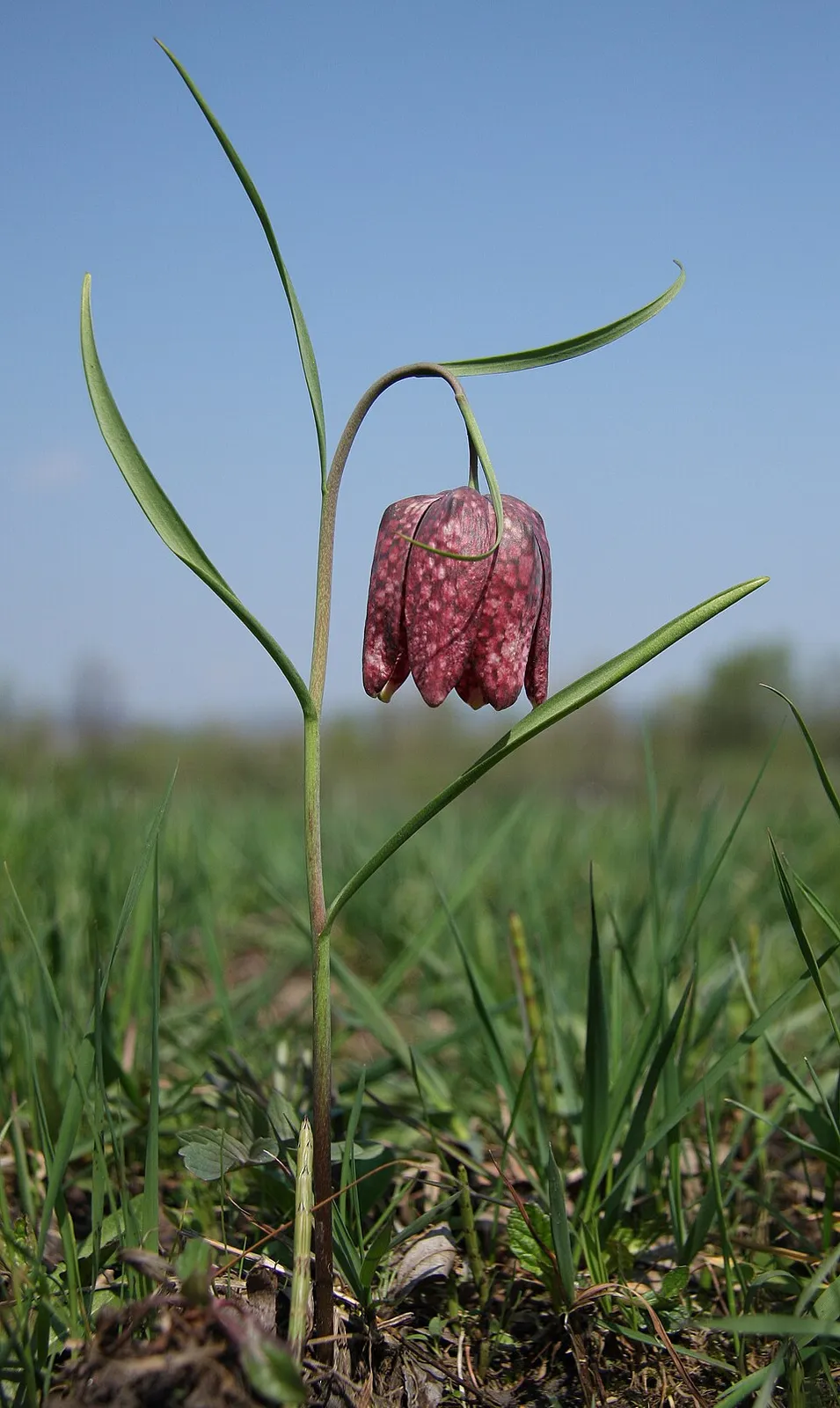
Fritillaria meleagris, widely recognized as the snake's head fritillary or checkerboard lily, is an exquisite perennial herbaceous plant belonging to the Liliaceae family. Typically reaching heights of 30 to 40 centimeters, this species is celebrated for its distinctive, nodding, bell-shaped flowers. These blooms exhibit a unique checkerboard pattern, often in shades of purple and white, creating a striking visual spectacle that makes it a highly prized ornamental in garden settings.
Its lanceolate leaves, which can grow up to 25 centimeters long, display a deep green hue that elegantly contrasts with the vibrant flowers. Blooming in the spring, these resilient perennials bring a splash of color to both cultivated gardens and their natural habitats.
Native to moist meadows and grasslands across Europe, Fritillaria meleagris is found from Sweden south to France, Serbia, and the Lower Volga region, including Britain. It naturally favors well-drained, loamy soils, often thriving in alkaline conditions. The plant demonstrates a preference for partially shaded environments, making it an excellent choice for woodland gardens or areas receiving dappled sunlight.
Its underground bulbous base serves as a crucial nutrient storage organ, enabling the plant to survive harsh winter months and re-emerge each spring. The sturdy stems, characterized by their smooth texture, effectively support the delicate yet robust blooms. As a member of the Liliaceae family, alongside other well-known bulbous plants, Fritillaria meleagris significantly contributes to local biodiversity and offers versatile options for landscaping projects, including borders and mixed plantings, enhancing spring aesthetics.
Trusted Scientific References
1. Authoritative external sources for Fritillaria meleagris
1.1 Wikipedia — Fritillaria meleagris
1.2 Kew POWO (Plants of the World Online)
1.3 PubMed — peer-reviewed research
1.4 NCBI Taxonomy Browser
1.5 GBIF — Global Biodiversity
1.6Fritillaria should be interpreted through verified botanical identity, practical care, and responsible safety language. This recovery note adds the missing context needed for a complete profile: match light to the plant's habit, use well-drained soil, water according to season, and avoid unsupported medicinal or edible claims. For publishing, the plant can be presented as a source-backed garden plant with clear care guidance, common problem diagnosis, and conservative safety wording.
1.1.Fritillaria — Key Features
- ✓ <strong>Distinctive Checkerboard Flowers</strong> — Unique purple and white checkered pattern on nodding, bell-shaped blooms.
- ✓ <strong>Early Spring Bloomer</strong> — Provides vibrant color and nectar during the late spring season.
- ✓ <strong>Bulbous Perennial</strong> — Grows from an underground bulb, returning annually.
- ✓ <strong>European Native</strong> — Indigenous to damp meadows and grasslands across Europe.
- ✓ <strong>Attracts Pollinators</strong> — Flowers serve as an important food source for early bees.
- ✓ <strong>Highly Ornamental</strong> — Widely cultivated for its aesthetic appeal in gardens.
- ✓ <strong>Toxic Plant</strong> — Contains poisonous alkaloids, especially in the bulb.
- ✓ <strong>Prefers Moist, Well</strong> — Drained Soil — Thrives in specific soil and moisture conditions.
- ✓ <strong>Semi</strong> — Shade Tolerant — Grows well in dappled light or light woodland settings.
- ✓ <strong>USDA Hardiness Zones 3</strong> — 7 — Demonstrates significant cold tolerance.
1.2.Fritillaria — Quick Summary
- ✓ Ornamental spring bulb with distinctive checkerboard flowers.
- ✓ Native to European moist meadows, thriving in semi-shade.
- ✓ Contains toxic steroidal alkaloids, particularly in the bulb.
- ✓ Primarily valued for aesthetic appeal and pollinator support.
- ✓ No recognized safe internal medicinal use due to toxicity.
- ✓ Requires moist, well-drained soil and protection from rabbits.
2.Fritillaria — Scientific Identity
3.Fritillaria — Quick Facts
4.Fritillaria — Appearance & Identification
5.Fritillaria — Native Habitat
6.Fritillaria — Water Requirements
- ✓ Soil Preference — Thrives in moist, well-drained loamy to clay soils, but is adaptable to light sandy soils, preferring a pH range from mildly acidic to mildly alkaline.
- ✓ Light Requirements — Best cultivated in semi-shade or light woodland conditions, though it can tolerate full sun provided the soil remains consistently moist.
- ✓ Moisture Needs — Requires consistently moist soil, especially during the growing season; plants should not be allowed to dry out in summer dormancy.
- ✓ Propagation by Seed — Best sown fresh in a cold frame immediately after ripening (June-July); germination can be slow, sometimes taking over a year.
- ✓ Propagation by Division — Offsets from mature bulbs can be carefully divided in August, planting larger bulbs directly or potting smaller ones for a year in a cold frame.
- ✓ Winter Hardiness — Fully hardy in USDA zones 3-7 and UK zone 4, it is not frost tender and can withstand cold winters.
- ✓ Pest Management — Note that rabbits are particularly fond of the plant and can cause significant damage; protective measures may be necessary in affected areas.
- ✓ Naturalization — This species is known to self-sow and naturalize effectively in suitable, undisturbed environments, creating beautiful displays over time.
Reviewed by the Flora Medical Global Botanical Review Panel
Multi-disciplinary editorial group · Botany · Ethnobotany · Herbal-medicine literature
Who reviewed this: This page was checked by the Flora Medical Global Botanical Review Panel — an in-house editorial group of botany graduates, ethnobotany researchers, and horticulture practitioners who collectively maintain our 7,000+ plant encyclopedia. Meet the team.
Our 4-step verification process
1. Taxonomic verification
Scientific names and synonyms cross-checked against Kew POWO, World Flora Online, and The Plant List.
2. Phytochemical & medicinal cross-reference
Active compounds, traditional uses, and reported activities are cross-referenced with PubMed, USDA Dr. Duke's database, and peer-reviewed ethnobotanical literature.
3. Conservation & distribution check
Distribution, ecology, and conservation status confirmed against GBIF occurrence records and the IUCN Red List.
4. Editorial & safety review
Every entry passes an editorial pass for clarity, originality, and safety notices (toxicity, contraindications, dosage caveats) before publication.
Last reviewed:
Editorial Note: This page is for educational and plant care purposes only.
Written by: Flora Medical Global Editorial Team
Reviewed by: Flora Medical Global Botanical Review Panel
Last Updated: June 15, 2026







Fritillaria — Comments & Community Reviews
Rate this plant