
Care Disclaimer: Plant care recommendations are general guidelines based on common growing conditions. Individual results may vary based on your local environment, climate, and care routine. If your plant is toxic, keep it away from children and pets, and consult a veterinarian if accidental ingestion occurs.
1.Fuchsia — Overview
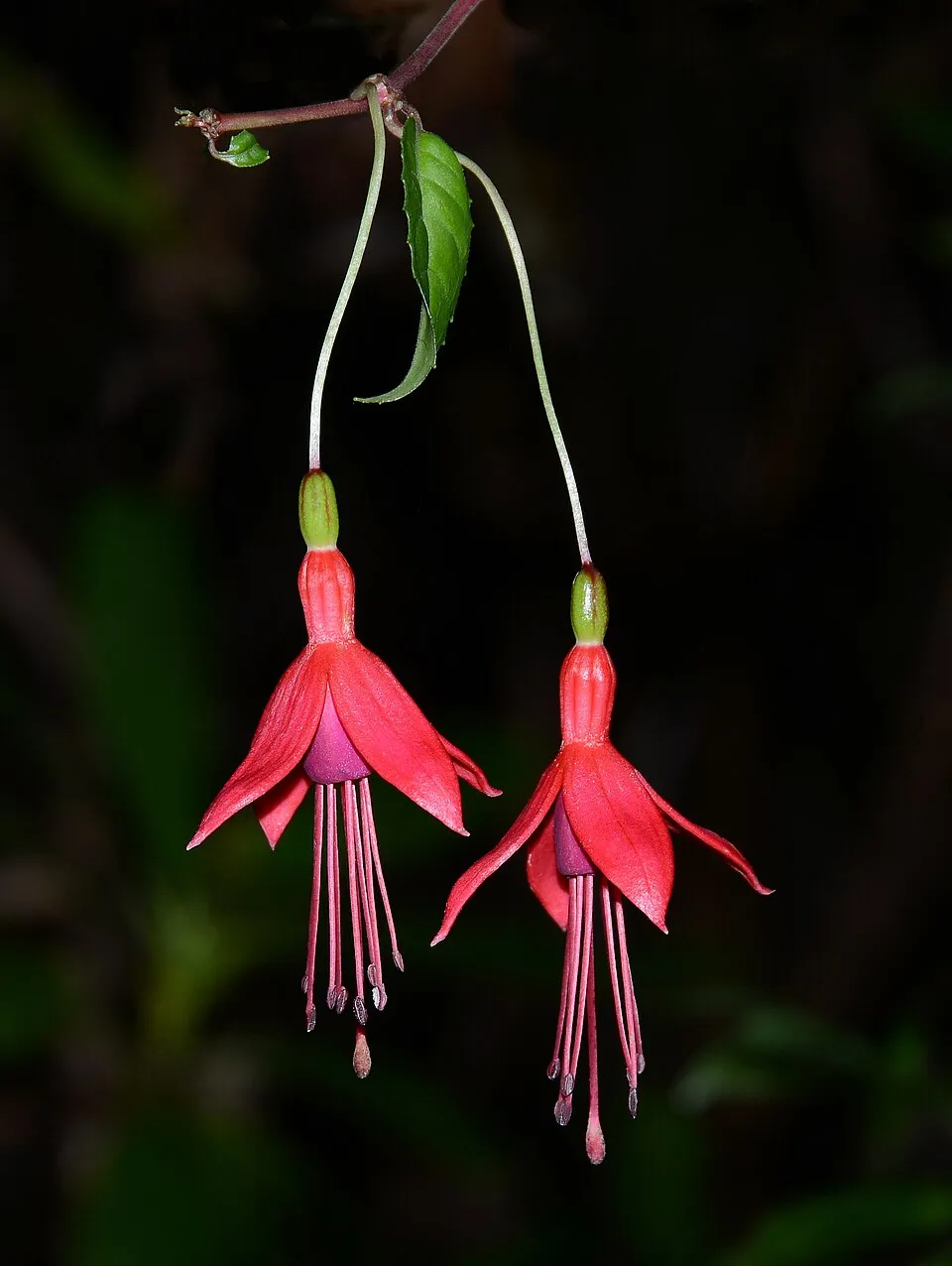
Fuchsia magellanica, widely recognized as hardy fuchsia, is an elegant perennial shrub renowned for its striking ornamental blooms and adaptability. This species typically establishes itself as a multi-stemmed shrub, reaching heights of 1 to 3 meters and often spreading to a similar width, making it a versatile choice for diverse garden landscapes. Its foliage consists of lanceolate, glossy green leaves, each growing up to 7.5 cm in length, arranged oppositely along the stems.
From late spring through early autumn, Fuchsia magellanica showcases its most captivating feature: pendulous, tubular flowers. These vibrant blossoms, which can vary in shades of red, purple, or pink depending on the cultivar, are a magnet for hummingbirds and other pollinators, enhancing biodiversity in any garden. Native to the cool, temperate zones of southern South America, particularly Chile and Argentina, this hardy fuchsia thrives in well-drained, consistently moist soils and prefers sites offering partial shade.
Its natural distribution extends to regions with mild climates, demonstrating its resilience. Taxonomically, it belongs to the Onagraceae family, also known as the evening primrose family, a diverse group of flowering plants.
Trusted Scientific References
1. Authoritative external sources for Fuchsia magellanica
1.1 Wikipedia — Fuchsia magellanica
1.2 Kew POWO (Plants of the World Online)
1.3 PubMed — peer-reviewed research
1.4 NCBI Taxonomy Browser
1.5 GBIF — Global Biodiversity
1.6Fuchsia should be interpreted through verified botanical identity, practical care, and responsible safety language. This recovery note adds the missing context needed for a complete profile: match light to the plant's habit, use well-drained soil, water according to season, and avoid unsupported medicinal or edible claims. For publishing, the plant can be presented as a source-backed garden plant with clear care guidance, common problem diagnosis, and conservative safety wording.
1.1.Fuchsia — Key Features
- ✓ <strong>Striking Pendulous Flowers</strong> — Red, purple, or pink tubular blossoms.
- ✓ <strong>Hummingbird Attractor</strong> — Highly attractive to various pollinators.
- ✓ <strong>Edible Berries</strong> — Varying flavors, used in desserts and preserves.
- ✓ <strong>Ornamental Value</strong> — Popular for gardens, hanging baskets, and landscapes.
- ✓ <strong>Hardy Perennial Shrub</strong> — Resilient and adaptable to cooler climates.
- ✓ <strong>Traditional Medicinal Uses</strong> — Diuretic, antiseptic, anti-inflammatory.
- ✓ <strong>Rich in Antioxidants</strong> — Contains anthocyanins, flavonoids, and phenolics.
- ✓ <strong>Adaptable to Partial Shade</strong> — Thrives in filtered light conditions.
- ✓ <strong>Native to South America</strong> — Indigenous to temperate regions.
- ✓ <strong>Easy to Cultivate</strong> — Requires moderate care for lush growth.
1.2.Fuchsia — Quick Summary
- ✓ Hardy perennial shrub known for ornamental beauty and edible berries.
- ✓ Traditionally used for diuretic, antiseptic, and anti-inflammatory purposes.
- ✓ Rich in antioxidants like anthocyanins and flavonoids.
- ✓ Berries are edible and used in various culinary applications.
- ✓ Requires well-drained soil and partial shade for optimal growth.
- ✓ Considered generally safe for topical and oral use, with precautions for specific groups.
2.Fuchsia — Scientific Identity
3.Fuchsia — Quick Facts
4.Fuchsia — Appearance & Identification
5.Fuchsia — Native Habitat
6.Fuchsia — Water Requirements
- ✓ Soil Preference — Fuchsia magellanica thrives in well-drained, fertile soil with a slightly acidic to neutral pH range of 6.0 to 7.0, ensuring optimal nutrient absorption.
- ✓ Light Requirements — This hardy fuchsia prefers partial shade, particularly in hotter climates, as direct afternoon sun can scorch its leaves and reduce flowering.
- ✓ Watering Regimen — Consistent moisture is crucial; regular watering is required to keep the soil moist but not waterlogged, especially during dry periods and the growing season.
- ✓ Pruning Practices — Pruning in late winter or early spring is essential to remove dead or weak wood, encourage vigorous new growth, and promote abundant flowering.
- ✓ Fertilization — Apply a balanced liquid fertilizer every 2-4 weeks during the active growing season to support robust growth and enhance flower production.
- ✓ Hardiness Zones — Best suited for USDA Plant Hardiness Zones 6-9, though some cultivars can tolerate Zone 5 with adequate winter protection.
- ✓ Planting Depth — When planting, ensure the base of the stem is set approximately two inches (5 cm) below the soil surface to protect the crown.
- ✓ Pest and Disease Management — Monitor for common pests like aphids, whiteflies, and spider mites, and diseases such as rust, addressing them promptly with appropriate organic or chemical controls.
Reviewed by the Flora Medical Global Botanical Review Panel
Multi-disciplinary editorial group · Botany · Ethnobotany · Herbal-medicine literature
Who reviewed this: This page was checked by the Flora Medical Global Botanical Review Panel — an in-house editorial group of botany graduates, ethnobotany researchers, and horticulture practitioners who collectively maintain our 7,000+ plant encyclopedia. Meet the team.
Our 4-step verification process
1. Taxonomic verification
Scientific names and synonyms cross-checked against Kew POWO, World Flora Online, and The Plant List.
2. Phytochemical & medicinal cross-reference
Active compounds, traditional uses, and reported activities are cross-referenced with PubMed, USDA Dr. Duke's database, and peer-reviewed ethnobotanical literature.
3. Conservation & distribution check
Distribution, ecology, and conservation status confirmed against GBIF occurrence records and the IUCN Red List.
4. Editorial & safety review
Every entry passes an editorial pass for clarity, originality, and safety notices (toxicity, contraindications, dosage caveats) before publication.
Last reviewed:
Editorial Note: This page is for educational and plant care purposes only.
Written by: Flora Medical Global Editorial Team
Reviewed by: Flora Medical Global Botanical Review Panel
Last Updated: June 15, 2026







Fuchsia — Comments & Community Reviews
Rate this plant