

Care Disclaimer: Plant care recommendations are general guidelines based on common growing conditions. Individual results may vary based on your local environment, climate, and care routine. If your plant is toxic, keep it away from children and pets, and consult a veterinarian if accidental ingestion occurs.
1.Galtonia Candicans — Overview
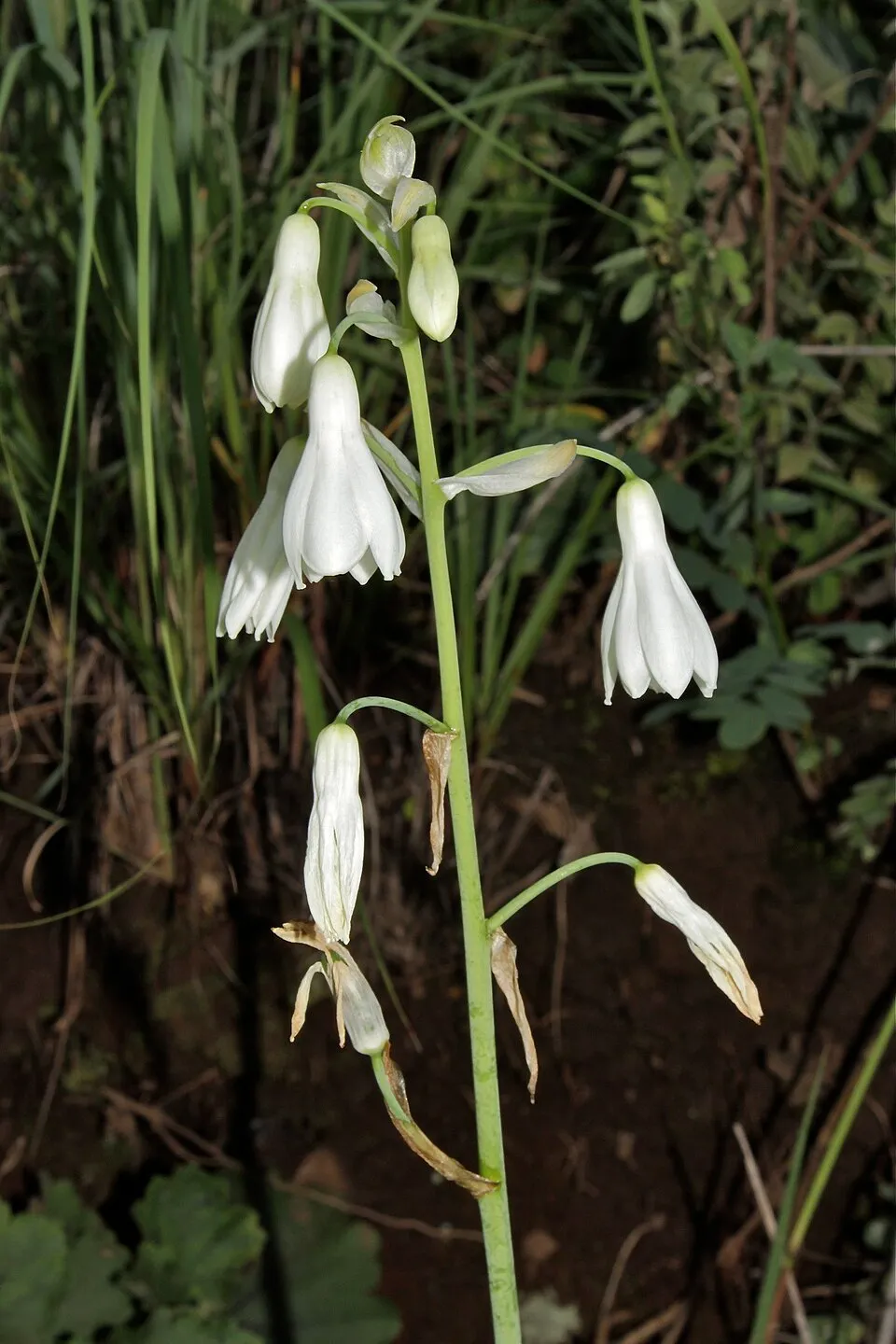
Galtonia Candicans, commonly known as the Summer Hyacinth, Cape Hyacinth, Spire Lily, or Berg Lily, is an elegant bulbous perennial native to the Drakensberg mountains of South Africa. It belongs to the Asparagaceae family, a taxonomic classification that places it among a diverse group of monocotyledonous flowering plants. This striking plant is highly prized in ornamental horticulture for its tall, architectural flower spikes, which can majestically reach heights of up to 1.5 meters (5 feet).
Each spike is adorned with numerous pendulous, bell-shaped, waxy white flowers, often featuring a subtle hint of green at their tips, that bloom profusely from mid-summer through early autumn. These blooms are subtly fragrant, adding another layer of sensory appeal to the garden. Its long-lasting display and impressive vertical form make it an excellent choice for adding dramatic interest to perennial borders, cottage gardens, and for use as elegant cut flowers.
The foliage consists of broad, strap-like, glaucous green leaves that form a robust basal clump, providing a lush and stable backdrop to the impressive floral spectacle. While visually captivating, it is crucial to understand its primary role is ornamental.
Trusted Scientific References
1. Authoritative external sources for Galtonia Candicans
1.1 Wikipedia — Galtonia Candicans
1.2 Kew POWO (Plants of the World Online)
1.3 PubMed — peer-reviewed research
1.4 NCBI Taxonomy Browser
1.5 GBIF — Global Biodiversity
1.6Galtonia Candicans should be interpreted through verified botanical identity, practical care, and responsible safety language. This recovery note adds the missing context needed for a complete profile: match light to the plant's habit, use well-drained soil, water according to season, and avoid unsupported medicinal or edible claims. For publishing, the plant can be presented as a source-backed garden plant with clear care guidance, common problem diagnosis, and conservative safety wording.
1.1.Galtonia Candicans — Key Features
- ✓ <strong>Botanical Name</strong> — Galtonia Candicans
- ✓ <strong>Common Names</strong> — Summer Hyacinth, Cape Hyacinth, Spire Lily, Berg Lily
- ✓ <strong>Family</strong> — Asparagaceae
- ✓ <strong>Origin</strong> — Drakensberg mountains, South Africa
- ✓ <strong>Growth Habit</strong> — Elegant bulbous perennial, reaching up to 1.5 meters tall
- ✓ <strong>Flowers</strong> — Pendulous, bell-shaped, waxy white with green tips, subtly fragrant
- ✓ <strong>Bloom Time</strong> — Profuse flowering from mid-summer to early autumn
- ✓ <strong>Toxicity</strong> — Contains potent cardiac glycosides, making all parts highly toxic if ingested
- ✓ <strong>Medicinal Use</strong> — None; strictly ornamental due to its dangerous chemical constituents
- ✓ <strong>Garden Value</strong> — Excellent for adding vertical interest to borders, cottage gardens, and as a long-lasting cut flower
1.2.Galtonia Candicans — Quick Summary
- ✓ Ornamental perennial from South Africa, known for tall, fragrant white flower spikes.
- ✓ Contains potent cardiac glycosides; highly poisonous if ingested.
- ✓ No documented medicinal benefits or traditional therapeutic uses.
- ✓ Primarily cultivated for its striking aesthetic value in gardens and as a cut flower.
- ✓ Critical to avoid any internal or external medicinal application due to severe toxicity.
2.Galtonia Candicans — Scientific Identity
3.Galtonia Candicans — Quick Facts
4.Galtonia Candicans — Appearance & Identification
5.Galtonia Candicans — Native Habitat
6.Galtonia Candicans — Water Requirements
- ✓ Planting Time — Plant Galtonia Candicans bulbs in spring, after the last expected frost, ensuring the soil has warmed sufficiently for optimal root development and establishment.
- ✓ Soil Requirements — Thrives in well-drained, fertile soil enriched with ample organic matter; prefers a pH range from slightly acidic to neutral for vigorous growth and abundant flowering.
- ✓ Light Exposure — Requires full sun to partial shade for best flowering performance, with full sun generally promoting more abundant and robust blooms.
- ✓ Watering Regime — Maintain consistent moisture levels, especially during dry spells and throughout the active growing and flowering season, but always avoid waterlogging which can lead to bulb rot.
- ✓ Winter Care (Cold Climates) — In hardiness zones 6 and below, it is recommended to lift bulbs before the first hard frost and store them in a cool, dry, dark, and frost-free place over winter, replanting in spring.
- ✓ Propagation — Can be propagated effectively by sowing fresh seeds in containers in a cold frame when ripe, or by carefully removing offsets from mature bulbs in early spring.
- ✓ Spacing and Depth — Plant bulbs approximately 15-20 cm (6-8 inches) deep and 20-30 cm (8-12 inches) apart to allow for proper root expansion, growth, and adequate air circulation.
- ✓ Pest and Disease Resistance — Generally robust and considered virtually pest and disease free, making it a relatively low-maintenance and reliable ornamental choice for various garden settings.
Reviewed by the Flora Medical Global Botanical Review Panel
Multi-disciplinary editorial group · Botany · Ethnobotany · Herbal-medicine literature
Who reviewed this: This page was checked by the Flora Medical Global Botanical Review Panel — an in-house editorial group of botany graduates, ethnobotany researchers, and horticulture practitioners who collectively maintain our 7,000+ plant encyclopedia. Meet the team.
Our 4-step verification process
1. Taxonomic verification
Scientific names and synonyms cross-checked against Kew POWO, World Flora Online, and The Plant List.
2. Phytochemical & medicinal cross-reference
Active compounds, traditional uses, and reported activities are cross-referenced with PubMed, USDA Dr. Duke's database, and peer-reviewed ethnobotanical literature.
3. Conservation & distribution check
Distribution, ecology, and conservation status confirmed against GBIF occurrence records and the IUCN Red List.
4. Editorial & safety review
Every entry passes an editorial pass for clarity, originality, and safety notices (toxicity, contraindications, dosage caveats) before publication.
Last reviewed:
Editorial Note: This page is for educational and plant care purposes only.
Written by: Flora Medical Global Editorial Team
Reviewed by: Flora Medical Global Botanical Review Panel
Last Updated: June 15, 2026







Galtonia Candicans — Comments & Community Reviews
Rate this plant