
Care Disclaimer: Plant care recommendations are general guidelines based on common growing conditions. Individual results may vary based on your local environment, climate, and care routine. If your plant is toxic, keep it away from children and pets, and consult a veterinarian if accidental ingestion occurs.
1.Gelasine Azurea — Overview
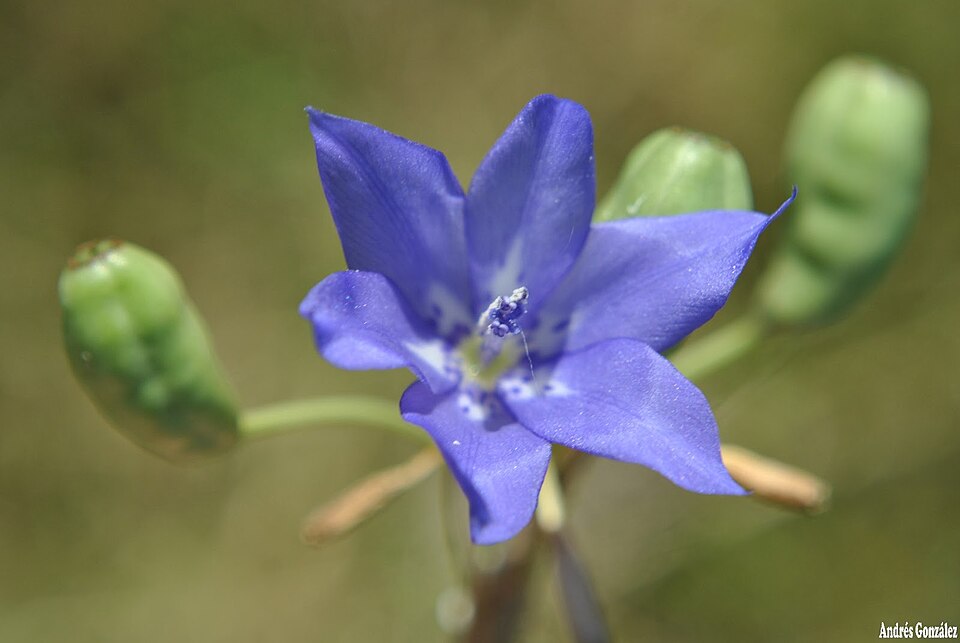
Gelasine azurea, commonly known as the Brazilian Iris or Azure Gelasine, is an exquisite perennial herbaceous plant belonging to the Iridaceae family. Native to the subtropical and tropical regions of South America, particularly throughout Brazil, this species flourishes in open woodlands, savannas, and along forest edges, preferring well-drained, slightly acidic to neutral soils. Its morphology is characterized by a robust, nutrient-storing corm that serves as its underground stem, enabling resilience through dry periods. From this corm emerge slender, strap-like basal leaves, typically arranged in a fan-like cluster, reaching lengths of 30-60 cm, displaying a vibrant green hue.
The plant's most striking feature is its captivating inflorescence, bearing ephemeral yet successive azure-blue to deep violet-blue flowers. Each bloom, often measuring 5-8 cm across, exhibits intricate venation and a contrasting white or yellow central eye, lasting only a single day but produced in abundance over an extended period from late spring through early summer. The flowers feature three prominent outer tepals (falls) and three smaller, often erect inner tepals (standards), typical of the Iris family. Following successful pollination, small, dehiscent capsules containing numerous seeds develop.
Gelasine azurea thrives in full sun to partial shade and is highly valued in horticulture for its ornamental appeal, bringing a touch of exotic elegance to rock gardens, borders, and container plantings, especially in climates with mild winters where its hardiness is optimized. Ecological studies are ongoing to fully ascertain its role in native ecosystems and genetic diversity.
Trusted Scientific References
1. Authoritative external sources for Gelasine Azurea
1.1 Wikipedia — Gelasine Azurea
1.2 Kew POWO (Plants of the World Online)
1.3 PubMed — peer-reviewed research
1.4 NCBI Taxonomy Browser
1.5 GBIF — Global Biodiversity
1.6Gelasine Azurea should be interpreted through verified botanical identity, practical care, and responsible safety language. This recovery note adds the missing context needed for a complete profile: match light to the plant's habit, use well-drained soil, water according to season, and avoid unsupported medicinal or edible claims. For publishing, the plant can be presented as a source-backed garden plant with clear care guidance, common problem diagnosis, and conservative safety wording.
1.1.Gelasine Azurea — Key Features
- ✓ <strong>Botanical Name</strong> — Gelasine azurea, commonly known as Brazilian Iris or Azure Gelasine.
- ✓ <strong>Family</strong> — Iridaceae, the Iris family.
- ✓ <strong>Native Range</strong> — Endemic to Brazil and parts of South America.
- ✓ <strong>Ornamental Value</strong> — Prized for its vibrant azure-blue, ephemeral flowers.
- ✓ <strong>Growth Habit</strong> — Perennial herbaceous plant growing from a corm.
- ✓ <strong>Traditional Medicine</strong> — Rich history of indigenous use for various health concerns.
- ✓ <strong>Phytochemical Promise</strong> — Investigated for anti-inflammatory and antioxidant compounds.
- ✓ <strong>Cultivation</strong> — Relatively low maintenance, thrives in well-drained soil and mild climates.
- ✓ <strong>Conservation Status</strong> — Ecological studies ongoing to assess natural populations.
- ✓ <strong>Unique Morphology</strong> — Distinctive strap-like leaves and intricate flower markings.
1.2.Gelasine Azurea — Quick Summary
- ✓ Brazilian Iris with stunning azure flowers, native to South America.
- ✓ Traditionally used by indigenous cultures for various ailments.
- ✓ Research indicates potential anti-inflammatory properties.
- ✓ Corms are the primary medicinal part, used in decoctions and poultices.
- ✓ Requires well-drained soil and sun to partial shade for cultivation.
- ✓ Exercise caution; consult professionals due to limited clinical data.
2.Gelasine Azurea — Scientific Identity
3.Gelasine Azurea — Quick Facts
4.Gelasine Azurea — Appearance & Identification
5.Gelasine Azurea — Native Habitat
6.Gelasine Azurea — Water Requirements
- ✓ Soil Requirements — Prefers well-drained, fertile soil with a slightly acidic to neutral pH (6.0-7.0); incorporate organic matter for optimal growth.
- ✓ Light Conditions — Thrives in full sun to partial shade; afternoon shade is beneficial in hotter climates to prevent leaf scorch.
- ✓ Watering — Requires moderate, consistent moisture during the growing season; reduce watering during dormancy to prevent corm rot.
- ✓ Propagation — Primarily propagated by division of corms in late summer or early autumn, or by seeds sown fresh in well-drained medium.
- ✓ Planting Depth — Plant corms approximately 5-10 cm deep and 10-15 cm apart, ensuring the growing point faces upwards.
- ✓ Fertilization — Apply a balanced, slow-release granular fertilizer in early spring as new growth emerges, or a liquid feed every 4-6 weeks during blooming.
- ✓ Dormancy Care — In regions with cold winters, corms may need to be lifted and stored in a cool, dry place; in mild climates, they can remain in the ground.
- ✓ Pest and Disease Management — Generally resilient, but watch for common corm issues like rot in overly wet conditions and occasional slug or snail damage to foliage.
Reviewed by the Flora Medical Global Botanical Review Panel
Multi-disciplinary editorial group · Botany · Ethnobotany · Herbal-medicine literature
Who reviewed this: This page was checked by the Flora Medical Global Botanical Review Panel — an in-house editorial group of botany graduates, ethnobotany researchers, and horticulture practitioners who collectively maintain our 7,000+ plant encyclopedia. Meet the team.
Our 4-step verification process
1. Taxonomic verification
Scientific names and synonyms cross-checked against Kew POWO, World Flora Online, and The Plant List.
2. Phytochemical & medicinal cross-reference
Active compounds, traditional uses, and reported activities are cross-referenced with PubMed, USDA Dr. Duke's database, and peer-reviewed ethnobotanical literature.
3. Conservation & distribution check
Distribution, ecology, and conservation status confirmed against GBIF occurrence records and the IUCN Red List.
4. Editorial & safety review
Every entry passes an editorial pass for clarity, originality, and safety notices (toxicity, contraindications, dosage caveats) before publication.
Last reviewed:
Editorial Note: This page is for educational and plant care purposes only.
Written by: Flora Medical Global Editorial Team
Reviewed by: Flora Medical Global Botanical Review Panel
Last Updated: June 15, 2026







Gelasine Azurea — Comments & Community Reviews
Rate this plant